
Description
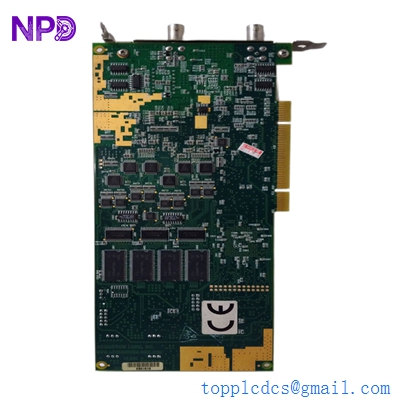
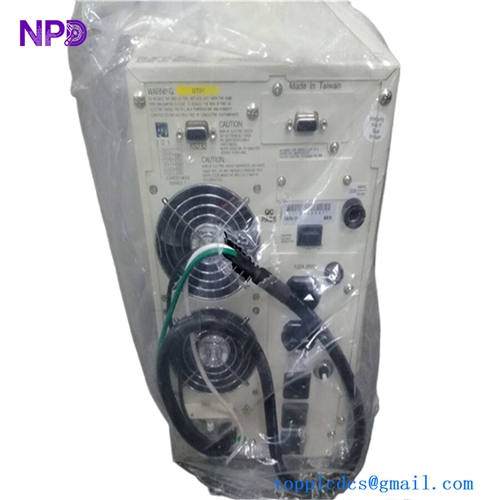
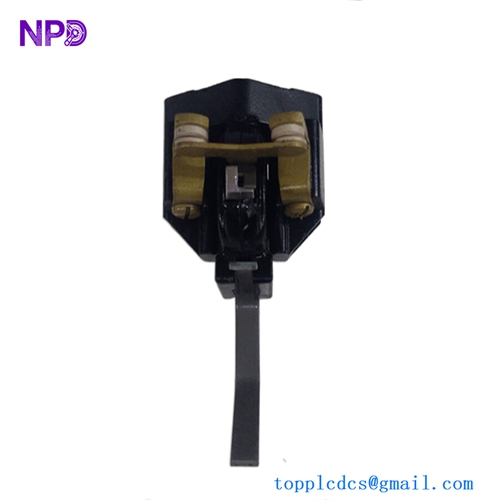
The Woodward DSLC (Digital Synchronizer and Load Control) Model 9905-797 is an advanced, microprocessor-based controller designed for three-phase AC generator sets. Combining synchronizing, load sharing, power factor/VAR control, and process control functions into a single compact device, it automates generator paralleling, dead bus closing, and bumpless transfer of electrical load across isolated or grid-tied power generation systems.

📊 Product Technical Datasheet
- Brand: Woodward
- Model: 9905-797
- Series: DSLC (Digital Synchronizer and Load Control Series)
- Product Name: Digital Synchronizer and Load Control Module
- Place of Production: United States
- Condition Status: Factory New / Refurbished Available
- Operating Power Supply: 8 to 32 VDC (24 VDC nominal)
- Voltage Input: 120 VAC, Open Delta PT Configuration
- Speed Bias Output: \pm 3 VDC bi-directional speed bias
- Operating Temperature: -40°C to +70°C (-40°F to +158°F)
- Weight: Approx. 3.12 kg (6.88 lbs)
🔍 Initial Operation Checklist
- Verify physical integrity: Inspect the module housing enclosure, Phoenix contact terminal blocks, rear communication ports, and front LED display elements for any transit damage prior to installation.
- Check power compatibility: Confirm that the incoming DC power supply matches the rated input requirement (8 to 32 VDC) and verify correct polarity before energizing the unit.
- Inspect wiring terminations: Ensure that all potential transformer (PT) sensing inputs, current transformer (CT) lines, speed bias output wiring, and discrete control lines are securely fastened and torqued.
- Verify configuration settings: Power on the controller and review baseline software parameters, voltage ratios, and synchronizer limits to match the specific characteristics of your generator set.
- Perform loop checks: Test all breaker close commands, emergency stop circuits, and synchronizer feedback loops before attempting automatic paralleling or live bus closing.
🔧 Routine Maintenance and Care
- Environmental monitoring: Regularly inspect the switchgear panel or control cabinet to ensure internal ambient operating temperatures remain within the specified range of -40°C to +70°C.
- Terminal security: Periodically check and retighten all rear screw terminal blocks to prevent loose connections caused by continuous industrial vibration or engine humming.
- Wiring harness integrity: Examine potential transformer, current transformer, and communication cabling periodically for insulation wear, cracking, or signal shielding degradation.
- Software backups: Export and archive current configuration parameters and calibration settings using Woodward service tools whenever system adjustments are performed.
- Surface cleaning: Clean the front-panel display and membrane interface using a soft, lint-free cloth dampened with mild detergent or isopropyl alcohol. Avoid abrasive industrial solvents.
⚠️ Troubleshooting and Common Issues
- Synchronization Timeouts: If the module fails to issue a breaker close command, check phase-matching parameters, verify VT phase rotation alignment, and inspect slip frequency limits.
- Speed Bias Instability: Erratic load sharing or hunting behavior usually points to improper PID loop tuning, incorrect speed bias scaling, or unstable governor actuator responses.
- Voltage Sensing Errors: Inaccurate true RMS power or voltage calculations typically indicate loose PT secondary wiring, incorrect transformer ratio programming, or ground loop interference.
- Communication Dropouts: If the unit loses connection over its local operating network (LON) or plant DCS, verify network cable shielding integrity, termination resistors, and node addresses.
🛡️ Safety Precautions
- High Voltage Hazards: Potential transformer (PT) and current transformer (CT) secondary circuits carry hazardous voltages and currents. Never open-circuit a live CT secondary terminal.
- Qualified Personnel Only: Installation, wiring, calibration, and commissioning of the DSLC module must be executed exclusively by certified electrical and generator control specialists.
- Power Isolation: Completely isolate all DC control power sources, AC generator outputs, and bus voltages before opening the enclosure or performing internal hardware maintenance.
- Operational Safety: Never bypass critical generator protection functions, overspeed shutdowns, or synchronizer interlocks while the unit is operating online.
❓ Frequently Asked Questions (Q&A)
- Q1: What is the primary function of the Woodward DSLC 9905-797?
A1: The DSLC module integrates automatic synchronizing, dead bus closing, isochronous load sharing, and power factor/VAR control into a single unit for multi-generator power systems.
- Q2: How does the DSLC interface with the engine governor?
A2: The unit communicates with compatible electronic governors using a bi-directional \pm 3 VDC speed bias output signal to govern engine speed and manage load distribution.
- Q3: Does this model support dead bus closing capabilities?
A3: Yes, the 9905-797 is engineered to safely handle dead bus closure scenarios, allowing a generator to automatically energize an unpowered bus under programmed conditions.
- Q4: What immediate action should be taken if an internal hardware fault occurs?
A4: Record any error codes or LED status indicators displayed on the unit, verify DC power supply stability, and consult the Woodward technical manual or authorized support channels.