Description
🔹 Product Overview
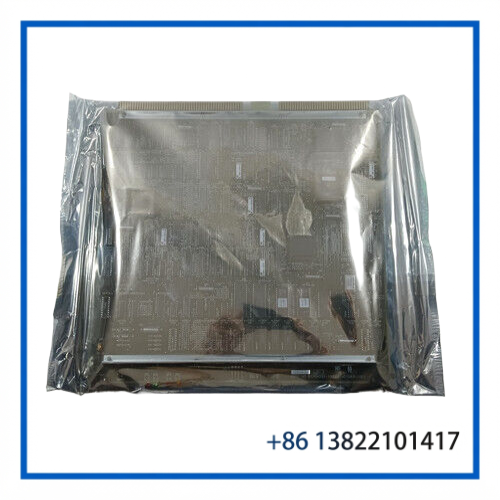
The YAMATAKE HONEYWELL 51401583-100 is an Enhanced Process Network Interface (EPNI) circuit board used in Honeywell DCS network-interface architecture. It is also identified by the assembly/reference number 80364052-100.
The board serves as the main logic board associated with the Network Interface Module (NIM). In the Honeywell TDC 3000 environment, the EPNI provides the network-interface function between the Universal Control Network (UCN) and Local Control Network (LCN), supporting communication between process-control nodes and their associated databases.
For legacy Honeywell DCS maintenance, this PCB can be an important replacement spare when troubleshooting NIM communication or maintaining an existing TDC 3000 installation.
🔹 Key Features
- Honeywell / Yamatake-Honeywell EPNI circuit board
- Part number 51401583-100
- Alternate assembly/reference 80364052-100
- Enhanced Process Network Interface (EPNI)
- Main logic board for the Network Interface Module
- Designed for Honeywell DCS architecture
- Supports UCN-to-LCN network interfacing
- Compatible with legacy TDC 3000 network-interface applications
- Suitable for maintenance, replacement, and spare inventory
- Firmware and hardware revision should be verified before replacement
🔹 Technical Datasheet
| Parameter | Specification |
|---|---|
| Brand | YAMATAKE HONEYWELL / Honeywell |
| Model | 51401583-100 |
| Alternate Part Number | 80364052-100 |
| Series | Honeywell TDC 3000 / NIM |
| Product Name | Enhanced Process Network Interface Board |
| Product Type | EPNI PCB / Network Interface Card |
| Primary Function | Network Interface Module Main Logic Board |
| Network Architecture | UCN / LCN Interface |
| System Application | Honeywell DCS Process Control |
| Product Status | Legacy Industrial Automation Spare |
🔹 Network Interface Function
The EPNI board is associated with the Honeywell Network Interface Module (NIM). The NIM provides the communication path between the Universal Control Network and Local Control Network.
A typical architecture can be represented as:
UCN → EPNI / NIM → LCN → Honeywell Control & Process Nodes
The NIM may also be configured as part of a redundant network-interface arrangement. The exact system configuration should be checked against the existing cabinet documentation and node configuration before replacing the PCB.
🔹 System Integration
The 51401583-100 should be treated as a system-level communication component rather than a conventional standalone I/O card.
When integrating a replacement board, verify:
- NIM hardware configuration
- EPNI board revision
- Processor configuration
- Network topology
- UCN and LCN node assignments
- Firmware revision
- Redundancy arrangement
- Existing communication diagnostics
- Associated NIM I/O and processor boards
The EPNI works together with other NIM components, so replacing the PCB without checking the complete NIM assembly can lead to compatibility or communication problems.
🔹 Installation & Commissioning
- Record the existing board part number and revision before removal.
- Confirm 51401583-100 / 80364052-100 identification.
- Compare the replacement PCB hardware revision with the installed unit.
- Follow the site’s electrical isolation and ESD procedures.
- Inspect card-edge connectors and cabinet connections.
- Install the PCB in the correct NIM position.
- Verify associated processor and I/O modules.
- Power up the NIM according to the system maintenance procedure.
- Check network status and diagnostic indications.
- Confirm communication between the UCN and LCN.
- Verify redundant NIM operation where applicable.
- Record the replacement board revision and final system status.
🔹 Troubleshooting Guide
NIM does not initialize:
Check the board seating, cabinet power, associated processor, hardware revision, and diagnostic indicators.
UCN/LCN communication is unavailable:
Check network cabling, node configuration, NIM status, processor operation, and EPNI board condition.
Intermittent communication:
Inspect card-edge contacts, connectors, network wiring, cabinet grounding, and diagnostic logs.
Replacement board is not recognized:
Compare the exact part number, hardware revision, firmware requirements, and NIM configuration with the original board.
Redundant NIM does not operate correctly:
Check both NIM paths, processor status, network connections, configuration, and redundancy logic.
Communication errors appear after replacement:
Verify that the replacement board has the appropriate revision and that the existing system configuration remains unchanged.
🔹 Maintenance
Because the 51401583-100 is used in legacy DCS infrastructure, preventive maintenance should include inspection of connectors, cabinet conditions, cooling, power supplies, network connections, and diagnostic information.
Keep a verified spare board in controlled storage and protect it against static electricity, moisture, dust, and mechanical damage.
Where the installed system uses a particular firmware revision, record that revision as part of the spare-parts management process. This is especially important for applications requiring specific network or time-synchronization functionality.
🔹 Replacement Considerations
The complete identification should be checked before ordering:
- 51401583-100
- 80364052-100
- EPNI / Enhanced Process Network Interface
- NIM application
- Hardware revision
- Firmware revision
- Associated K4LCN processor configuration
- NIM I/O configuration
- UCN/LCN network architecture
The part number alone should not be used to assume that every EPNI board is configured identically.
🔹 Frequently Asked Questions
Q1: What is the Honeywell 51401583-100?
It is an Enhanced Process Network Interface (EPNI) board used as the main logic/interface board in Honeywell Network Interface Module architecture.
Q2: What is 80364052-100?
It is an alternate assembly/reference number associated with the 51401583-100 EPNI board.
Q3: What system is this board associated with?
It is primarily associated with Honeywell DCS systems, particularly TDC 3000-era network-interface applications.
Q4: What does EPNI mean?
EPNI stands for Enhanced Process Network Interface.
Q5: What is the relationship between EPNI and NIM?
The EPNI is the main logic board that identifies and supports the Network Interface Module.
Q6: Does this board handle UCN and LCN communication?
The EPNI/NIM architecture provides the interface between the Universal Control Network and Local Control Network.
Q7: Should the firmware revision be checked before replacement?
Yes. Firmware and hardware revisions should be compared with the installed system, especially where specific network or synchronization functions are required.
Q8: Is this suitable as a maintenance spare?
Yes. It is particularly useful for maintaining existing Honeywell DCS installations where the original NIM/EPNI hardware remains in service.
🔹 10 Related Honeywell Models / Parts
- Honeywell 51304511-100 NIM I/O Board
- Honeywell 51304511-200 CE NIM I/O Board
- Honeywell 51401551-200 K2LCN Processor Board
- Honeywell 51401551-300 K2LCN Processor Board
- Honeywell 51401551-301 K2LCN Board Assembly
- Honeywell 51401551-400 K2LCN Processor Board
- Honeywell 51401551-600 K2LCN Processor Board
- Honeywell 51401551-601 K2LCN Board Assembly
- Honeywell 51401052-100 SPC Board Assembly
- Honeywell 51401286-100 EPDG Board Assembly
🔹 Product Summary
The YAMATAKE HONEYWELL 51401583-100 / 80364052-100 EPNI PCB is a specialized network-interface circuit board for legacy Honeywell DCS infrastructure. Its primary role is within the Network Interface Module architecture connecting UCN and LCN environments.
For replacement projects, the complete part number, board revision, firmware requirements, NIM configuration, and existing network architecture should be verified before installation.