
Description
Technical Parameters
- Manufacturer: Yokogawa
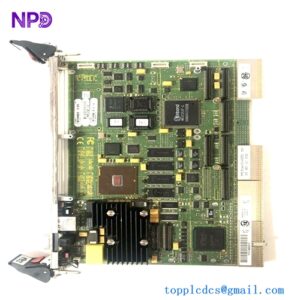
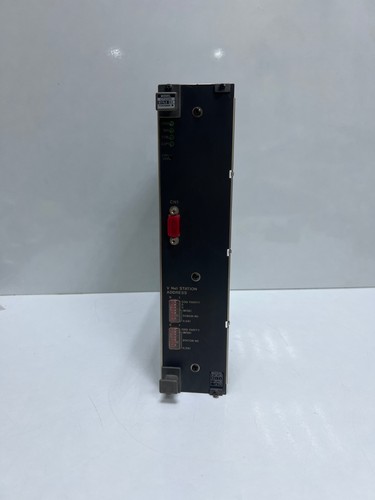
- Model Number: CP333D-S3
- Product Type: Processor Module (Single or Duplex)
- System Series: CENTUM CS 3000 / CS 1000
- Processor Speed: High-speed processing for real-time control loops
- Memory: Internal RAM with battery backup for control logic and data
- Communication: Vnet/IP or VL net system bus compatibility
- Redundancy: Supports dual-redundant configuration for high-availability systems
Product Datasheet
| Specification | Details |
|---|---|
| Model | CP333D-S3 |
| Origin | Japan |
| Dimensions | 13.0 cm x 4.0 cm x 25.0 cm |
| Weight | 0.78 kg |
| Power Consumption | 15W (Typical) |
| Operating Temp | 0°C to +50°C |
| Mounting | Slot-mounted in Processor Node |
| Certification | CE, KC, CSA (System Dependent) |
Application Fields
The CP333D-S3 is the central processing unit for Yokogawa Distributed Control Systems (DCS):
- Oil & Gas Refining: Executing complex regulatory and sequence control logic.
- Chemical Processing: Managing batch controls and safety interlocking.
- Power Plants: Controlling boiler automation and turbine synchronization.
- Water Treatment: Supervising distributed pump stations and filtration systems.
Product Instructions
- Preparation: Verify system software compatibility before installation; ensure the domain and station numbers are correctly set.
- Redundancy Setup: If used in a duplex system, ensure both processor modules (Primary and Backup) have matching hardware revisions.
- Installation: Insert the module firmly into the designated CPU slot until the locking levers click into place.
- Battery Check: Ensure the internal memory backup battery is fresh to prevent loss of control parameters during power cycles.
- Initialization: Use the System View software to download the configuration and verify the “RUN” status on the module’s front panel.
Q&A
Q1: What is the main difference between the CP333D and earlier CP330 models? A1: The CP333D offers enhanced processing speed and larger memory capacity, specifically designed to support the more demanding requirements of CENTUM CS 3000 systems.
Q2: Can I hot-swap this module? A2: In a dual-redundant configuration, the standby module can be replaced while the system is running. However, in a simplex (single) system, the station must be powered down.
Q3: What do the “HRDY” and “CTRL” LEDs signify? A3: “HRDY” indicates the hardware is ready and has passed self-diagnostics. “CTRL” indicates the module is currently in control of the station tasks.
Recommended Similar Models
- Yokogawa CP345-S1
- Yokogawa CP451-10
- Yokogawa CP461-50
- Yokogawa CP9341D
- Yokogawa CP333D-S1