
Description
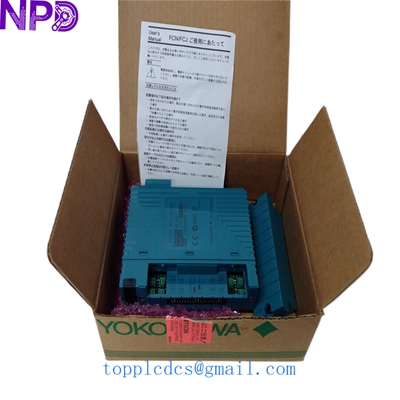
- Model: NFAI143-H00
- Brand: Yokogawa
- Series: CENTUM VP / CENTUM CS 3000 (FIO System)
- Core Function: 16-Channel Isolated Analog Input Module
- Product Type: Analog Input (AI) Module
- Key Specs: 4 to 20 mA | 16 Channels | Module Isolation | H00 Standard Type
- Number of Channels: 16, isolated
- Input Signal: 4 to 20 mA DC
- Input Impedance: 250 Ω
- Accuracy: ±0.1% of full scale
- Resolution: 16-bit
- Allowable Input Voltage: 30 V DC max
- Isolation Resistance: 100 MΩ or more (at 500 V DC)
- Data Refresh Cycle: 10 ms
- Power Consumption: 2.3 W (typical)
- Mounting: Installs into an ANB or ANT Node Unit
- Weight: Approx. 0.3 kg
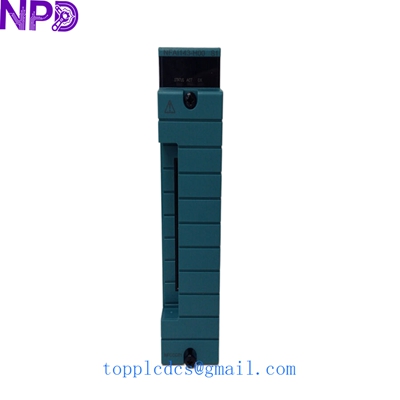
YOKOGAWA NFAI143-H00
Installation & Configuration Guide
Stage 1: Pre-Installation
⚠️ Safety Checklist:
- Node Power: Ensure the Node Unit (ANB/ANT) is powered down if you are not using a redundant configuration. While FIO modules support online replacement, always follow site-specific safety protocols.
- Module Keying: Verify that the slot coding on the baseplate matches the NFAI143 module to prevent accidental insertion into a different module’s slot.
- Grounding: Ensure the DIN rail and the node unit are properly grounded to the system instrument ground to prevent signal noise.
Required Tools:
- Small flat-head screwdriver (for terminal block screws)
- Yokogawa CENTUM VP/CS 3000 Engineering Workstation
- Multimeter for loop verification
Stage 2: Hardware Installation
Steps:
- Module Insertion: Align the module with the guides in the node unit and push firmly until the latches click into place.
- Terminal Block: Secure the Pressure Clamp Terminal Block (e.g., NFAT141) or the KS Cable Interface to the front of the module.
- Wiring: Connect the 4-20 mA field device wires.
- Note: For 2-wire transmitters, ensure an external 24 V DC power supply is used, as the NFAI143-H00 is a non-power-supplying (sink) input module.
Stage 3: Engineering Configuration
Steps:
- I/O Definition: In the Yokogawa System View, define the slot where the module is installed as an NFAI143.
- Range Setting: Set the engineering scale (e.g., 0 to 100% or 0 to 1000 kPa) for each of the 16 channels.
- Scan Period: Assign the scan period (e.g., 1 second or 200 ms) based on the process requirements.
- Download: Perform a “Project Download” or “Online Change” to update the FCS (Field Control Station).
Stage 4: Testing & Commissioning
Validation:
- Status LED: The “STATUS” LED should be solid green. A blinking red LED indicates a module hardware fault or an I/O communication error.
- Loop Check: Use a signal generator to inject 4, 12, and 20 mA at the field side. Verify the values on the HIS (Human Interface Station) display.
- Alarm Check: Verify that “Input Open” or “High-High” alarms trigger correctly when the signal is removed or exceeded.
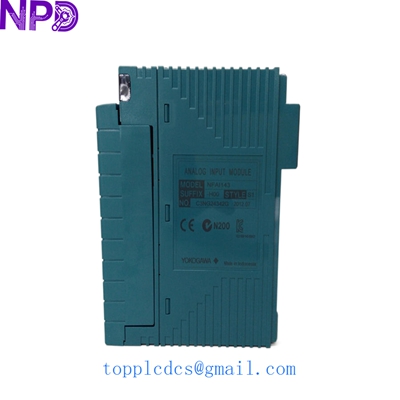
YOKOGAWA NFAI143-H00
Customer Cases & Industry Applications
Case 1: Oil & Gas Separator Monitoring
Situation: A refinery in Southeast Asia was experiencing intermittent data drops on their level transmitters. The issue was traced to an aging analog input module that had suffered thermal stress over 15 years.
Task: Replace the failing NFAI143 module without shutting down the entire Field Control Station.
Action: We supplied a New Surplus NFAI143-H00. Because the DCS used redundant I/O, the customer was able to swap the module while the process remained live.
Result: The new module stabilized the readings immediately. The refinery’s engineering team noted that the surplus unit was in pristine condition, matching the original factory specs exactly.
Case 2: Chemical Dosing Control Precision
Situation: A specialty chemical plant required high-accuracy monitoring for 16 different flow meters. Their existing generic I/O modules were drifting, leading to inconsistent product quality.
Task: Upgrade the I/O to a dedicated isolated module to reduce crosstalk and electrical interference.
Action: The customer installed the NFAI143-H00 isolated module. This provided channel-to-channel isolation, preventing a fault in one flow meter from affecting the other 15 channels.
Result: Product batch consistency improved by 15%, and the frequency of “signal out of range” alarms was reduced significantly.
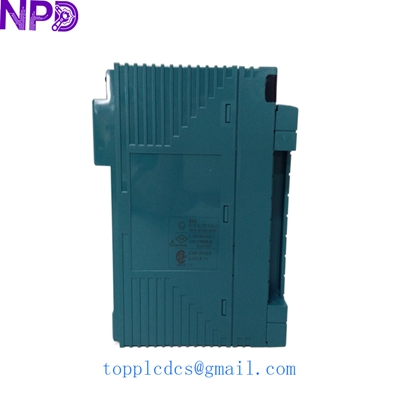
YOKOGAWA NFAI143-H00
Frequently Asked Questions (FAQ)
Q: What does the “-H00” suffix stand for? A: The “-H” signifies the standard type, and “00” indicates no specific options like G3 conformal coating. The H00 is the most common version for general industrial environments.
Q: Does this module provide power to 2-wire transmitters? A: No. The NFAI143 is an isolated analog input module that receives 4-20 mA signals. If you are using 2-wire transmitters, you must provide 24 V DC power to the loop externally. For a module that supplies power, you would typically look at the NFAI141.
Q: Can I use this in a CENTUM VP system? A: Yes. The NFAI143 is a standard FIO (Field I/O) module and is fully compatible with both CENTUM CS 3000 and the newer CENTUM VP platforms.
Q: Is “New Surplus” reliable for a DCS? A: Yes. Our New Surplus units are original Yokogawa parts that were never put into service. They have been kept in climate-controlled storage, ensuring that the internal components are not “aged” by the heat and vibration of an active plant floor.
Featured Inventory List (Current Stock)
- YOKOGAWA NFAI141 Analog Input (with Power)
- YOKOGAWA NFAV141 Analog Input
- ABB PM866 Controller
- Bently Nevada 3500/22M
- TRICONEX 3503E
- Honeywell CC-PAIH01
- Siemens 6ES7 417-4XT07-0AB0
- Allen-Bradley 1756-L75
For more details on these parts, visit our catalog at newplcdcs.