
Description
Product Description
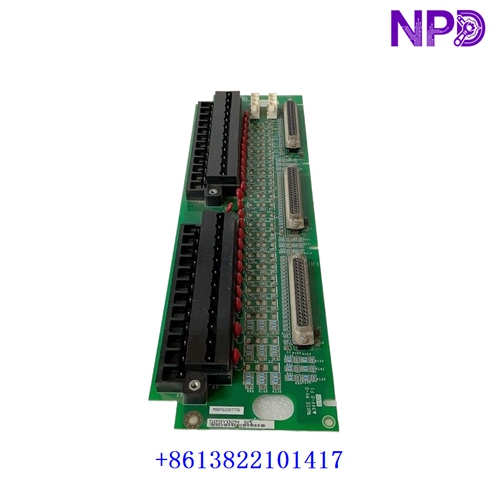
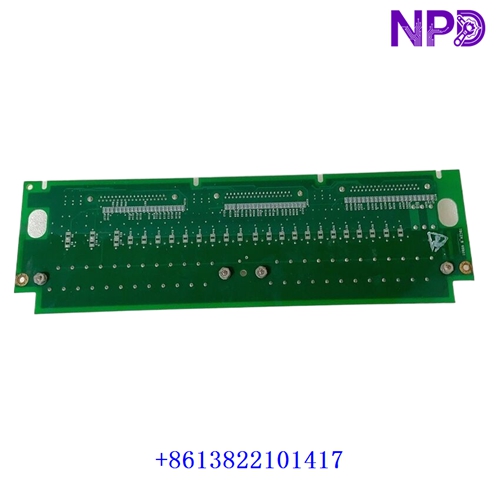
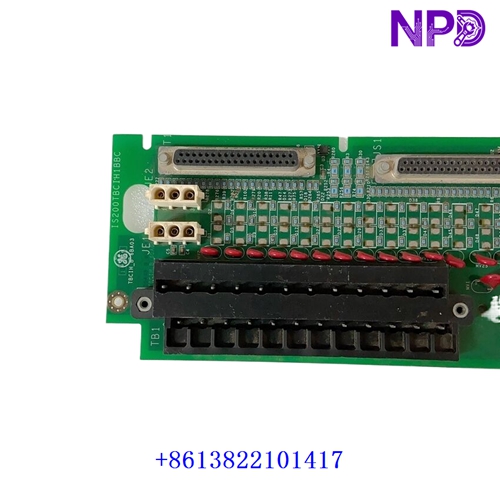
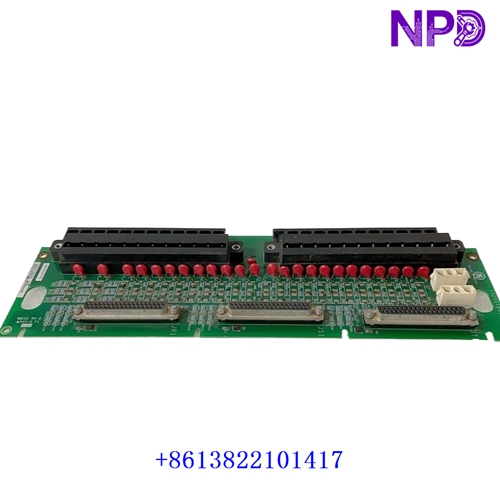
The GE IS200TBCIH1BBC is a Contact Input Terminal Board (TBCI) designed for GE Speedtronic Mark VI turbine control systems. It provides field termination and signal conditioning for external dry-contact inputs, allowing switch and relay status signals to be transferred into the turbine control system.
The board accepts up to 24 dry-contact input channels through two barrier-type terminal blocks. Its group-isolated input arrangement includes noise-suppression circuitry designed to reduce the effects of electrical surges and high-frequency interference on incoming contact signals.
The TBCIH1B board family uses a nominal 125 V DC floating contact-excitation supply. In Mark VI installations, the board interfaces with VTCC/VCRC control hardware through cables with molded connectors. The TBCI architecture supports simplex and Triple Modular Redundancy (TMR) configurations.
The TBCI family is also used in compatible Mark VIe architectures with PDIA I/O packs. However, mechanical alignment and hardware revision requirements must be checked before using a Mark VI terminal board in a Mark VIe installation.
The complete catalog number IS200TBCIH1BBC should be retained when ordering. Confirm the board revision, terminal arrangement, excitation voltage, and connected I/O hardware before replacement.
IS200TBCIH1BBC
Product Datasheet
| Parameter | Specification |
|---|---|
| Brand | GE (General Electric) |
| Model | IS200TBCIH1BBC |
| Product Series | Speedtronic Mark VI |
| Board Family | TBCI |
| Product Type | Contact Input Terminal Board |
| Primary Function | Dry-contact input termination and signal conditioning |
| Input Channels | 24 dry-contact inputs |
| Input Arrangement | Group-isolated contact inputs |
| Terminal Blocks | 2 barrier-type terminal blocks |
| Contact Excitation | Nominal 125 V DC floating supply |
| Excitation Range | 100–145 V DC, according to GE TBCIH1C family documentation |
| Signal Conditioning | Noise suppression for surge and high-frequency interference |
| Mark VI Interface | VTCC/VCRC-related control hardware |
| Mark VIe Interface | Compatible PDIA I/O pack arrangements, subject to revision requirements |
| Redundancy Support | Simplex and TMR in Mark VI applications |
| Field Wiring | External dry-contact circuits |
| Mounting | Mark VI control-system terminal-board installation |
| Dimensions | Confirm from original board drawing |
| Weight | Confirm from actual unit |
| Country of Origin | Confirm from product label |
| Product Status | Legacy industrial control spare |
| Condition | Confirm actual supplied unit |
Technical Features & Specifications
1. 24-Channel Dry-Contact Input
The IS200TBCIH1BBC belongs to the TBCI contact-input family, which accepts up to 24 external dry-contact signals. Typical field devices include limit switches, pressure switches, temperature switches, relay contacts, and equipment status contacts.
The board provides the termination point for these signals before they are transferred to the associated control hardware.
2. Dual Barrier-Type Terminal Blocks
Two barrier-type terminal blocks provide field wiring connections for the 24 input channels. This arrangement provides accessible termination points for field cables and supports organized wiring during installation and maintenance.
Before removing an existing board, record the terminal assignments and wiring positions. Terminal numbers alone should not be used to determine signal polarity or excitation connections.
3. Group Isolation and Contact Excitation
The TBCI design uses group-isolated contact inputs. The H1 version is associated with a nominal 125 V DC floating contact-excitation supply, with a documented operating range of 100–145 V DC.
The excitation supply is an important selection parameter. Do not substitute a 24 V or 48 V excitation version without confirming the field-device requirements and system design.
4. Noise Suppression
The input circuits include noise-suppression components intended to reduce the effects of transient surges and high-frequency electrical interference.
This is particularly relevant in turbine control cabinets where contact wiring may be installed near relays, solenoids, motors, and other electrically noisy equipment.
5. Mark VI Control-System Interface
In Mark VI systems, the TBCI board works with VTCC/VCRC-related control hardware. Molded-plug cables connect the terminal board to the appropriate VME rack interface.
The TBCI arrangement supports simplex and TMR applications. The exact cable and processor-board configuration depends on the installed control architecture.
6. Mark VIe Application Considerations
The TBCI family can also be used with PDIA I/O packs in compatible Mark VIe configurations. GE documentation specifies that the appropriate C-version terminal board is required for mechanical alignment of connector JT1 with the I/O pack support.
Therefore, compatibility must be checked by complete catalog number and revision. Similar TBCI model names do not guarantee identical mechanical or electrical interfaces.
Application Scenarios & Pain Points
- Gas turbine control: Receives dry-contact status signals from turbine field switches and auxiliary equipment.
- Steam turbine control: Provides field termination for compatible contact-based monitoring and control signals.
- Generator protection and monitoring: Connects discrete equipment status signals to the turbine control system.
- Auxiliary equipment control: Interfaces with relay contacts, pressure switches, temperature switches, and limit switches.
- TMR turbine control: Supports contact-input termination in compatible triple-redundant Mark VI configurations.
- Legacy control-system maintenance: Provides a replacement terminal board for existing GE Speedtronic installations.
First-Time Installation Checklist
- Verify the complete part number IS200TBCIH1BBC on the board label.
- Compare the replacement board revision with the installed unit.
- Confirm that the required contact-excitation voltage is nominally 125 V DC.
- Record the original wiring positions on both barrier terminal blocks.
- Identify the field-device contact type and confirm that it is compatible with the TBCI input arrangement.
- Verify the correct VTCC/VCRC interface and molded-plug cable arrangement for Mark VI installations.
- For Mark VIe applications, confirm the approved PDIA I/O pack and terminal-board mechanical compatibility.
- Inspect terminal screws, connectors, PCB surfaces, and mounting hardware.
- Check field cable shielding, grounding, and routing according to the control-system drawings.
- Verify each contact channel using the approved commissioning procedure.
- Confirm input status at the associated controller or I/O pack.
- Complete the required simplex or redundant-system checks before returning the turbine to service.
Daily Maintenance
- Inspect the terminal blocks for loose connections and signs of overheating.
- Check the PCB for contamination, corrosion, or physical damage.
- Review contact-input status for unexpected changes or intermittent signals.
- Inspect field wiring and cable insulation during scheduled maintenance.
- Check excitation supply conditions against the specified voltage range.
- Inspect molded-plug connectors for damage and secure seating.
- Investigate repeated contact alarms or inconsistent input indications.
- Maintain records of board revisions, terminal assignments, and replacement history.
Troubleshooting & Frequently Asked Questions
Q1: What is the main function of the IS200TBCIH1BBC?
A: It is a GE Mark VI Contact Input Terminal Board. It terminates and conditions up to 24 external dry-contact signals for use by the turbine control system.
Q2: How many input channels does the board support?
A: The TBCI family supports 24 dry-contact inputs connected through two barrier-type terminal blocks.
Q3: What contact-excitation voltage does the H1 version use?
A: The H1 version is associated with a nominal 125 V DC floating excitation supply. GE documentation for the TBCIH1C family gives a range of 100–145 V DC. Confirm the exact installation requirements before applying power.
Q4: Can this board be used in a TMR system?
A: Yes. The TBCI family supports simplex and TMR applications in compatible Mark VI configurations. The correct cabling and processor-board arrangement must be verified.
Q5: Is the IS200TBCIH1BBC compatible with Mark VIe?
A: The TBCI family is used with compatible Mark VIe PDIA I/O packs. However, GE specifies mechanical revision requirements for Mark VIe installations. Verify the exact board revision and approved I/O pack combination before installation.
Q6: Can the IS200TBCIH1BBC replace an IS200TBCIH2C?
A: Do not assume direct interchangeability. The H1 and H2 versions have different contact-excitation voltage requirements. Compare the complete part number, excitation voltage, field wiring, and application documentation.
Q7: What causes incorrect contact-input indications?
A: Possible causes include incorrect field wiring, unsuitable excitation voltage, damaged contacts, loose terminal connections, electrical interference, or an incompatible control-system configuration.
Q8: Does the terminal board contain the turbine control logic?
A: No. It is a field termination and signal-conditioning board. The associated control hardware processes the input information and executes the application logic.
Safety Precautions
- Installation and maintenance must be performed by qualified turbine-control or industrial electrical personnel.
- Follow the approved turbine shutdown and electrical isolation procedures.
- Verify the absence of hazardous voltage before handling field wiring.
- Treat the 125 V DC contact-excitation circuit as a hazardous electrical source.
- Do not change excitation voltage or terminal assignments without approved engineering documentation.
- Use ESD protection when handling the circuit board.
- Confirm the correct molded-plug cable and controller interface before installation.
- Do not assume Mark VI and Mark VIe terminal-board revisions are mechanically interchangeable.
- Perform channel-by-channel functional checks before returning the control system to service.
- Follow the applicable GE Mark VI and Mark VIe installation documentation.
Recommended Related Models & Components
The following are related GE TBCI terminal boards, I/O packs, and Mark VI control-system components. They are useful for system maintenance and compatibility checks, but are not all direct replacements for the IS200TBCIH1BBC.
- IS200TBCIH1B – TBCI contact input terminal board family
- IS200TBCIH1C – TBCIH1 contact input terminal board revision
- IS200TBCIH2C – TBCI terminal board with 24 V DC nominal excitation
- IS200TBCIH3C – TBCI terminal board with 48 V DC nominal excitation
- IS200TBCIH4C – Related TBCI terminal board variant; verify application
- IS220PDIAH1A – Mark VIe discrete input I/O pack
- IS220PDIAH1B – Mark VIe discrete input I/O pack
- IS221PDIAH1B – Coated Mark VIe discrete input I/O pack
- IS200VTCCH1B – Mark VI turbine control circuit board family; verify exact revision
- IS200VCRCH1B – Mark VI control-related circuit board family; verify exact revision
- IS200VTCCH1C – Related Mark VI control board revision; verify catalog number
- IS200TBAIH1C – Mark VI analog input terminal board
- IS200TBCIH2B – Related TBCI terminal board family
- IS200TBCIH3B – Related TBCI terminal board family
- IS200-series Mark VI VME interface and termination components – Select by the installed rack configuration and original GE drawings.
Always compare the full catalog number, excitation voltage, hardware revision, connector arrangement, and system generation before ordering related components.