Description
🔹 Product Overview
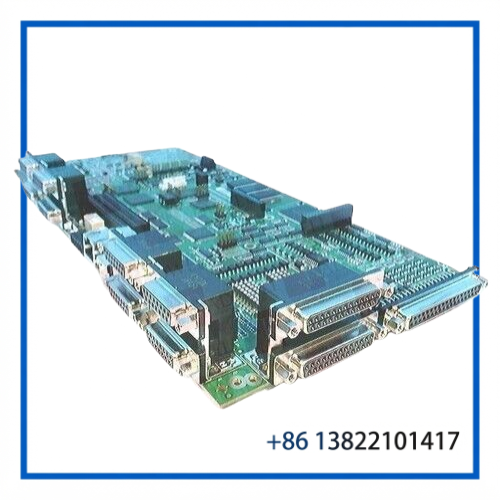
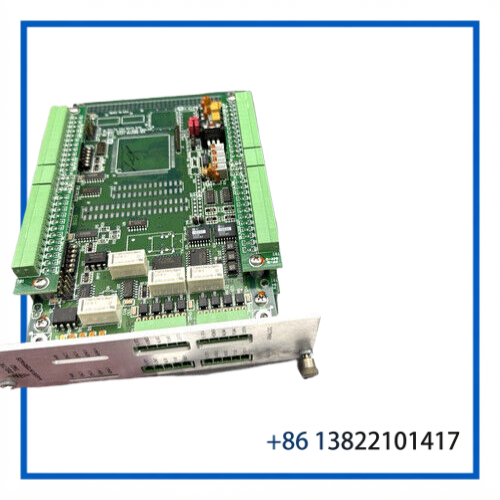
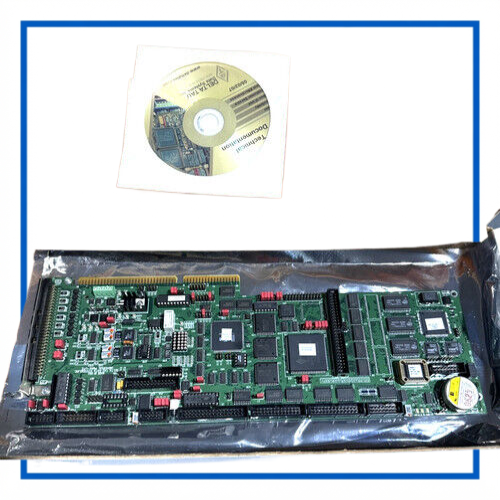
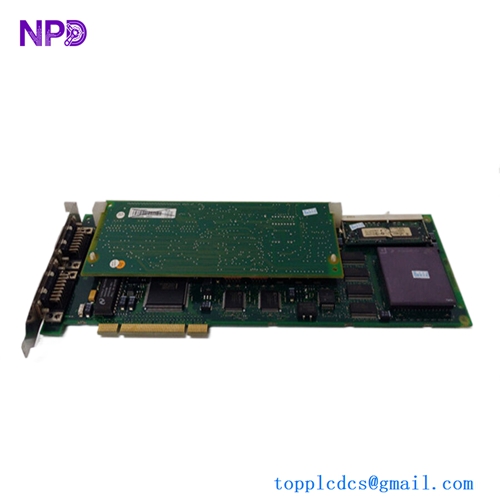
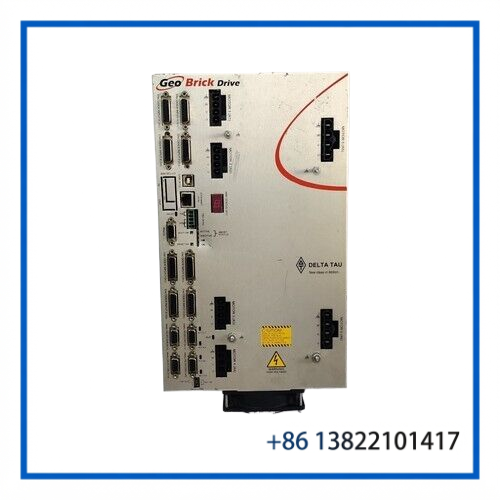
The OMRON DELTA TAU GBL6-F3-5F2-13D8C600 is a GEO Brick multi-axis drive designed for industrial motion-control applications requiring coordinated servo operation, encoder feedback, programmable motion control, and integrated drive electronics.
This configuration belongs to the Delta Tau GEO Brick 6-axis drive family. The GEO Brick architecture combines motion-control processing with multi-axis amplifier functions in a compact industrial drive platform. The F3 processor option corresponds to the 240 MHz Turbo PMAC2 processor configuration described in the GEO Brick documentation.
The exact listing identifies the unit as a Delta Tau GEO BRICK DRIVE, model GBL6-F3-5F2-13D8C600, with digital control and the NEW IDEAS IN MOTION platform. The listed condition is used/pre-owned.
📋 Product Datasheet
| Parameter | Specification |
|---|---|
| Brand | OMRON DELTA TAU |
| Model | GBL6-F3-5F2-13D8C600 |
| Product Series | GEO Brick |
| Product Name | GEO Brick 6-Axis Drive |
| Product Type | Multi-Axis Servo / Motion Control Drive |
| Axis Configuration | 6-Axis |
| Processor Option | F3 / Turbo PMAC2, 240 MHz |
| Control Type | Digital Motion Control |
| Platform | NEW IDEAS IN MOTION |
| Condition / Status | Used / Pre-Owned |
The GEO Brick documentation identifies the GBL6 family as a six-axis configuration and specifies the F3 option as a 240 MHz Turbo PMAC2 processor with 192K × 24 internal memory, 1M × 24 SRAM, and 4 MB flash memory. Exact configuration and installed options should always be confirmed from the unit nameplate and hardware markings before replacement.
⚙️ Key Features
- Delta Tau GEO Brick multi-axis drive architecture
- Six-axis motion-control configuration
- Turbo PMAC2 F3 processor option
- Integrated motion-control and amplifier functions
- Digital motion-control platform
- Encoder feedback interfaces for axis control
- Designed for coordinated multi-axis servo applications
- Supports industrial machine-control integration
- Compact architecture for machine-level motion systems
- Suitable for replacement and maintenance of existing Delta Tau installations
🏭 Industrial Motion-Control Applications
The GEO Brick platform is intended for applications where multiple servo axes must be controlled from a coordinated motion-control system.
Typical application areas include:
- CNC machinery
- Robotics and positioning systems
- Semiconductor and electronics manufacturing equipment
- Precision machine tools
- Packaging machinery
- Automated production equipment
- Multi-axis material handling
- High-speed positioning systems
- Specialized OEM machinery
For an existing machine, the most important consideration is not simply the model number. The complete configuration should be checked, including amplifier ratings, axis assignment, encoder interfaces, I/O options, communication configuration, firmware, and motor compatibility.
🔌 System Integration
The GEO Brick 6-axis architecture provides dedicated connections for motor outputs, encoder inputs, general-purpose I/O, analog I/O, and communication interfaces. The documented six-axis configuration includes encoder connections for the controlled axes and interfaces associated with the motion-control system.
When integrating a replacement unit, verify:
- Exact model number and suffix.
- Axis configuration.
- Processor option.
- Motor and amplifier requirements.
- Encoder type and feedback wiring.
- General-purpose I/O assignment.
- Analog I/O configuration.
- Communication interfaces.
- PMAC/Delta Tau software and firmware compatibility.
- Existing machine parameters and motion programs.
A replacement drive should match the original configuration as closely as possible rather than being selected solely by the GEO Brick family name.
🛠️ Installation & Maintenance
Before installation, disconnect all incoming power and follow the machine manufacturer’s electrical safety procedures.
Inspect the unit for:
- Damaged connectors
- Loose terminals
- Contaminated cooling paths
- Signs of overheating
- Damaged PCB areas
- Corrosion or oxidation
- Abnormal fan or ventilation conditions
- Missing hardware or covers
The GEO Brick documentation specifies airflow requirements around the drive and recommends installation within an enclosure capable of maintaining the required environmental conditions. Proper ventilation is important because excessive enclosure temperature can affect drive operation.
For long-term maintenance, keep a record of the drive’s model, complete configuration code, firmware/software version, machine application, and parameter backup.
🔍 Troubleshooting
Drive does not power up:
Check incoming power, auxiliary/control power, fusing, wiring, and visible signs of board damage.
Axis does not enable:
Check amplifier-enable signals, fault inputs, emergency-stop circuits, drive status, and controller configuration.
Encoder feedback fault:
Inspect encoder wiring, connector seating, feedback device compatibility, shielding, and axis assignment.
Motor moves incorrectly:
Verify motor phase connections, encoder polarity, axis configuration, servo parameters, and stored motion parameters.
Communication problem:
Check the physical communication connection, controller configuration, software settings, and applicable Delta Tau interface options.
Replacement unit behaves differently from the original:
Compare the complete configuration code and hardware options. Two GEO Brick units may belong to the same family while having different processor, axis, I/O, or amplifier configurations.
✅ First-Operation Checklist
Before placing the system into production:
- Confirm the complete model number: GBL6-F3-5F2-13D8C600.
- Compare the replacement unit with the original nameplate.
- Confirm six-axis configuration.
- Verify processor and hardware options.
- Check motor and encoder wiring.
- Confirm controller communication.
- Restore the correct machine parameters.
- Test each axis independently at low speed.
- Check direction, feedback, limits, and enable signals.
- Perform a controlled production test before returning the machine to full operation.
❓ FAQ
What is the GBL6-F3-5F2-13D8C600?
It is a Delta Tau GEO Brick multi-axis drive configured for six-axis motion-control applications.
Is this a PLC?
It is primarily a motion-control and multi-axis drive platform rather than a conventional general-purpose PLC.
What does F3 indicate?
The F3 option identifies the 240 MHz Turbo PMAC2 processor configuration in the GEO Brick documentation.
Can it replace another GEO Brick drive?
Only after comparing the complete configuration. Axis count alone is not sufficient to establish interchangeability.
Is the unit new?
The referenced listing identifies this particular unit as used/pre-owned. Actual physical condition should be confirmed before installation.
Should the machine parameters be backed up before replacement?
Yes. Motion programs, servo parameters, axis configuration, I/O assignments, and communication settings should be backed up whenever possible.
🔄 Related OMRON DELTA TAU Models / Series
- Delta Tau GEO Brick GBL4 Series
- Delta Tau GEO Brick GBL6 Series
- Delta Tau GEO Brick GBL8 Series
- Delta Tau GEO Drive Series
- Delta Tau Turbo PMAC2 Motion Controller
- Delta Tau PMAC2A Series
- Delta Tau UMAC Motion Controller
- Delta Tau ACC-24E2A Axis Interface Series
- Delta Tau ACC-11E I/O Interface Series
- Delta Tau PMAC-NC Motion-Control Platform
These products belong to related Delta Tau motion-control families; they should not be treated as direct replacements without checking the machine configuration, hardware options, software, and electrical requirements.
📦 Spare-Parts & Lifecycle Planning
For production equipment using Delta Tau motion-control hardware, keeping one verified spare can significantly reduce downtime when a drive failure occurs.
A practical spare-parts strategy should include:
- Criticality classification: Identify GEO Brick drives controlling high-value or bottleneck equipment.
- Configuration control: Record the complete model and option code rather than only “GBL6”.
- ABC inventory management: Assign higher stock priority to drives with long procurement cycles or limited availability.
- Parameter backup: Maintain current motion programs and servo parameters separately from the physical hardware.
- Compatibility records: Document motor, encoder, I/O, communication, and firmware requirements.
- Replacement testing: Test spare units before placing them into long-term storage when practical.
- Last-Time-Buy planning: For legacy Delta Tau equipment, review future availability and consider securing critical spares before supply becomes more restricted.