
Description
🔍 Product Overview
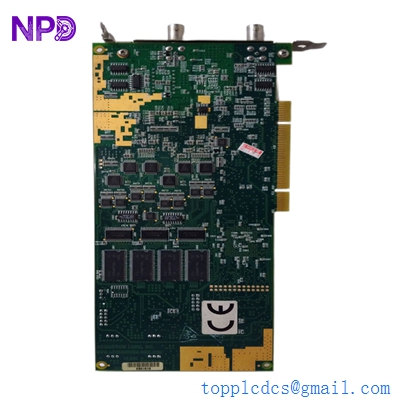
The Fugro REC4000LRS-01 is a high-performance Starfix 4100 LRS (Long Range System) receiver engine designed for precise marine positioning and navigation applications. Developed specifically for Fugro’s proprietary satellite correction networks, this ruggedized hardware module decodes dual-purpose L-band and tracking signals. It provides ultra-reliable, centimeter-level positioning accuracy for offshore survey vessels, drilling rigs, and marine construction platforms operating in harsh maritime environments.

⚙️ Technical Parameters & Specifications
- Model/Part Number: REC4000LRS-01
- Module Identification: Starfix 4100 LRS Receiver Card
- Chassis Integration Type: Rack-mountable / Internal Receiver Assembly
- Dimensions: 165 mm x 105 mm x 35 mm
- Weight: 0.42 kg
- Country of Origin: Netherlands / United Kingdom
🚀 Application Areas
- Offshore Hydrographic Surveying: Delivering precise baseline coordinates for subsea mapping and seismic exploration.
- Dynamic Positioning (DP) Systems: Acting as a highly stable reference sensor input for vessel heading and station-keeping.
- Marine Construction & Pipe-Laying: Ensuring pinpoint structural placement accuracy across global ocean basins.
- Dredging and Barge Management: Providing real-time vertical and horizontal positioning telemetry.
📖 Product Usage Instructions
The REC4000LRS-01 card is engineered for installation inside a dedicated Starfix receiver mainframe enclosure or integrated navigation console. Prior to handling, observe strict electrostatic discharge (ESD) precautions. Secure the card into its designated slot alignment rails and seat the backplane interface pins firmly. Connect the external active L-band/GNSS antenna coaxial cables to the ruggedized RF coaxial ports on the module face, ensuring optimal torque to minimize signal attenuation.
🌐 Communication Configuration Steps
- IP Address Setup: For network-attached setups, connect via the Starfix configuration software utility. Assign a dedicated static IP address matching your vessel’s onboard survey network infrastructure subnet.
- Station Number: Configure the designated receiver node index or NMEA talker ID identifier inside the software matrix settings to allow peripheral navigation computers to correctly parse the positioning sentences.
- Baud Rate: Set the serial port communications (RS-232/RS-422 ports) to align with the peripheral logging computers. The system supports standard baud distributions including 9600, 19200, 38400, or 115200 bps.
⚡ Power-Up & Commissioning Flow
- RF Line Audit: Verify that the antenna cable connections are tight and no physical shorts exist on the coaxial core line.
- Power Distribution: Apply the internal carrier system voltage (typically derived 5V/12V DC power lines from the host rack chassis).
- Boot Indicators: Monitor the integrated status LEDs. The power indicator should remain solid, followed by flashing sequence indicators as the internal processor runs its bootloader.
- Carrier Lock: Observe the signal lock indicator. Once the receiver tracks the target L-band satellite beams, the tracking LED will change state to confirm valid data decryption.
✅ Initial Operation Checklist
- Are the GNSS and L-band antenna cables routed away from high-interference shipboard radar and VHF transmission lines?
- Is the card properly locked into the main housing frame to withstand high hull vibrations?
- Does the interface configuration indicate a valid Signal-to-Noise Ratio (SNR) for the active correction satellites?
- Are the output NMEA data sentences successfully streaming to the vessel’s primary navigation processor?
❓ Common Questions (Q&A)
Q: What should I check if the receiver fails to obtain an L-band carrier signal lock?
A: Check for structural blockages (masts, cranes) obstructing the antenna’s clear view of the sky, verify the antenna inline amplifier voltage, and inspect all coaxial connectors for moisture ingress.
Q: Can this module decode standard uncorrected public GPS signals independently?
A: Yes, the unit functions as a high-grade GNSS sensor, but its main competitive utility comes from decoding Fugro’s encrypted Starfix differential correction streams.
Q: Does the REC4000LRS-01 require manual frequency tuning when sailing to a different global region?
A: The receiver parameters can be configured to auto-scan or update spot frequencies via the central Starfix operator console software when changing ocean sectors.