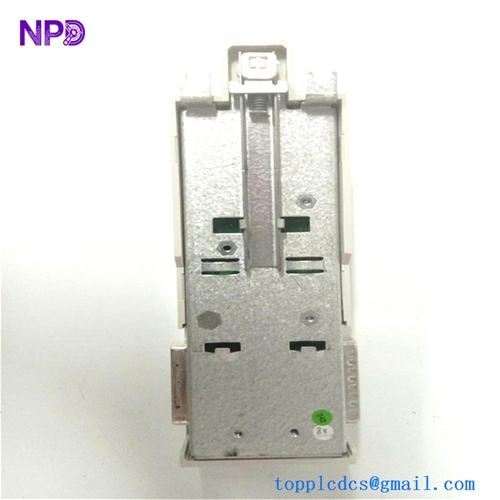
Description
The Triconex PI3381 is a high-density, safety-rated Pulse Input Module designed for use in the Tricon TMR (Triple Modular Redundant) Safety Instrumented System. This module is engineered to monitor and process high-frequency signals from pulse-generating field devices, such as flow meters, tachometers, and position sensors. By providing triple-redundant signal acquisition, the PI3381 ensures the high availability and fault-tolerant integrity required for emergency shutdown (ESD) and fire and gas protection systems in hazardous industrial environments, such as oil refineries, petrochemical plants, and power generation facilities.
Product Specifications
- Model Number: PI3381
- Manufacturer: Triconex (Schneider Electric)
- Product Series: Tricon TMR Safety System
- Function: Pulse Input Module
- Dimensions: 30 mm x 275 mm x 265 mm (Standard Tricon module size)
- Weight: 1.80 kg (3.97 lbs)
- Country of Origin: United States (USA)
- Input Channels: 8 independent pulse input channels
- Frequency Range: 0.05 Hz to 20 kHz
- Isolation: Optically isolated to 1500 VDC between field and system logic
- Diagnostic Features: Continuous self-testing for channel health and pulse-count integrity
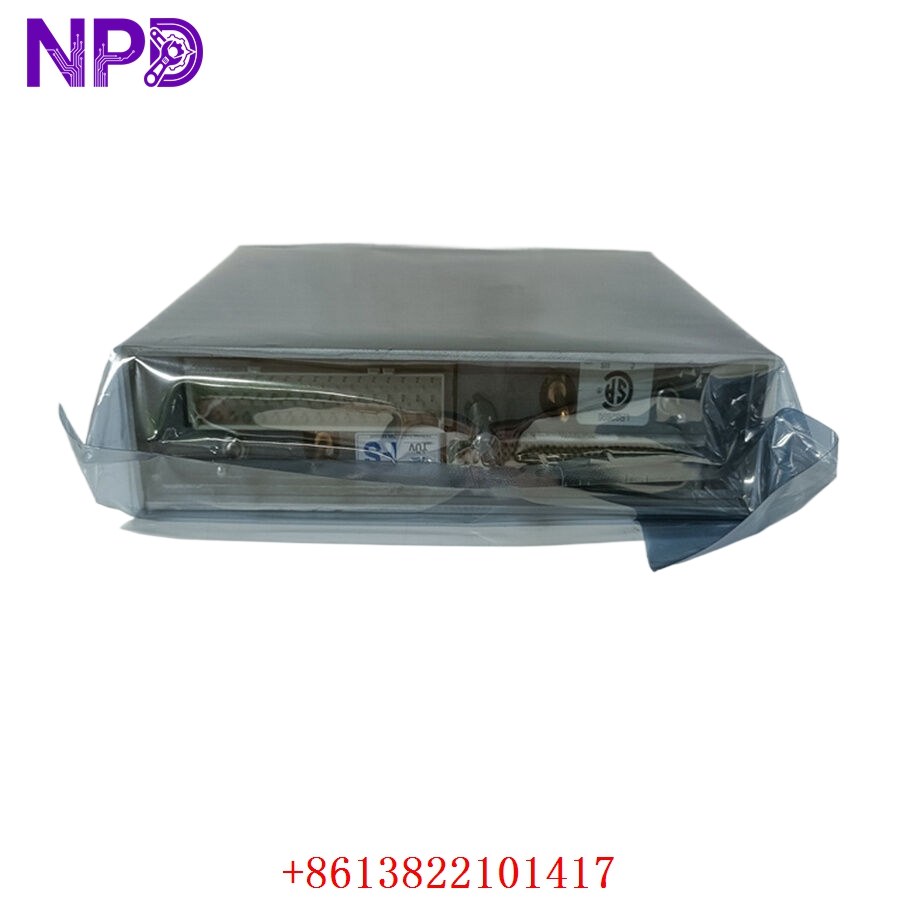
TRICONEX PI3381
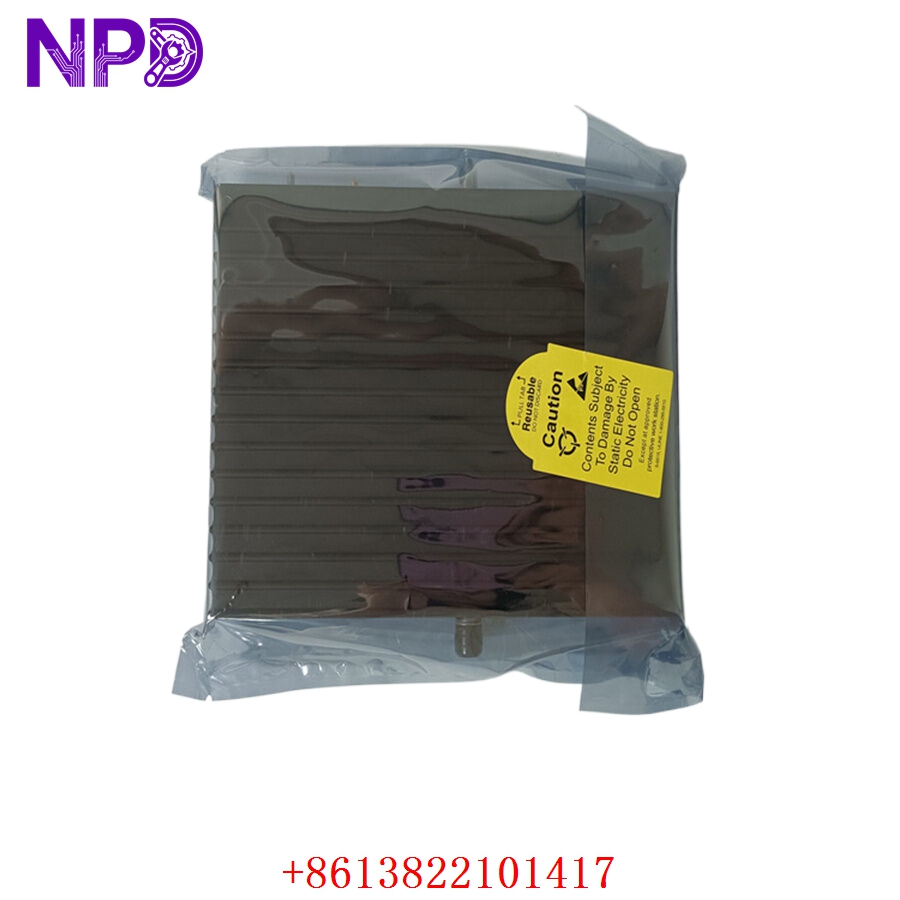
TRICONEX PI3381
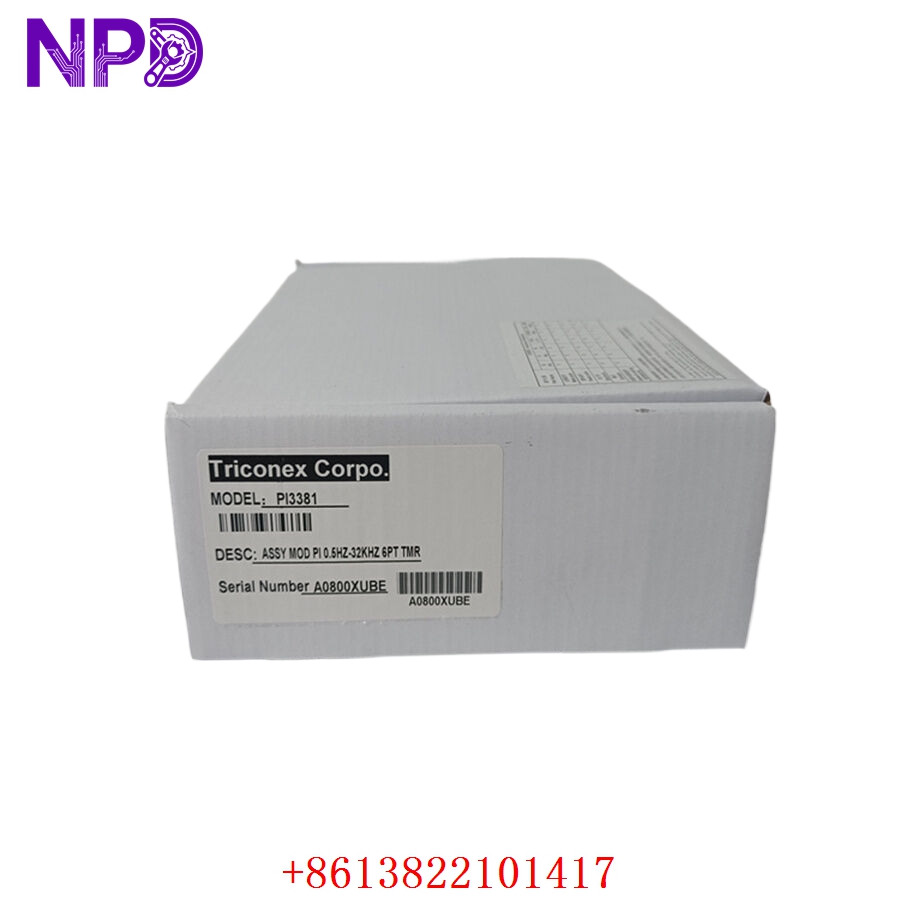
TRICONEX PI3381
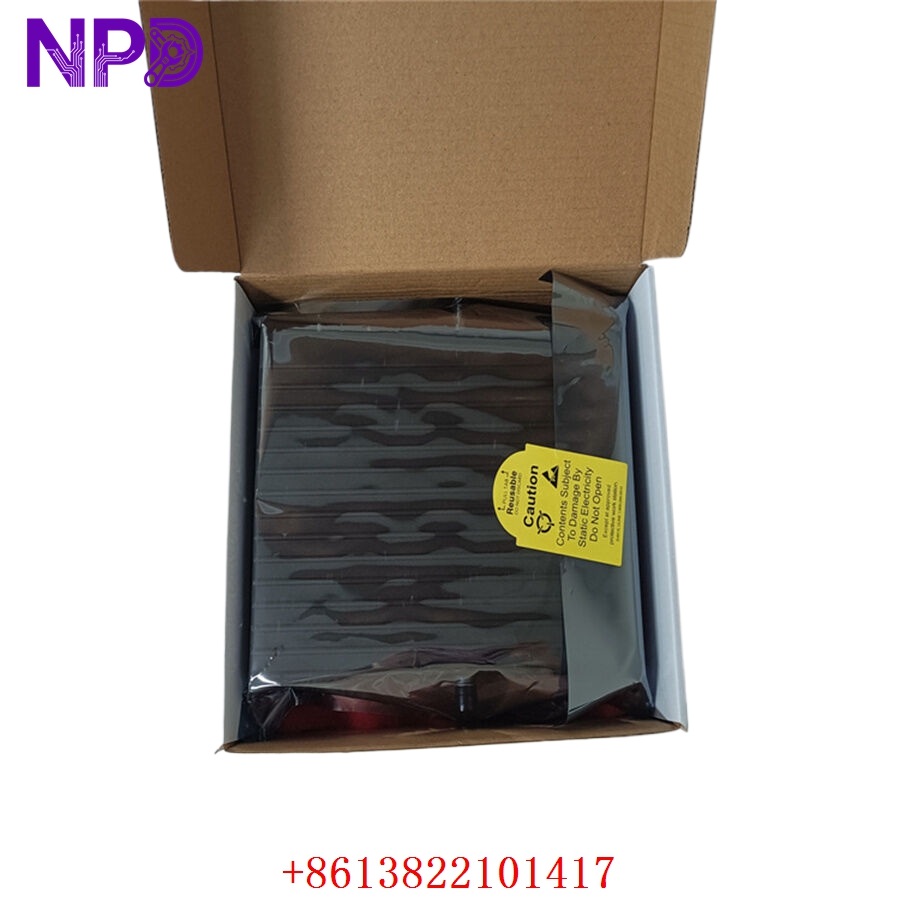
TRICONEX PI3381
Applications
- Turbine Speed Monitoring: Provides critical overspeed protection by monitoring magnetic pickup sensors on rotating turbine shafts.
- Flow Measurement: Integrates pulse signals from flow meters to manage and monitor mass or volumetric flow rates in safety-critical pipelines.
- Positioning Systems: Tracks high-speed pulse trains from encoders or proximity switches to determine precise valve or actuator positioning in safety-rated loops.
- Emergency Shutdown (ESD): Acts as a primary sensor interface for initiating automated shutdowns if input pulse rates cross pre-defined safe thresholds.
Product Usage Instructions
- TMR Architecture Mounting: The PI3381 is a TMR module and must be installed in a Tricon chassis that supports Triple Modular Redundant operation. Ensure the module is properly seated in the backplane slot, allowing the Tricon main processor to perform voting logic across all three modules.
- Field Wiring: Connect the pulse-generating sensors to the associated Field Termination Assembly (FTA). Shielded twisted-pair cabling is strongly recommended to minimize electromagnetic interference (EMI) on high-frequency signal lines.
- Configuration: Use the Triconex TriStation 1131 software to configure the input scaling, pulse threshold voltages, and frequency range. Define the module in the I/O configuration tree to ensure the main processor correctly polls the input data.
- Operational Health Checks: Use the TriStation diagnostic tools to verify that all eight channels are active. The module faceplate LEDs indicate “Active,” “Fault,” and “I/O” status; a steady “Active” light confirms the module is participating in the TMR voting process.
Frequently Asked Questions (Q&A)
- Q: Does the PI3381 support multiple signal types? A: Yes, the module can be configured to accept various pulse inputs, including magnetic pickups, dry contacts, and voltage-level pulses, provided they fall within the specified voltage and frequency range of the module’s input circuitry.
- Q: Is this module hot-swappable? A: Yes, because the Tricon system is Triple Modular Redundant, the PI3381 can be removed and replaced while the system is online without interrupting the safety function, as the remaining two modules continue to process the signal.
- Q: What is the primary advantage of the PI3381 over a standard analog input module? A: Unlike analog modules that measure voltage or current levels, the PI3381 is specifically optimized to count and measure the frequency of pulses. This provides much higher accuracy and faster response times for speed and flow-rate monitoring applications.
- Q: How does the PI3381 handle input signal noise? A: The module includes configurable filtering and thresholding capabilities within the TriStation software. By adjusting these software parameters, users can effectively filter out “bouncing” or electrical noise from field wiring before the data is processed by the safety logic.