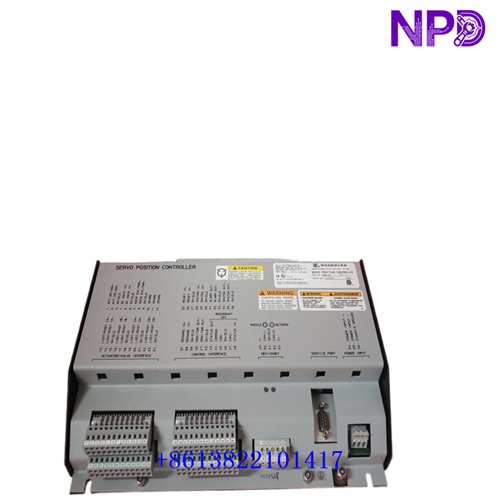

Description
⚙️ Product Specifications (Datasheet)
| Parameter | Value |
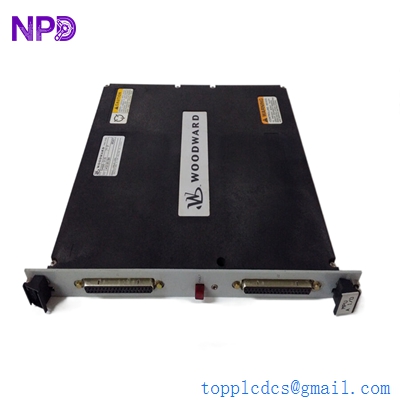
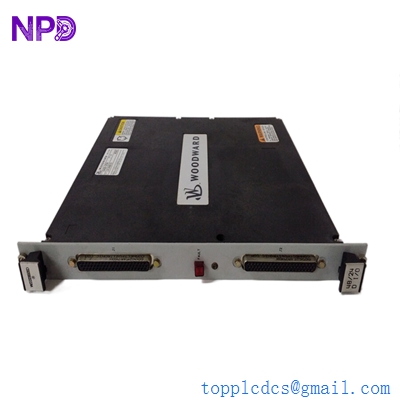
| Model / Part Number | 723 Series (P/N: 8280-219) |
| Device Type | Programmable Digital Speed & Load Controller |
| Update Time Groups | Configurable Executions from 10 ms to 80 ms |
| Network Interface | 2 Local Operating Network (LON) Channels (FT-10 / Local Net) |
| Operating Temperature | -40°C to +70°C (-40°F to +158°F) |
| Power Supply Voltage | Low Voltage DC Version (18 to 40 VDC continuous, 24/32 VDC Nominal) |
| Speed & Load Features | Remote Speed/Load Settings, Dual Dynamics, Flexible Ramping |
| Serial Communications | Dual Serial Ports (RS-232, RS-422, RS-485 Modbus RTU / ASCII) |
| Housing Material | Heavy-Duty Sheet Metal Chassis |
| Country of Origin | USA (Woodward, Inc.) |
🚀 Standard Operating Procedure
- 🛠️ Pre-Start Loop Check: Confirm low-voltage power supply wiring matches 18–40 VDC specifications. Verify connections for speed sensors, LON channels, and remote analog speed/load bias inputs.
- ⚡ Power On Sequence: Switch on DC control power. Ensure status indicator LEDs illuminate properly as the unit completes internal self-testing.
- 🕹️ Control Mode Selection: Select Local or Remote operating control via discrete inputs or LON network commands.
- 🏎️ Prime Mover Start: Initiate the engine or turbine start command. The 8280-219 executes programmed acceleration ramps using configured 10–80 ms update execution rates for fast, precise governor response.
- 📊 Operational Monitoring: Monitor real-time engine speed, remote speed setpoint tracking, and LON node communication statuses using Watch Window or Handheld Programmer tools.
- 🛑 Controlled Shutdown: Initiate the normal stop sequence to smoothly ramp down speed and fuel demand before de-energizing the actuator circuit.
⚙️ Parameter Configuration Guide
- 💻 Connect a PC with Woodward Watch Window or a Handheld Programmer (HHP) to the dedicated serial service port.
- 🔑 Log in with the required security level passcode to access configuration parameters.
- 📑 Navigate to time-critical parameter setup menus, including PID Rate/Gain Execution Groups (10 ms to 80 ms rates), Remote Speed Setpoint Scaling, and LON Channel Configuration.
- ✏️ Adjust loop response times and setpoint limits to match prime mover dynamic requirements.
- 💾 Save configuration values to non-volatile EEPROM memory prior to exiting configuration mode to retain all custom settings.
🔄 Manual / Automatic Mode Switching
- 🖐️ To Select Manual Mode: Actuate the designated manual discrete contact or set a manual override in Watch Window. Manual mode grants direct operator control over local speed references and fuel limiters.
- 🤖 To Select Auto Mode: Toggle control inputs back to Automatic mode. The controller automatically balances speed governing loops and follows remote speed/load reference commands over LON network channels or 4–20 mA inputs.
❓ Frequently Asked Questions (Q&A)
- ❓ Q: What is the significance of the configurable update time groups (10 to 80 ms)?
💡 A: Configurable update groups allow critical speed calculation and actuator control loops to execute as fast as 10 ms for high-dynamic stability, while non-critical telemetry runs at 80 ms to optimize CPU processing.
- ❓ Q: What are the two Local Operating Network (LON) channels used for?
💡 A: The twin LON channels enable high-speed digital communications between multiple Woodward controllers, expansion I/O modules, and distributed plant automation networks using standard LON protocols.
- ❓ Q: How does the remote speed/load setting feature function?
💡 A: Remote speed/load settings accept external 4–20 mA signals, 0–5 V inputs, or digital network commands to adjust governor setpoints dynamically from a remote SCADA, DCS, or master vessel panel.