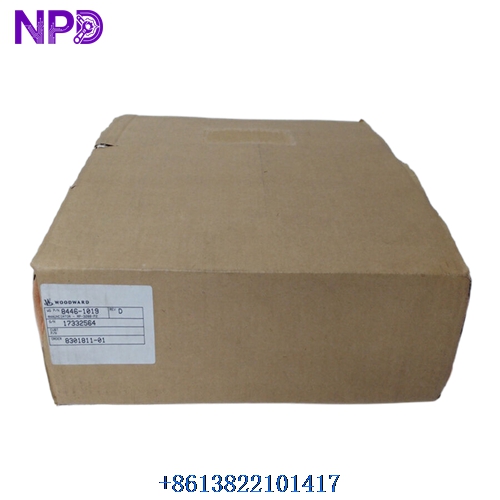

Description
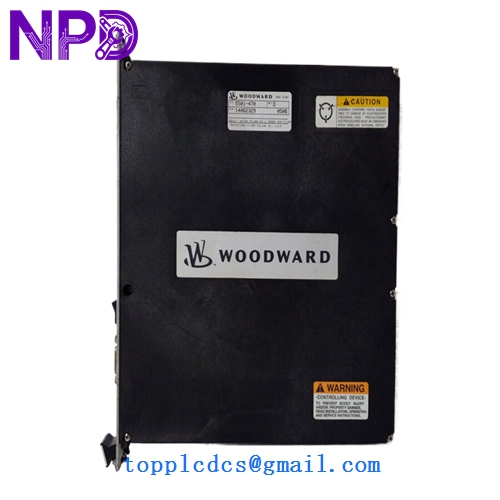
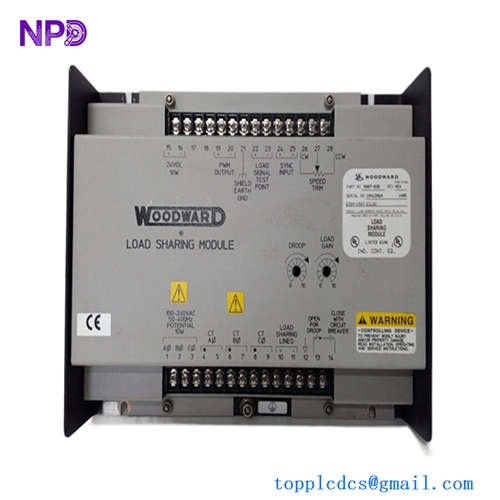
The Woodward 8290-148 is a high-performance isochronous speed controller within the EPG (Electrical Powered Governor) series, specifically configured for 24-volt DC electrical systems. Designed to maintain an engine at a precise, constant rated speed regardless of load variations, this controller is a staple in critical power generation applications. Its isochronous control logic ensures that the prime mover remains rock-steady, meeting the stringent requirements for frequency stability in grid-parallel or standalone power distribution.
As a high-reliability Woodward 8290-148 unit, it is built to manage the rigorous demands of industrial operation. The controller supports a maximum power consumption of 95 W, and to ensure consistent performance without the risk of low-voltage dropouts, the system must be paired with a battery charger capable of providing a continuous output of at least 5 A. This hardware configuration is essential for protecting the controller’s internal electronics and ensuring the actuator receives full power during peak load transitions.
Technical Specifications
- Product Name: EPG Isochronous Speed Controller
- Model Number: 8290-148
- Operating Voltage: 24 V DC
- Power Consumption: 95 W (Maximum)
- Required Battery Charger Capacity: 5 A (Minimum)
- Control Mode: Isochronous (Constant Speed)
- Steady State Speed Band: High-precision rated speed maintenance
- Weight: Approximately 0.58 kg
- Dimensions: Standardized EPG modular housing
- Origin: Engineered and manufactured to rigorous Woodward industrial standards
Frequently Asked Questions
⚙️ Why is a 5 A battery charger strictly required?
The 95 W peak power consumption of the EPG system (controller + actuator) represents a significant current draw at 24 V (\approx 4 A). A charger with a minimum 5 A rating provides the necessary overhead to power the governor while simultaneously maintaining the float charge of the battery bank. Anything less may result in a system voltage drop during high-load transients, leading to governor instability.
🔌 How does this model achieve its steady-state speed performance?
The 8290-148 utilizes advanced proportional-integral-derivative (PID) control algorithms. By continuously analyzing the difference between the actual engine speed and the set speed, it makes micro-adjustments to the actuator position. This constant monitoring allows the governor to settle at the rated speed with minimal deviation, even when the engine is subjected to rapid load changes.
⚠️ Can this 24V model be adapted for a 12V engine?
No, the 8290-148 is designed exclusively for 24V architectures. Attempting to power this unit with 12V will result in insufficient electromagnetic force within the controller’s internal circuitry and the actuator, rendering it unable to control the engine properly. Conversely, applying higher voltages or mismatched power supplies will likely cause permanent component failure.
🛠️ What is the recommended maintenance for this governor setup?
Regularly check the battery voltage at the controller terminals with a digital multimeter while the engine is under load. If the voltage drops below the threshold defined in your manual, inspect the battery charger performance, check for corroded cable connections, and ensure that the wiring gauge is sufficient for the current draw.
Recommended Woodward Series Models
To support your power generation and governing infrastructure, the following Woodward components are frequently deployed alongside the 8290-148:
- Woodward 8256-022 EPG Actuator
- Woodward 8256-079 EPG Actuator (Position Feedback)
- Woodward 1724 EPG Actuator Series
- Woodward 8290-103 (Controller with Position Feedback)
- Woodward 8290-075 (High-Frequency Controller)
- Woodward 8290-028 (24V 501 Controller)
- Woodward EG-3P Actuator
- Woodward EG-6P Actuator
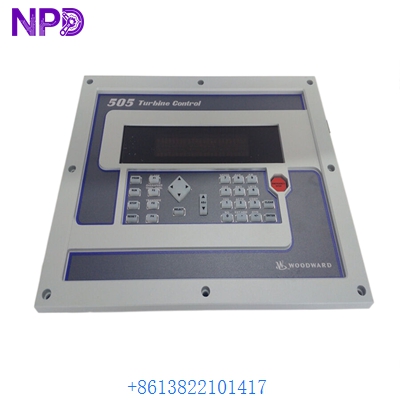
- Woodward 505 Digital Governor
- Woodward 723PLUS Digital Control