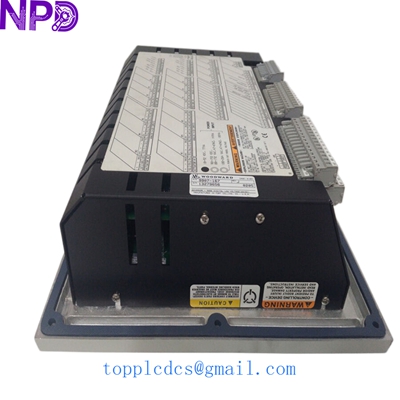
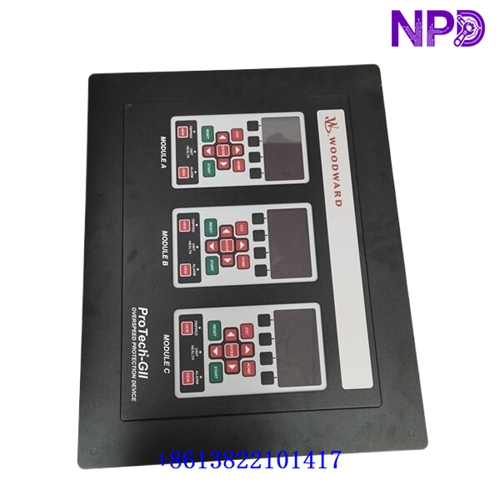

Description
⚙️ Product Datasheet & Technical Parameters
- Brand: WOODWARD
- Model: 8406-121 (EGCP-2)
- Series: EGCP-2 (Engine Generator Control Package) Series
- Product Name: Digital Generator Controller / Engine Management Package
- Place of Origin: United States
- Condition Status: Brand New / Factory Original Surplus
- Dimensions: Approx. 282 mm x 358 mm x 69 mm
- Weight: Approx. 1.8 kg
- Original Region: USA Manufacturing Plant
- Power Supply Rating: 9–32 VDC (SELV, 24V Nominal)
- PT Sensing Range: 50–150 VAC low voltage input
- CT Input: 0–5 A rms current transformer input
- Network Capacity: Designed to network and control up to eight (8) un-manned generator sets
📖 Product Overview & Description
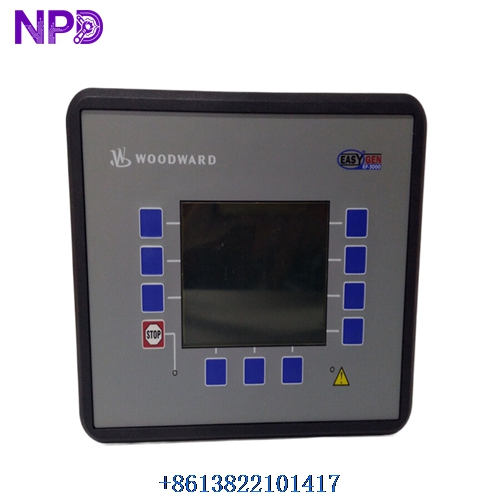
The Woodward 8406-121 is a microprocessor-based EGCP-2 (Engine Generator Control Package) controller designed to automate, synchronize, and protect diesel or gas engine-driven generator sets. It functions as a complete management unit capable of handling standalone operations or complex multi-unit utility paralleling.
As noted, a network utilizing these controls is fully capable of coordinating up to eight un-manned generator sets for automated backup power generation, baseload power, or peak shaving applications. It combines engine control, true real (kW) load control, reactive (kVAR) control, automatic sequencing, and comprehensive generator and engine protection into a single panel-mounted interface equipped with dual backlit LCD screens and a membrane keypad.
🛠️ Operating Specifications & Usage Methods
Proper installation and wiring practices are essential for achieving stable network communication and precise synchronization. All low-voltage potential transformer (PT) inputs (50–150 VAC), current transformer (CT) lines, DC power supply wires (9–32 VDC), and serial communication cables (Modbus / RS-485) must be properly shielded and routed away from high-voltage power lines and variable frequency drives to prevent electromagnetic interference.
During system configuration, use the front-panel interface or supported PC software tools to establish engine parameters, protection thresholds, load-sharing settings, and automatic sequencing rules across the multi-unit network. Verify signal fidelity across all monitoring channels prior to initiating live grid-parallel or isolated bus tests.
⚡ Startup & Shutdown Sequence
Following a structured startup and shutdown sequence protects prime movers, alternators, and switchgear components from mechanical shock and electrical transients.
- Startup Sequence: First, inspect all auxiliary control circuits, safety interlocks, and fuel supply valves. Energize the 9–32 VDC control power supply to the 8406-121 module and verify that the system diagnostics and network status indicators show normal operation. Initiate the automatic sequence or manual start command to crank the prime mover, bringing it up to its rated operational speed and nominal voltage. Once stabilized, the unit coordinates generator synchronization, active kW loading, and reactive kVAR sharing across the networked generator array.
- Shutdown Sequence: Begin by ramping down active power generation through automated load-shedding or manual unloading commands until minimum load is reached. Open the main generator circuit breaker to decouple the unit from the shared bus or utility grid. Allow the prime mover to run at a no-load idle state for thermal cool-down stabilization. Issue the engine stop command, and finally de-energize the DC control power supply once all equipment has come to a complete standstill.
❓ Frequently Asked Questions (Q&A)
- Q1: What is the primary function of the Woodward 8406-121 controller?
- A1: It serves as a comprehensive EGCP-2 microprocessor-based generator control and engine management package that handles synchronization, real power (kW) load control, reactive power (kVAR) regulation, and multi-unit sequencing.
- Q2: How many generator sets can be linked within a network using these controllers?
- A2: A network of these controls is capable of seamlessly coordinating up to eight un-manned generator sets for backup power, baseload, or peak shaving operations.
- Q3: What are the electrical input ratings specific to the 8406-121 model?
- A3: This specific model features a 50–150 VAC potential transformer (PT) sensing input range, a 0–5 A rms current transformer (CT) input, and operates on a 9–32 VDC power supply.