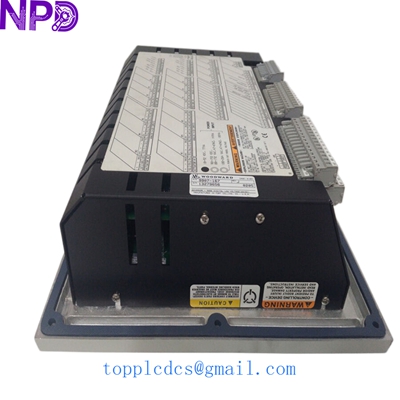
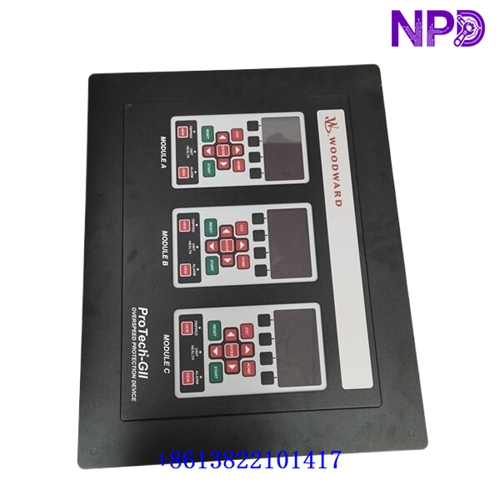

Description
⚙️ Product Datasheet & Technical Parameters
- Brand: WOODWARD
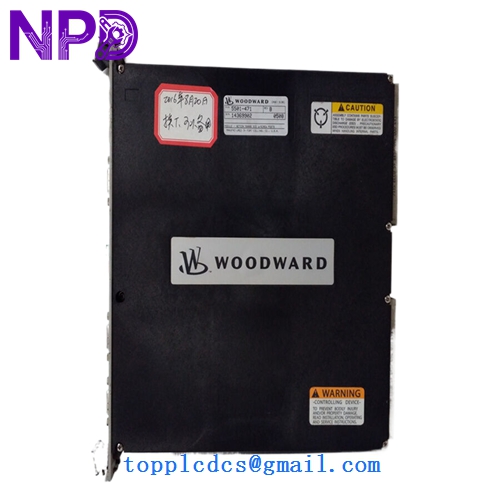
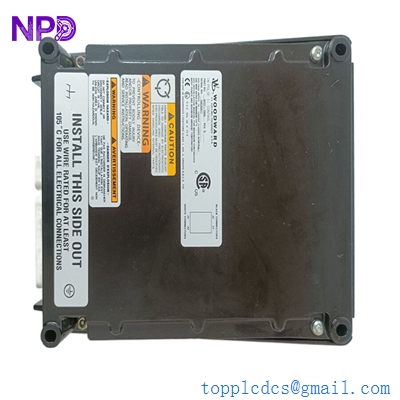
- Model: 8440-1977 (MSLC-2)
- Series: MSLC-2 Master Synchronizer and Load Control Series
- Product Name: Master Synchronizer and Load Control Unit
- Place of Origin: United States
- Condition Status: Brand New / Factory Original Surplus
- Dimensions: Standard Panel Mount Enclosure (Approx. 144mm x 144mm x 100mm)
- Weight: Approx. 1.0 kg
- Original Region: USA Manufacturing Plant
- Current Inputs & Power Supply: 1A Current Transformer (CT) inputs; flexible 12/24 VDC (8 to 40 VDC) wide-range power supply input
- Wiring & Operating Modes: Configurable for 3-phase, 4-wire (3ph-4w) wiring phase systems; can also be operated in a strictly dedicated synchronizer mode
📖 Product Overview & Description
The Woodward MSLC-2 (Part 8440-1977) is an advanced, compact microprocessor-based master synchronizer and load control unit designed for multi-generator power generation systems. It serves as the central coordination hub for complex power networks, managing system-wide synchronization to utility grids or main distribution buses, power factor regulation, and import/export power control.
Featuring 1A Current Transformer (CT) inputs and a wide-range 8 to 40 VDC power supply, the MSLC-2 offers high installation flexibility. It supports 3-phase, 4-wire (3ph-4w) electrical configurations and can be configured to operate in a strictly dedicated synchronizer mode, making it adaptable to various industrial switchgear architectures and utility tie requirements.
🛠️ Operating Specifications & Usage Methods
Proper installation and wiring are essential for stable system performance and accurate measurements. All Potential Transformer (PT) voltage lines, 1A Current Transformer (CT) secondary leads, and communication wiring must use shielded twisted-pair cables routed safely away from high-voltage distribution lines and variable frequency drives to prevent electrical noise interference.
During system commissioning, configure the MSLC-2 parameters—including nominal voltage, 3-phase 4-wire phase settings, synchronizer limits, and load control thresholds—using the front panel interface or authorized configuration software. Verify communication links and signal integrity across all inputs before initiating live master breaker tie tests.
⚡ Startup & Shutdown Sequence
Following a structured startup and shutdown sequence protects the primary electrical infrastructure, plant switchgear, and generation assets from mechanical shock and voltage transients.
- Startup Sequence: First, inspect all auxiliary control circuits, safety interlocks, and master breaker mechanisms. Energize the 8 to 40 VDC control power supply to the MSLC-2 and confirm that all status indicators and network communications display normal operation. Bring individual generator sets online and stabilize the plant bus. Once generation is steady, engage the MSLC-2 master synchronizer mode to monitor the utility tie or bus lines, allowing the unit to issue automatic close commands once conditions safely align.
- Shutdown Sequence: Begin by ramping down plant import/export power levels or transferring active loads away from the utility tie through the master control interface. Open the main utility tie breaker to decouple the plant network from the external grid. Proceed to shut down individual generator units sequentially, allowing the prime movers to undergo thermal cool-down before bringing them to a complete stop. Finally, de-energize the MSLC-2 control power supply.
❓ Frequently Asked Questions (Q&A)
- Q1: What power supply range does the Woodward 8440-1977 MSLC-2 support?
- A1: It supports a flexible 12/24 VDC wide-range power supply spanning from 8 to 40 VDC.
- Q2: What current transformer (CT) input rating does this specific model use?
- A2: Part number 8440-1977 is equipped with 1A Current Transformer (CT) inputs.
- Q3: Can the MSLC-2 be configured for specific wiring phases or specialized operation?
- A3: Yes, it can be set for 3-phase, 4-wire (3ph-4w) wiring configurations and can also be operated in a strictly dedicated synchronizer mode depending on plant requirements.