
Description
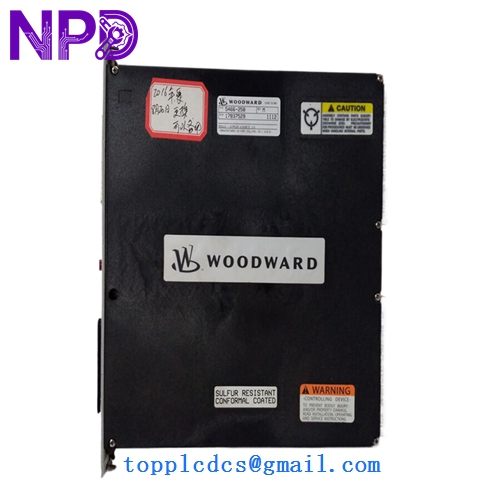
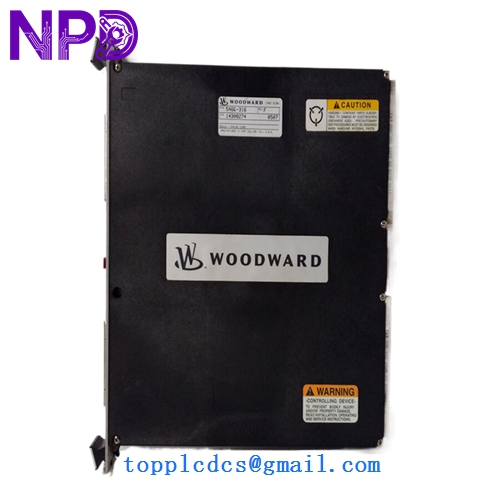
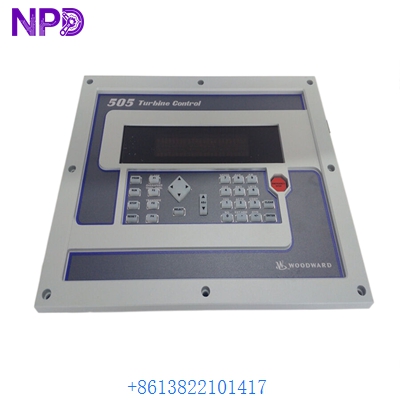
- The Woodward 9905-372 is a microprocessor-based digital governor module belonging to the well-established 505 series. It is configured to provide reliable, precise speed and load regulation for single-valve or split-range steam turbines. Utilizing advanced field-programmable algorithms, this unit ensures high operational efficiency, transient stability, and critical overspeed protection in demanding industrial environments.
Product Specifications
- Model Number: 9905-372
- Manufacturer: Woodward
- Control Type: Digital Governor (505 Series)
- Input Voltage: 18–32 VDC (Standard Industrial DC Input)
- Speed Sensing Input: Dual Magnetic Pickup (MPU) channels
- Actuator Signal Output: 4–20 mA or 20–160 mA current loops
- Communication Interface: RS-232 / RS-422 / RS-485 Modbus RTU protocols
- Operator Interface: Integrated high-visibility display with dynamic membrane keypad
- Operating Temperature: -25°C to +65°C
- Dimensions: 483mm x 177mm x 103mm (Standard Panel/Rack Mount)
- Weight: 3.5 kg (7.72 lbs)
- Country of Origin: USA
Application Fields
The 9905-372 is universally deployed across heavy engineering sectors where steam turbine asset reliability is critical:
- Utility and captive power plants managing synchronous generator sets.
- Chemical processing and petroleum refining plants driving large process compressors.
- Heavy marine vessels utilizing steam turbine propulsion or auxiliary turbo-generators.
- Paper mills and textile factories leveraging process steam extraction and speed-regulated mechanical drives.
Usage Instructions
Mount the Woodward 9905-372 inside a secure, low-vibration control panel enclosure. All low-voltage signal wiring—especially the dual speed sensor (MPU) inputs—must be terminated using individual twisted-pair shielded cables to prevent electrical noise from disrupting the frequency calculation. When powering up the unit for the first time, navigate through the password-protected “Configure Mode” using the front keypad to input key system parameters like flywheel gear tooth count, critical speed bands, and proportional-integral-derivative (PID) initial gains. Always execute a stroke test on the turbine steam valve actuator via “Service Mode” before starting the actual steam-admission process.
Frequently Asked Questions (Q&A)
Q: How does the dual speed sensor input logic operate on this module? A: The 9905-372 reads both speed channels simultaneously for redundancy. If one MPU signal suffers from a drop in voltage or erratic noise, the internal safety logic smoothly transitions to the healthy channel and issues a diagnostic alarm instead of shutting down the turbine completely.
Q: Can this unit handle remote speed reference adjustments? A: Yes. The control algorithm accepts an external 4–20 mA analog signal or Modbus network commands to bias the internal speed reference, making it ideal for remote load-dispatching or automatic synchronization systems.
Q: What is the correct protocol for resolving a “CPU Fault” alarm code? A: First, cycle the 24 VDC power supply lines to reset the microprocessor. If the error code remains after re-booting, it implies an internal hardware failure, and the module should be pulled for factory repair or swapped with a verified spare to avoid compromising turbine overspeed protection.
Related Model Recommendations
- Woodward 9905-971 (505 Standard Valve Controller)
- Woodward 9905-973 (505E Extraction Turbine Control)
- Woodward 9907-164 (505 Field-Mount Version)
- Woodward 8200-1302 (Peak 150 Digital Governor)
- Woodward 5466-1035 (MicroNet TMR CPU)