
Description
Product Datasheet & Technical Parameters
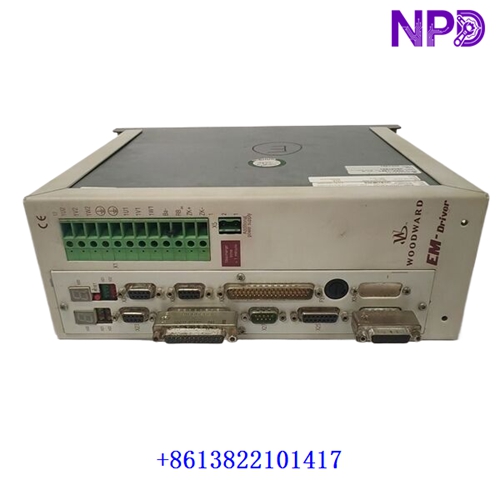
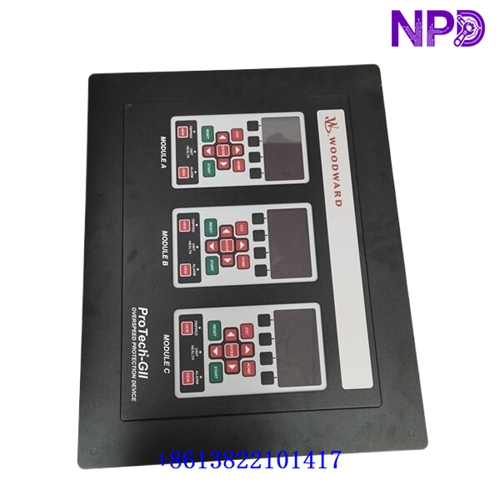
- Brand: WOODWARD
- Model: 9905-795
- Series: DSLC (Digital Synchronizer and Load Control) Series
- Product Name: Digital Synchronizer and Load Control Unit
- Manufacturing Origin: United States
- Physical Condition: Brand New / Factory Sealed
- Dimensions: Standard Industrial Enclosure Module (461 \times 265 \times 59 mm)
- Weight: Approx. 6 lbs 14 oz (3.12 kg)
- Country of Origin: USA
- Power / Input Rating: Three-phase AC generator application, Wye PT configuration, 120/240 VAC voltage input, \pm 3 VDC speed bias output, Full Functions
Product Overview & Introduction
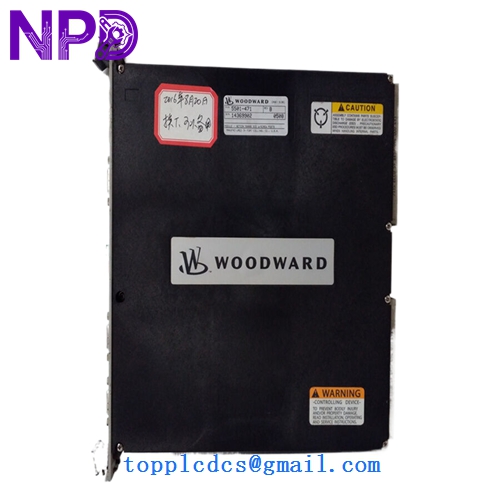
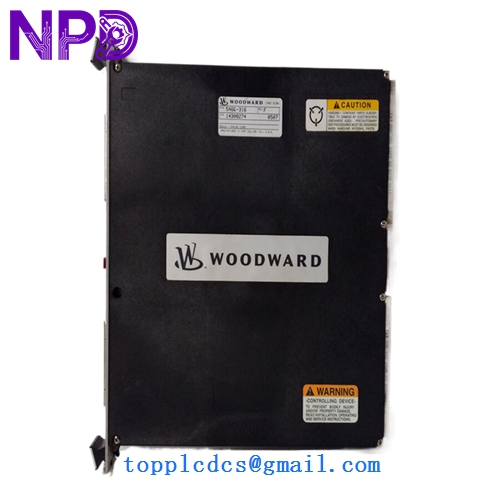
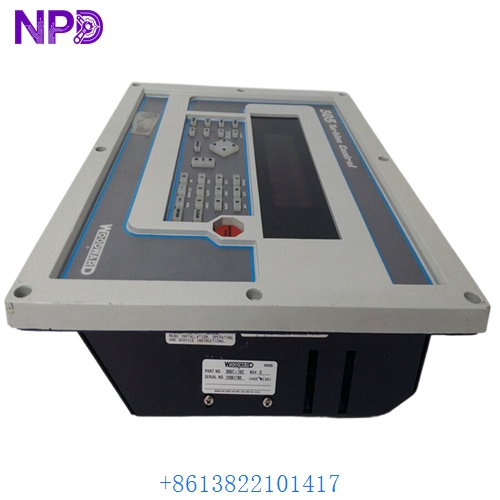
The WOODWARD 9905-795 is a high-performance, microprocessor-based Digital Synchronizer and Load Control (DSLC) unit engineered specifically for three-phase AC generator systems. Designed with a Wye potential transformer (PT) configuration and a flexible 120/240 VAC voltage input, it provides precise digital synchronization, frequency matching, and automated active power load sharing across parallel generator applications. Featuring a bipolar \pm 3 VDC speed bias output and full functional capabilities, this robust control unit ensures seamless operational stability and safety during parallel switching and load management tasks in critical industrial environments.
Operational Specifications & Guidelines
Prior to installation or handling, ensure that all electrical power sources are completely de-energized and discharge any static electricity from your body to ground by touching a grounded metal object, as the unit is static-sensitive. Mount the 9905-795 module securely inside a protective sheet metal panel control enclosure, maintaining an operating temperature range between -40^\circC and 70^\circC and relative humidity levels up to 95\%. Connect the DC power supply, 120/240 VAC voltage sensing lines (Wye PT configuration), \pm 3 VDC speed bias output lines, and three-phase generator bus wiring strictly in accordance with the manufacturer’s wiring schematics. Verify all terminal connections and ensure system grounding integrity before restoring power.
Startup & Shutdown Sequencing
To prevent breaker tripping, out-of-phase synchronization, or system instability, operators must strictly follow the defined startup and shutdown procedures.
- Startup Sequence:
- Verify all external wiring, Wye PT sensing inputs, control power connections, and safety interlocks are securely fastened.
- Energize the DC control power supply to the WOODWARD 9905-795 module and wait for the internal diagnostic self-test to complete successfully.
- Start the prime mover and allow it to reach rated nominal speed and thermal stability under governor control.
- Enable the synchronizer module to monitor bus and generator frequency, voltage, and phase parameters.
- Engage the automatic synchronizing and load-sharing mode, allowing the unit to execute precise speed bias adjustments via the \pm 3 VDC output interface and issue the close command to the circuit breaker precisely at the synchronous point.
- Shutdown Sequence:
- Gradually transfer active electrical load away from the generator set back to the main utility grid or companion units until minimum baseline load is achieved.
- Open the main generator circuit breaker manually or via system command to isolate the unit electrically from the busbar.
- Initiate the prime mover cool-down cycle at idle speed for the required duration.
- Issue the stop command to shut down the engine or turbine completely.
- De-energize the auxiliary control power to the module only after the prime mover has come to a complete standstill.
Frequently Asked Questions (Q&A)
- Q1: What are the voltage input and PT configuration specifications for the WOODWARD 9905-795?
- A1: The unit features a 120/240 VAC voltage input range and utilizes a Wye potential transformer (PT) configuration for three-phase AC generators.
- Q2: What type of speed bias output does this specific DSLC model utilize?
- A2: The 9905-795 model is equipped with a bipolar \pm 3 VDC speed bias output interface.
- Q3: What precautions should be observed when installing this DSLC controller?
- A3: Technicians must ensure all power sources are locked out, discharge static electricity to a grounded metal object before handling the unit due to its static-sensitive electronics, and follow standard wiring diagrams.