Description
Product Description
The Benshaw RB2-1-S-361A-16C is an open-chassis solid-state soft starter with integrated bypass contactors and MX2 motor control technology. It is designed to control the starting and stopping of three-phase AC motors by regulating motor voltage during acceleration and deceleration.
With a nominal current rating of 361 A and an operating voltage range of 240–575 VAC, this RB2 model is suitable for large industrial motor applications. Its integrated bypass arrangement reduces heat dissipation during normal running, while the modular power section supports maintenance of individual phase assemblies.
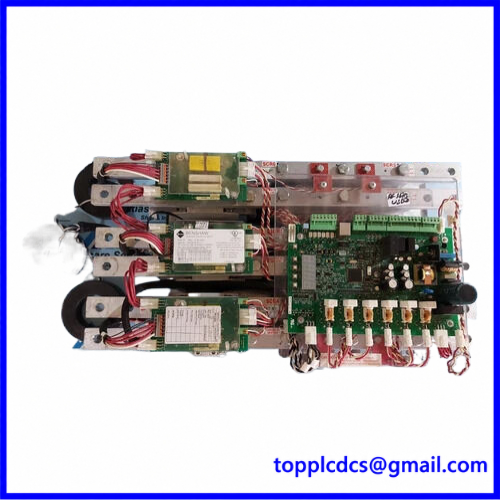
RB2-1-S-361A-16C
⚙️ Product Parameters
- Brand: Benshaw
- Model: RB2-1-S-361A-16C
- Product Number: 2028081
- Product Name: RB2 Open Chassis Soft Starter
- Product Type: Three-Phase Solid-State AC Motor Starter
- Product Series: RB2
- Control Technology: MX2
- Nominal Current Rating: 361 A
- Operating Voltage Range: 240–575 VAC (manufacturer product designation)
- Maximum Listed Voltage: 575 VAC
- Phase Configuration: Three-phase
- Bypass Configuration: Integrated bypass contactor
- Duty Classification: Standard Duty
- Standard-Duty Starting Capacity: 350% current for 30 seconds; 115% continuous
- Standard-Duty Horsepower: 125 HP at 208 V, 150 HP at 240 V, 300 HP at 480 V, and 400 HP at 575 V
- Starting Control: Adjustable motor ramp profiles and dual-ramp capability
- Motor Protection: Adjustable overload protection and integrated diagnostics
- Communication: Modbus standard; optional fieldbus configurations
- Programming: Onboard LED keypad, Modbus register mapping, or optional remote LCD keypad
- Place of Manufacture: Not confirmed for the individual unit
- Country of Origin: Verify the actual nameplate
- Product Condition: Used, according to the referenced eBay listing
- Dimensions: Approximately 23.9 × 13.3 × 9.2 inches, according to the RB2 catalog
- Weight: Approximately 57 lb (25.85 kg), according to distributor specifications
- Power Requirements: Main circuit 240–575 VAC; control supply requirements must be verified from the wiring diagram
- Discontinued Status: Not confirmed
🏭 Application Scenarios and Operating Benefits
Industrial pump systems
Adjustable acceleration and deceleration ramps help reduce hydraulic shock and mechanical stress during pump starting and stopping.
Fans and ventilation equipment
Controlled motor acceleration can reduce starting current demand and mechanical stress on belts, couplings, and fan assemblies.
Compressors
The soft starter provides controlled motor starting for compatible compressor installations. Confirm the compressor’s starting torque and duty requirements before selecting the starter.
Conveyors and material handling
Ramp control helps reduce sudden mechanical loading on conveyor belts, gearboxes, and connected machinery.
Large industrial motor control
The 361 A power section supports high-current motor applications when the motor voltage, rated current, load profile, and duty classification match the starter specifications.
🔧 Daily Maintenance and Care
- Inspect the power section, control board, and enclosure mounting points for dust, corrosion, and physical damage.
- Check power terminals and bus connections for discoloration, overheating, and loose hardware.
- Inspect the integrated bypass contactors for signs of wear or abnormal operating noise.
- Check semiconductor power components and phase assemblies for visible damage.
- Review motor current, starting time, overload status, and diagnostic records.
- Confirm that the motor overload settings match the motor nameplate and approved protection study.
- Inspect control wiring, communication cables, and grounding connections.
- Keep the installation environment within the manufacturer’s temperature and contamination limits.
- Back up parameter settings before maintenance or control-board replacement.
- Perform scheduled electrical and functional tests according to the Benshaw maintenance procedure.
🛠️ Troubleshooting and Common Problems
Q1: The motor does not start when the soft starter receives a start command.
Check the control supply, start input, enable circuit, emergency-stop chain, overload status, and fault indications. Confirm that the programmed control mode matches the external wiring.
Q2: The starter trips during motor acceleration.
Review the motor’s rated current, starting current, ramp time, current limit, and load torque. Check for mechanical obstruction or an undersized starter selection.
Q3: The motor accelerates unevenly or produces excessive vibration.
Inspect phase connections, motor winding condition, load characteristics, and starter power components. Verify that the acceleration profile is appropriate for the driven equipment.
Q4: The starter overheats during operation.
Check load current, ambient temperature, terminal tightness, ventilation, and bypass contactor operation. Confirm that the motor current remains within the selected duty rating.
Q5: The bypass contactor does not operate correctly.
Inspect bypass control wiring, contactor condition, auxiliary feedback, and control logic. Do not bypass protective functions to force normal operation.
Q6: Modbus communication is unavailable.
Verify the communication wiring, network termination, device address, baud rate, parity, and master-device configuration. Confirm that the installed communication option supports the required network.
Q7: Can another RB2 model replace the 361 A unit?
Only after checking motor current, voltage, duty classification, starting frequency, overload requirements, frame size, and control configuration. A lower-current model is not an acceptable substitute simply because the physical design is similar.
⚠️ Safety Precautions
- Isolate the main power and control supplies before servicing the starter.
- Follow lockout/tagout procedures and verify the absence of hazardous voltage.
- Allow the DC bus and other stored-energy components to discharge according to the manufacturer’s instructions.
- Never disconnect or reconnect motor power wiring while energized.
- Do not operate the starter without appropriate motor overload and short-circuit protection.
- Verify phase sequence, grounding, cable sizing, and terminal torque before commissioning.
- Use appropriately rated electrical test instruments and personal protective equipment.
- Ensure that bypass contactors and semiconductor protection circuits are correctly connected.
- Commissioning and parameter changes must be performed by qualified motor-control personnel.
📦 Recommended Benshaw Models and Related Products
- Benshaw RB2-1-S-302A-15C Open Chassis Soft Starter
- Benshaw RB2-1-S-240A-15C Open Chassis Soft Starter
- Benshaw RB2-1-S-414A-17C Open Chassis Soft Starter
- Benshaw RB2-1-S-477A-17C Open Chassis Soft Starter
- Benshaw RB2-1-S-515A-17C Open Chassis Soft Starter
- Benshaw RB2-1-S-590A-18C Open Chassis Soft Starter
- Benshaw RB2-1-S-720A-19C Open Chassis Soft Starter
- Benshaw RB2-1-S-838A-20C Open Chassis Soft Starter
- Benshaw RB2-1-S-180A-14C Open Chassis Soft Starter
- Benshaw RB2-1-S-156A-14C Open Chassis Soft Starter
- Benshaw RB3 Series Open Chassis Soft Starter
- Benshaw RC2 Series Soft Starter
- Benshaw RX2 Series Soft Starter
- Benshaw MX2 Motor Control System
- Benshaw MX3 Motor Control System
Compatibility Note: These are related Benshaw soft starters and control products, not confirmed direct replacements. Verify the complete model number, current rating, voltage range, duty classification, bypass configuration, frame size, control technology, and communication options before selecting a substitute.