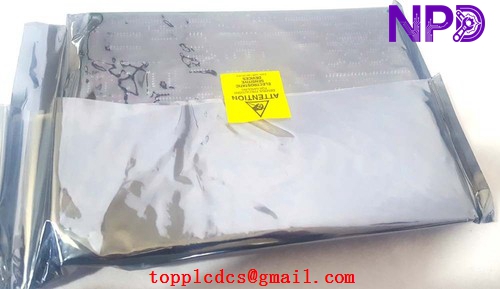

Description
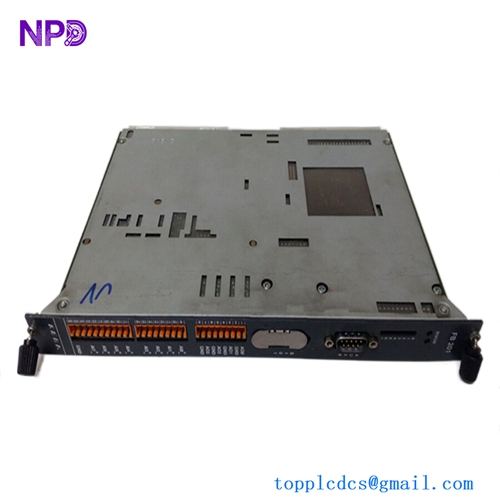
The GE Fanuc IC697PCM711P is a high-performance Programmable Coprocessor Module (PCM) designed for the Series 90-70 PLC platform. It serves as an intelligent co-processing unit that offloads specialized tasks from the main PLC CPU. By running its own independent programming and memory space, the PCM module is ideal for complex, computationally intensive operations such as advanced data manipulation, custom communication protocols, and real-time report generation, without sacrificing the scan time or performance of the primary control logic.

📋 Technical Specifications
| Parameter | Specification |
|---|---|
| Product Name | Series 90-70 Programmable Coprocessor Module |
| Model Number | IC697PCM711P |
| Core Function | Independent task execution and co-processing |
| Processor | Integrated microprocessor for dedicated logic/math |
| Memory | User-configurable RAM for program storage |
| Communication | Serial ports (RS-232/RS-485) for external device integration |
| Compatibility | Series 90-70 PLC Backplane |
| Programming | Supports C-language and specialized GE Fanuc firmware |
| Mounting Style | Rack-mounted module |
| Dimensions | Standard IC697 single-slot form factor |
🚀 Recommended Series Models & Integration
The PCM711 is often part of a highly customized 90-70 system. These components are frequently used in the same rack environments:
- IC697CPU788 – High-performance 90-70 CPU module
- IC697CMM711 – Communication module for advanced networking
- IC697CHS750 – 5-slot or 9-slot PLC backplane
- IC697PWR711 – Dedicated power supply for the 90-70 rack
- IC697MDLxxx – Compatible discrete and analog I/O modules
- IC697BEM731 – Bus interface module for distributed I/O
- IC697ACC701 – Programming cable and maintenance accessories
- IC641SWPxxx – VersaPro/CIMPLICITY development software
⚠️ Integration & Maintenance Note
The IC697PCM711P requires specific firmware versions to communicate effectively with the main CPU of the Series 90-70 system. When installing this module, ensure that the Backplane Address (set via jumpers or software configuration) does not conflict with existing communication or I/O modules in the rack.