Description
Product Description
The GE Fanuc VME-7700RC is a 6U, single-slot VMEbus Single Board Computer (SBC) designed for embedded computing and industrial control applications. It uses an Intel Ultra Low Voltage Celeron processor and an Intel 815E chipset to provide computing, communication, and VMEbus interface functions within a compact board-level platform.
The VME-7700RC is available in 400 MHz and 650 MHz processor configurations. It supports up to 512 MB of PC-100 SDRAM and up to 1 GB of CompactFlash storage, depending on the installed configuration. Its dual Ethernet controllers, serial ports, USB interfaces, and PMC expansion site support integration with other embedded hardware and control-system components.
The board connects to a VME backplane and supports VME64 transfer modes through its Tundra Universe II interface. It is suitable for maintaining legacy VME-based control, data acquisition, and industrial computing systems.
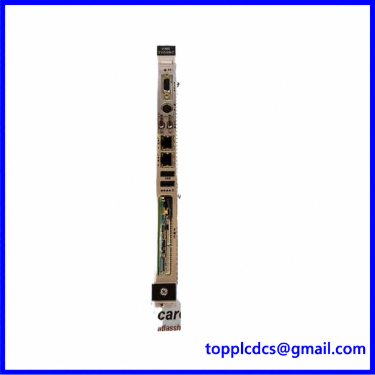
VME-7700RC
Key Technical Specifications
- Brand: GE Fanuc
- Model: VME-7700RC
- Product Name: VMEbus Processor Board / Single Board Computer
- Board Type: 6U, single-slot VMEbus SBC
- Processor: Intel Ultra Low Voltage Celeron
- Processor Speed: 400 MHz or 650 MHz, depending on configuration
- Chipset: Intel 815E
- System Bus: 100 MHz
- L2 Cache: Up to 256 KB
- Memory: Up to 512 MB PC-100 SDRAM
- Storage: CompactFlash, up to 1 GB
- Ethernet: Two 10Base-T / 100Base-TX interfaces
- Serial Interfaces: Two 16550-compatible serial ports
- USB: Two front-panel USB ports
- Expansion: One PMC expansion site
- VME Interface: Tundra Universe II
- Supported VME Modes: A32, A24, D32, D08(EO), MBLT64, and BLT32
- Operating Temperature: 0°C to +70°C
- Power Requirements: Confirm from the board revision and system installation documentation
- Dimensions: 6U VME form factor; confirm exact board dimensions from the mechanical drawing
- Weight: Approximately 1.25 lb (0.57 kg), according to a distributor listing; verify the actual unit and shipping configuration
- Product Status: Discontinued by manufacturer, according to distributor information
- Country of Origin: Confirm from the individual board label
Application Scenarios and Pain Points
- Industrial embedded computing: Provides processor and memory resources for dedicated control applications.
- VME-based control systems: Operates as a single-board computer within compatible 6U VME chassis and backplanes.
- Data acquisition systems: Supports communication with external devices through Ethernet, serial interfaces, and PMC expansion.
- Legacy automation equipment: Provides a replacement option for existing systems built around the VME-7700RC platform.
- Specialized embedded installations: Supports applications requiring VMEbus communication, remote booting, and local CompactFlash storage.
Typical maintenance challenges include aging CompactFlash media, memory faults, VME backplane communication problems, Ethernet link failures, and compatibility issues involving legacy operating systems or application software.
Installation and System Integration
- Confirm that the existing system requires the VME-7700RC rather than another VME-7700 family variant.
- Check the processor speed, memory configuration, CompactFlash capacity, assembly number, and board revision.
- Verify that the chassis supports the 6U single-slot VME board format.
- Confirm the backplane connector arrangement and VMEbus configuration before installation.
- Check the system BIOS and boot-device settings when replacing a board.
- Verify that the installed operating system and application software support the board’s processor architecture and peripheral interfaces.
- Confirm Ethernet port assignments, network speed, IP configuration, and remote-boot requirements.
- Check serial-port settings and cable pin assignments before connecting external equipment.
- If a PMC expansion card is installed, verify its mechanical, electrical, and software compatibility.
- Back up CompactFlash contents and system configuration before replacing or reinitializing storage media.
The VME-7700RC supports several VME64 transfer modes. The actual modes used depend on the backplane, system controller configuration, and application software. Do not assume that every VME chassis supports every transfer mode.
Daily Maintenance
- Check board status and system startup behavior during routine inspections.
- Monitor VMEbus communication and investigate recurring bus errors.
- Inspect the board’s front-panel connectors for looseness or corrosion.
- Check Ethernet link activity and serial communication status.
- Monitor processor temperature and chassis airflow.
- Inspect the CompactFlash device for read/write errors and maintain a verified backup.
- Check the PMC expansion site and installed module for secure seating.
- Keep the VME chassis free of dust and maintain the specified cooling conditions.
- Record BIOS settings, processor configuration, memory size, and software versions for future replacement work.
Troubleshooting and FAQ
Q1: What is the VME-7700RC?
A: It is a 6U single-slot VMEbus Single Board Computer based on an Intel Ultra Low Voltage Celeron processor. It provides computing and communication functions for embedded systems.
Q2: What processor speeds are available?
A: The product documentation identifies 400 MHz and 650 MHz processor configurations. Confirm the actual speed from the board documentation or installed configuration.
Q3: How much memory does the board support?
A: It supports up to 512 MB of PC-100 SDRAM. The installed memory capacity may differ between individual boards.
Q4: Does the VME-7700RC support Ethernet communication?
A: Yes. It has two onboard Ethernet controllers supporting 10Base-T and 100Base-TX interfaces.
Q5: What should be checked if the board fails to boot?
A: Check the VME chassis power, board seating, BIOS settings, CompactFlash condition, boot-device configuration, and connected peripherals. Review the system startup diagnostics before replacing components.
Q6: Can the VME-7700RC replace a VMIVME-7700?
A: The VME-7700 and VME-7700RC are closely related board variants, but replacement suitability depends on assembly number, revision, installed firmware, memory and storage configuration, and system application requirements. Verify the complete part identification before substitution.
Q7: Is the VME-7700RC still manufactured?
A: Distributor information identifies the product as discontinued. Existing systems may therefore require verified surplus stock, refurbishment, or a qualified replacement strategy.
Safety Precautions
- Disconnect chassis power and follow the equipment manufacturer’s isolation procedure before removing or installing the board.
- Use an ESD wrist strap and appropriate antistatic handling procedures.
- Do not force the board into the VME backplane connector.
- Verify the board orientation and slot assignment before installation.
- Avoid hot insertion unless the complete VME system explicitly supports it.
- Confirm the chassis power and cooling specifications before returning the system to operation.
- Do not change BIOS, boot, or VMEbus settings without preserving the original configuration.
- Test the board with the approved system software and application before reconnecting it to a live process.
Related GE Fanuc Models
The following products are related to GE Fanuc’s VMEbus and embedded computing product families. They are not all direct replacements for the VME-7700RC.
- GE Fanuc VMIVME-7700 – VMEbus Single Board Computer
- GE Fanuc VMIVME-7807 – VMEbus Processor Board
- GE Fanuc VMIVME-7807RC – VMEbus Processor Board
- GE Fanuc VMIVME-7750 – VMEbus Single Board Computer
- GE Fanuc VMIVME-7419 – VMEbus Embedded Controller
- GE Fanuc VMIVME-7614 – VMEbus I/O Board
- GE Fanuc VMIVME-7587 – VMEbus Communication Board
- GE Fanuc VMIVME-5565 – Reflective Memory Board
- GE Fanuc VMIVME-5500 – VMEbus Interface Board
- GE Fanuc VMIVME-3122 – Analog Input Board
- GE Fanuc VMIVME-3123 – Analog Input Board
- GE Fanuc VMIVME-4100 – Analog Output Board
- GE Fanuc VMIVME-7452 – VMEbus Digital I/O Board
- GE Fanuc VMIVME-7750E – Embedded VME Computer
- GE Fanuc VMIVME-9081 – Industrial I/O Controller
Ordering and Verification
Before purchasing the GE Fanuc VME-7700RC Processor Board, verify the complete model designation, assembly number, board revision, processor speed, memory configuration, and CompactFlash capacity.
For replacement projects, compare the original board’s front-panel connectors, VME backplane interface, BIOS configuration, and operating-system requirements. Confirm whether the application requires a particular firmware image or preconfigured CompactFlash device.
For surplus or used equipment, request clear photographs of the board label, front panel, connectors, and PCB revision. Confirm the test status and whether CompactFlash media or PMC accessories are included.