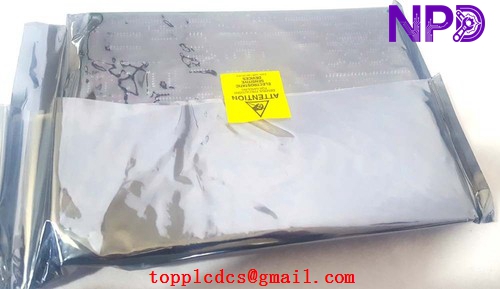

Description
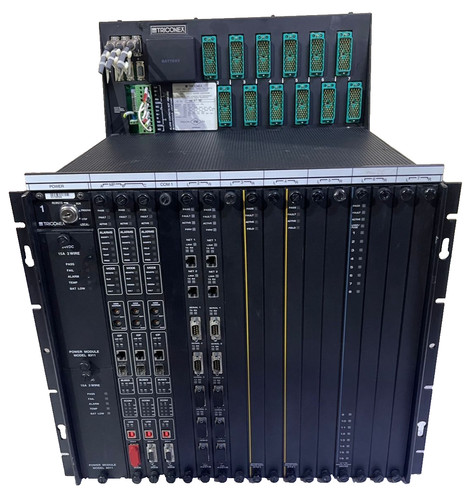
The Triconex Tricon system (Model 3009) represents the industry-leading safety-critical architecture for emergency shutdown (ESD) and fire & gas (F&G) applications. This assembly utilizes the high-availability Triple Modular Redundant (TMR) design, where three parallel control paths execute the same logic and “vote” on the output. This configuration ensures that the process continues to run safely even if a single hardware component fails, achieving high fault tolerance and SIL 3 certification.
📋 Assembly Breakdown (Model 3009)
The specific components listed constitute a robust safety logic controller setup:
| Component | Function / Role |
|---|---|
| MP3009 | Main Processor (Tricon v9/v10/v11 Series CPU) |
| 4351B | Power Module (Supports system power redundancy) |
| 3721 | Analog Input Module (Non-isolated, voltage/current inputs) |
| 3604E | Digital Output Module (24V DC, supervised/high-density) |
| 8311 | Remote/Expansion Interface (Supports multi-chassis comms) |
| 8111 | Expansion Chassis (Physical backplane for additional I/O) |
🚀 Integration and Operational Logic
The 8111 Expansion Chassis is connected to the Main Chassis via the 8311 Remote/Expansion Interface. This architecture allows you to distribute your I/O points closer to the field devices while maintaining the TMR integrity back to the main processor.
- TMR Voting: The MP3009 processors constantly perform synchronized voting. If one processor disagrees with the other two, it is automatically marked as “failed” and removed from the voting pool without interrupting system operation.
- Supervised Outputs: The 3604E module is critical for safety applications because it monitors field loop continuity, allowing the system to detect open or short circuits in safety-critical actuators.
- Power Redundancy: The 4351B modules ensure that the system can operate even if one power feed or one power supply module fails completely.
⚠️ Maintenance and Safety Guidelines
Working with a Triconex assembly requires strict adherence to safety protocols and hardware handling:
- Hot-Swapping: Triconex components are designed to be “hot-swapped.” However, always verify that the redundant module has fully taken over the load before removing the faulty unit.
- Chassis Backplane: The 8111 backplane is the heart of your expansion. Ensure that the 8311 communication cables are securely locked and that the backplane remains free of conductive dust, which can cause intermittent communication “blips.”
- Firmware Consistency: The MP3009 must be running a firmware version that is compatible with all modules in both the main and expansion chassis. Mismatched firmware across an expansion link is a leading cause of chassis-level communication alarms.
- Diagnostic Monitoring: Use the TriStation 1131 programming software to perform “Module Diagnostics.” This is essential for identifying “degraded” modules before they result in a complete loss of an I/O path.