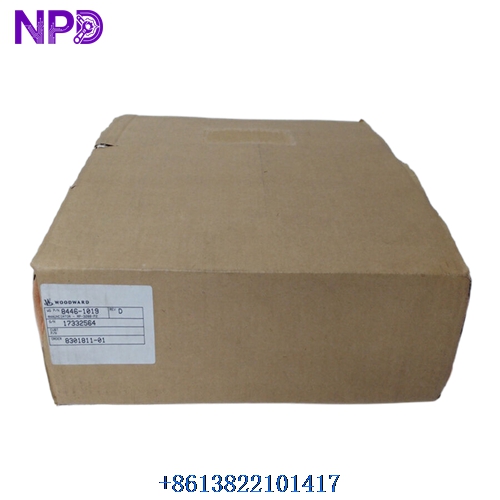

Description
The Woodward 8290-067 is a specialized speed control unit designed for applications requiring droop governing characteristics. Unlike isochronous controllers that maintain a rigid, constant speed regardless of load, this droop controller allows for a controlled decrease in engine speed as the load increases. This behavior is essential for parallel operation with other power sources, as it prevents load-hunting and ensures a stable distribution of power across the electrical bus. Operating on a 12-V DC system, the 8290-067 is tailored specifically for diesel engines and gas turbines.
As a precision Woodward 8290-067 controller, it is designed for compatibility with specific Woodward actuation hardware. By utilizing the 8256-017 and 8256-022 actuators, the system ensures a highly responsive and reliable link between the electronic control signal and the engine’s fuel metering device. This pairing is critical for maintaining the precise governor dynamics required for effective droop operation.
Technical Specifications
- Product Name: Single-Phase Droop Speed Controller
- Model Number: 8290-067
- Operating Voltage: 12 V DC
- Speed Sensing Frequency: 750–1500 Hz
- Control Mode: Droop (Load-dependent speed regulation)
- Compatible Actuators: Woodward 8256-017 and 8256-022
- Compatible Engines: Diesel engines and gas turbines
- Weight: Approximately 0.48 kg
- Dimensions: Standard EPG module footprint
- Origin: Engineered to Woodward industrial standards
Frequently Asked Questions
⚙️ What is the purpose of “Droop” control in this model? Droop control is a load-sharing strategy. By intentionally allowing the engine speed to drop slightly as load increases, the governor provides a predictable and stable feedback loop. This prevents multiple generators connected to the same bus from fluctuating against one another, effectively sharing the electrical burden proportionally.
🔌 Why is the frequency range (750–1500 Hz) lower than other models? This specific frequency range is matched to the magnetic pickup (MPU) signal characteristics typical of the engine/flywheel combinations where this controller is utilized. It is essential to ensure that your MPU gear tooth count and engine speed result in a signal within this 750–1500 Hz window for the controller to function accurately.
⚠️ How does this differ from an isochronous controller? An isochronous controller (like the 8290-050) attempts to maintain a fixed frequency (RPM) regardless of load. A droop controller (like the 8290-067) accepts a shift in frequency. While isochronous is preferred for single-unit stability, droop is often the safer, more stable choice for paralleling multiple generators together.
🛠️ Can I use this with gasoline engines? The 8290-067 is specifically optimized for the combustion dynamics of diesel engines and gas turbines. Using it on a gasoline engine may result in poor governing response, as the fuel control requirements and torque characteristics of gasoline engines differ significantly from the diesel/turbine profiles this controller expects.
Recommended Woodward Series Models
To support your power management setup, these related components are frequently used in environments where the 8290-067 is deployed:
- Woodward 8256-017 EPG Actuator
- Woodward 8256-022 EPG Actuator
- Woodward 8290-050 (Isochronous Controller)
- Woodward 8440-013 (501 Series Controller)
- Woodward 8290-028 (24V 501 Controller)
- Woodward 8290-032 (12V 501 Controller)
- Woodward EG-3P Actuator
- Woodward EG-6P Actuator
- Woodward L-Series Electric Actuator
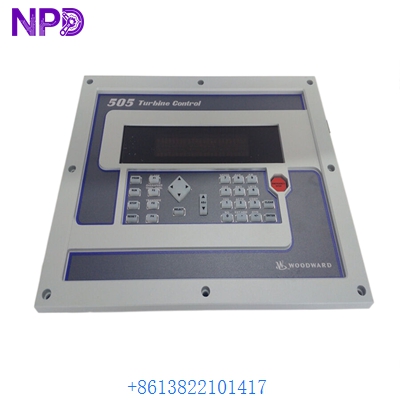
- Woodward 505 Digital Governor