
Description
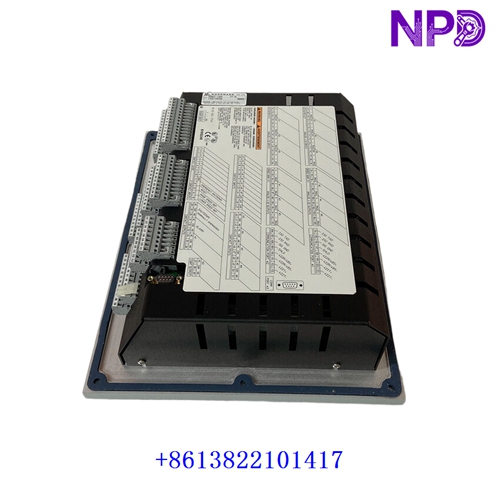
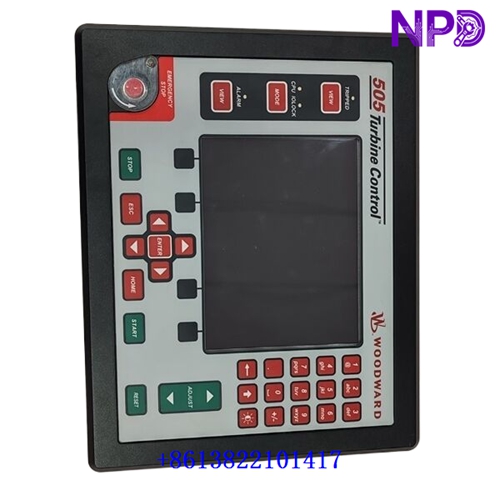
The Woodward MSLC (Master Synchronizer and Load Control) Model 9907-006 is a microprocessor-based utility load control system designed specifically for three-phase electric power generation plants operating in parallel with a utility grid alongside Woodward DSLC units. Below are the ten core specification parameters detailing its build, origin, and technical ratings:
- Brand: WOODWARD
- Model Number: 9907-006
- Series: MSLC Master Synchronizer Series
- Product Name: Master Synchronizer and Load Control Module
- Place of Production: United States / Global Facilities
- Condition State: Brand New / Factory Recertified Options Available
- Dimensions: Standard Industrial Panel-Mount Form Factor (approx. 18.15 in × 10.43 in × 2.32 in)
- Weight: Approx. 3.12 kg (6.88 lbs)
- Country of Origin: USA
- Power & Input Ratings: 220 VAC Input, Open Delta PT Configuration, and auxiliary power supply with integrated multi-phase true RMS utility sensing inputs
⚙️ Operation Guidelines & Usage Methods
Proper integration of the Woodward 9907-006 MSLC requires strict adherence to industrial electrical standards and precise wiring of open delta potential transformers (PTs) and current transformers (CTs) on the utility tie line. Operators must ensure that all communication and measurement wiring utilizes shielded twisted-pair cables to mitigate electromagnetic interference (EMI) from adjacent high-voltage switchgear. Grounding must be implemented strictly in accordance with manufacturer guidelines to protect internal circuitry from ground loops and voltage transients. Configuration, tuning, and network mapping can be handled using setup software or via connection interfaces mapped across the unit.
During active operation, continuous monitoring of plant import/export power levels, utility bus status, and digital network communication with individual DSLC modules is vital. Maintenance personnel should periodically inspect terminal block connections and verify that ambient operating temperatures remain within the specified industrial range of -40 to +70 °C. Never attempt internal component repairs or adjustments while the unit is energized, as this can cause permanent electrical damage or severe personal injury.
⚡ Power-Up & Power-Down Sequence
Industrial control hardware demands a structured sequencing protocol to prevent voltage spikes, data corruption, and out-of-phase breaker closure across complex utility-parallel systems.
Startup Sequence:
- Verify that all external emergency stop circuits, safety interlocks, and auxiliary sensing lines are fully functional and in their normal standby states.
- Energize the auxiliary control power distribution panel, ensuring the input supply voltage stabilizes within its operational window.
- Allow the module internal boot sequence and diagnostic self-test to complete fully, observing the status indicators and front-face layouts.
- Verify utility bus voltage and phase rotation, feeding the 220 VAC open delta PT configuration inputs correctly.
- Establish active network communication between the MSLC and all connected DSLC generator controllers before enabling automated import/export load management or utility breaker synchronization.
Shutdown Sequence:
- Command an orderly plant unloading cycle via the control interface to ramp active utility power exchange down to zero or baseline safety limits.
- Open the main utility tie circuit breaker once system load transfer is complete.
- Command individual generator shutdown sequences as required for system maintenance.
- De-energize the module input power supply and potential/current transformer feeds by opening the main control circuit breakers.
- Lock out and tag out (LOTO) all power sources if physical maintenance or module replacement is required.
📖 Product Operating Instructions
The Woodward 9907-006 MSLC operates in tandem with DSLC modules to provide seamless plant-wide control, acting as a utility load sensor, import/export load level controller, power factor controller, and master synchronizer. This specific variant features an Open Delta PT configuration optimized for 220 VAC systems and incorporates specialized architecture designed to establish reduced wiring between the synchronizer models, simplifying switchgear installation and minimizing multi-unit hardwiring requirements. Operators interact with the unit using dedicated programming tools to establish base plant limits, import/export setpoints, and network node configurations.
❓ Frequently Asked Questions (Q&A)
Q1: What is the primary role of the 9907-006 MSLC in a power generation system?
A1: The MSLC coordinates plant-wide operations by monitoring utility tie lines and managing import/export power levels, overall power factor, and utility breaker synchronization for generators running in parallel with the grid.
Q2: What are the primary input and electrical specifications for the 9907-006 model?
A2: This unit is configured for a 220 VAC voltage input utilizing an Open Delta PT configuration.
Q3: What design advantage does the 9907-006 offer regarding installation?
A3: It is built with a topology that yields reduced wiring between the synchronizer models, cutting down on complex hardwired control interconnections across switchgear panels.
Q4: What environmental and temperature limits apply to this module?
A4: The unit is rated for an industrial operating temperature range of -40 to +70 °C (-40 to 158 °F) and requires installation within a properly rated protective electrical enclosure to prevent moisture condensation.