
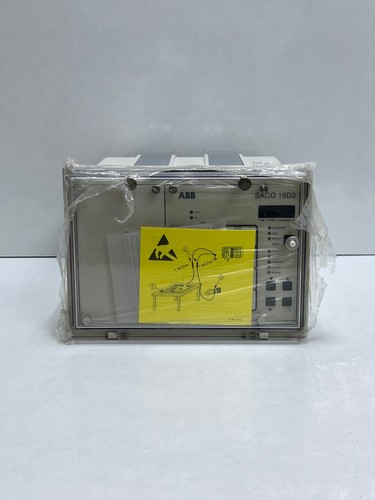
The ABB SACO16D3AA358 is a robust digital annunciator unit designed for sophisticated alarm monitoring and event reporting in industrial environments. This unit serves as a critical interface for visualizing the status of various processes and equipment, ensuring that operators are promptly alerted to fault conditions or changes in system status.

Product Specifications
| Feature | Specification Details |
| Product Name | ABB Digital Annunciator Unit |
| Model Number | SACO16D3AA358 |
| Manufacturer | ABB |
| Component Type | Alarm Monitoring/Annunciation System |
| Application | Industrial Automation / Power Systems |
| Functionality | 16-channel digital alarm input and LED indication |
| Communication | Serial interface for system integration |
Application Fields
This annunciator unit is primarily deployed in infrastructure where real-time status visibility is essential:
- Substation Control: Monitoring breaker status, transformer alarms, and relay trips in power distribution centers.
- Process Automation: Providing centralized visual feedback for status changes in chemical, oil, and gas processing plants.
- Energy Management: Highlighting critical system events for operators in power generation facilities.
- Manufacturing Facilities: Tracking line faults, emergency stops, and system operational changes across large-scale production floors.
Product Usage Instructions
- Mounting: The SACO16D3AA358 is typically panel-mounted. Ensure the cutout dimensions meet the manufacturer’s specifications for a flush fit. Secure the unit using the provided mounting brackets to withstand industrial vibration.
- Wiring: Connect alarm inputs to the rear terminal blocks according to the pinout diagram. Ensure that inputs are properly isolated to prevent noise interference. Use shielded cable for longer runs to maintain signal integrity.
- Configuration: Set the input logic (Normally Open/Normally Closed) via the internal DIP switches or through the software interface if your system supports it. Configure the flash patterns (steady, slow flash, fast flash) to distinguish between alarm priorities.
- Testing: After wiring, perform a “lamp test” to ensure all LEDs are functional. Trigger individual inputs to verify that the corresponding alarm channels report correctly to the HMI or SCADA system.
Frequently Asked Questions (Q&A)
Q: Can I integrate the SACO16D3AA358 with a modern SCADA system?
A: Yes, this unit features serial communication capabilities that allow it to report alarm status to external monitoring systems, bridging the gap between local visual annunciation and central control.
Q: What do I do if an alarm channel stays on after the fault is cleared?
A: Check if the unit is set to “latching” mode. If it is, the alarm must be manually acknowledged via the reset button. If the mode is non-latching, verify that the field signal (input) has actually returned to its normal state.
Q: Is it possible to expand the number of alarm channels?
A: While the SACO16D3 unit is a fixed 16-channel device, you can daisy-chain multiple units together if your control architecture supports multi-module alarm systems.
Q: How do I replace a faulty LED?
A: The front panel indicators on the SACO16 series are typically long-life LEDs integrated into the display module. If an indicator fails, the display board or the entire annunciator unit may need to be replaced.
Recommended Similar Products
- ABB SACO16D4 Series Digital Annunciators
- ABB SACO64D Series Large-Scale Annunciator Systems
- Ronan X110 Series Alarm Annunciators
- Panalarm Model 90 Series Annunciators
- AMETEK Panalarm Millennium Series Monitors


