
🔧 Product Overview
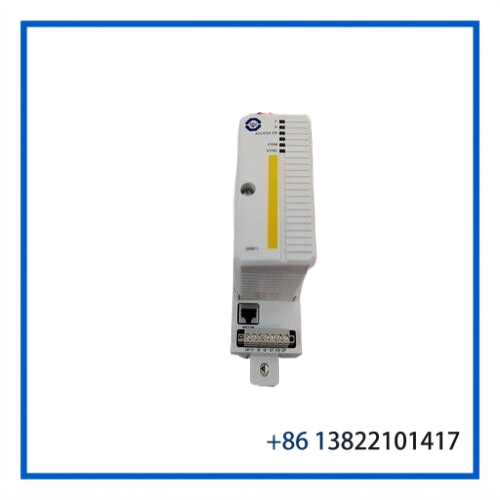
The ABB 3BSE018173R1, identified as SM811K01 PR:B G3, is a Safety CPU Module designed for ABB safety automation systems. The unit is associated with control drawing 3BUR001854 and is rated for a 24 VDC supply.
This module is built for safety-related control applications where dependable processing and monitored system operation are required. The available specifications identify a 250 mA current rating, Class 1, Zone 2 hazardous-area markings, and a surrounding air temperature rating of 55°C.
The exact product identification is important when sourcing a replacement. ABB safety CPU modules can have different hardware generations and revisions, so the complete part number, PR:B G3 marking and associated system configuration should be checked before installation.
⚙️ Key Features
- Brand: ABB
- Model: SM811K01
- Part Number: 3BSE018173R1
- Version: PR:B G3
- Product Type: Safety CPU Module
- Control Drawing: 3BUR001854
- Supply: 24 VDC
- Current rating: 250 mA
- Maximum output current: 0.5 A per output
- Surrounding air temperature: 55°C
- Hazardous-area marking: Class 1, Zone 2
- Protection marking: AEx nA IIC T4 Gc X
- Weight: approximately 510 g
- Country of origin listed: Switzerland
- Suitable for ABB safety-control applications
📋 Product Datasheet
| Parameter | Specification |
|---|---|
| Brand | ABB |
| Product Family | ABB Safety Automation |
| Model | SM811K01 |
| Part Number | 3BSE018173R1 |
| Revision | PR:B G3 |
| Product Type | Safety CPU Module |
| Control Drawing | 3BUR001854 |
| Supply Voltage | 24 VDC |
| Current Rating | 250 mA |
| Max. Output Current | 0.5 A per output |
| Surrounding Air Temperature | 55°C |
| Hazardous Area | Class 1, Zone 2 |
| Ex Marking | AEx nA IIC T4 Gc X |
| Weight | Approx. 510 g |
| Country of Origin | Switzerland |
| Available Condition | New / Open Box, depending on listing |
⚡ Operating Function
The SM811K01 serves as the processing element within a safety-oriented control architecture. It handles programmed control logic and system monitoring functions while operating with the associated safety I/O and communication hardware.
The 24 VDC supply and specified current rating should be considered together with the complete system load. The 0.5 A-per-output figure should not be interpreted as the total CPU power consumption; it refers to the specified output capability associated with the module.
For safety applications, replacement is not simply a matter of installing a module with the same physical dimensions. Hardware revision, firmware, configuration data, safety parameters and system certification requirements should all be checked.
🛠️ Installation & Configuration
- Verify the part number
Confirm 3BSE018173R1 and the PR:B G3 marking against the existing module. - Check the control drawing
Match control drawing 3BUR001854 before installation. - Inspect the module
Check connectors, terminals, housing and PCB areas for damage, contamination or corrosion. - Verify the 24 VDC supply
Confirm supply voltage and polarity before connecting the CPU. - Check the safety configuration
Verify the installed hardware configuration, safety program and required parameters. - Confirm hazardous-area requirements
If installed in a classified area, ensure the complete installation satisfies the applicable hazardous-location requirements. - Perform commissioning tests
After installation, verify CPU startup, diagnostics, communication, I/O response and safety functions according to the system commissioning procedure.
🔧 Maintenance Tips
Keep the module installed in a clean, dry and properly ventilated control cabinet. Avoid unnecessary removal of the CPU because repeated handling can increase the chance of connector or electrostatic damage.
During maintenance, check for abnormal heating, loose connectors, contamination and diagnostic indications.
For a replacement safety CPU, retain the original configuration and record the hardware revision before removal. After replacement, perform the required safety validation rather than assuming that normal CPU startup confirms correct operation.
❓ Common Questions
What is ABB 3BSE018173R1?
It is the part number for the ABB SM811K01 G3 Safety CPU Module.
What does PR:B G3 mean?
PR:B G3 identifies the product/revision configuration shown for this particular safety CPU. It should be matched when sourcing a replacement.
What is the supply voltage?
The listed supply voltage is 24 VDC.
What is the current rating?
The available specifications list 250 mA, with a maximum of 0.5 A per output.
What is the operating temperature rating?
The listed surrounding air temperature is 55°C.
Is this a standard PLC CPU?
No. It is identified as a Safety CPU Module and should be treated as a safety-system component rather than a general-purpose PLC processor.
Can another SM811 module replace it directly?
Not automatically. The complete part number, revision, firmware, safety configuration and system compatibility should be verified first.
What is the weight?
The listed weight is approximately 510 g.
What should be checked before purchase?
Confirm 3BSE018173R1, SM811K01, PR:B G3, control drawing 3BUR001854 and the physical condition of the module.
🔄 Related ABB Safety & Automation Models
- ABB SM811K01 — Safety CPU Module
- ABB SM812K01 — Safety CPU Module
- ABB SM820 — Safety Module
- ABB DI821 — Digital Input Module
- ABB DO821 — Digital Output Module
- ABB DI831 — Digital Input Module
- ABB DO840 — Digital Output Module
- ABB AI880A — High Integrity Analog Input Module
- ABB TU831 — Terminal Unit
- ABB CI920AS — Safety/Control Communication Interface
🏭 Application Summary
The ABB SM811K01 3BSE018173R1 is a specialized safety CPU intended for ABB safety automation architectures. Its compact format, 24 VDC supply and safety-oriented design make it suitable as a replacement or spare where the existing system uses the same hardware generation.
For maintenance inventory, the complete part number should be recorded together with the PR:B G3 revision and control drawing. When replacing a safety CPU, configuration recovery and functional safety validation are just as important as the physical installation.
Because this is safety-related hardware, the replacement should always be verified against the original system documentation and the applicable ABB configuration before being returned to service.


