Description
- Model: ABB 1SBP260020R1001 (07CR41)
- Brand: ABB (Sweden/Switzerland)
- Series: Advant Controller / Procontic CS31 Series
- Core Function: Compact programmable logic controller with onboard I/O for standalone or distributed tasks.
- Condition: Brand New Surplus (Original factory packaging, non-refurbished)
- Product Type: Central Processing Unit (CPU) / Compact PLC Module
- Key Specs: 24 V DC power | 8 Digital Inputs (24 V DC) | 6 Digital Outputs (Transistor) | CS31 System Bus interface
- Input Voltage: 24 V DC (+15%, -20% allowance)
- Onboard Digital Inputs: 8 channels (24 V DC, sink/source configuration)
- Onboard Digital Outputs: 6 channels (Transistor outputs, 24 V DC, 0.5 A max per channel)
- System Bus Protocol: CS31 Fieldbus (RS-485 physical layer)
- Program Memory: 16 KB Flash EPROM
- Data Memory: 4 KB RAM (Battery buffered)
- Programming Interface: Serial RS-232 via 9-pin Sub-D connector
- Configuration Software: 907 AC 41 / Advant OCS configuration tool
- Mounting Type: DIN Rail (35 mm) or panel screw mounting
- Enclosure Rating: IP20
- Operating Temperature: 0 °C to +55 °C
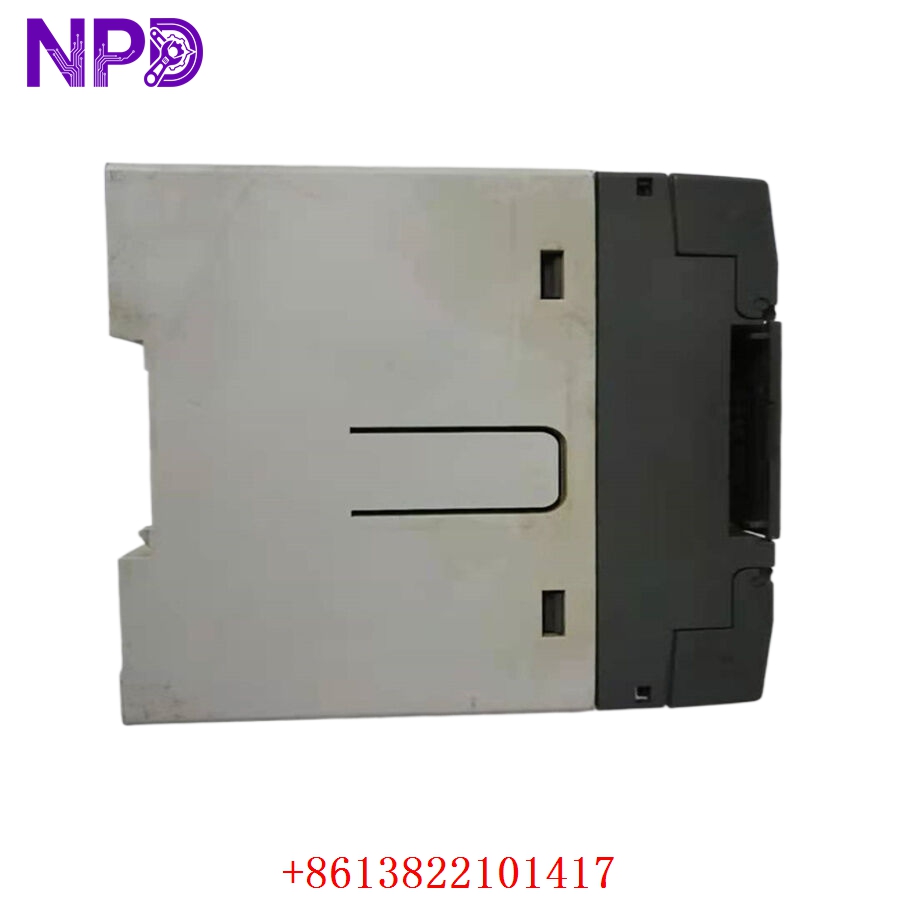
ABB 1SBP260020R1001 07CR41
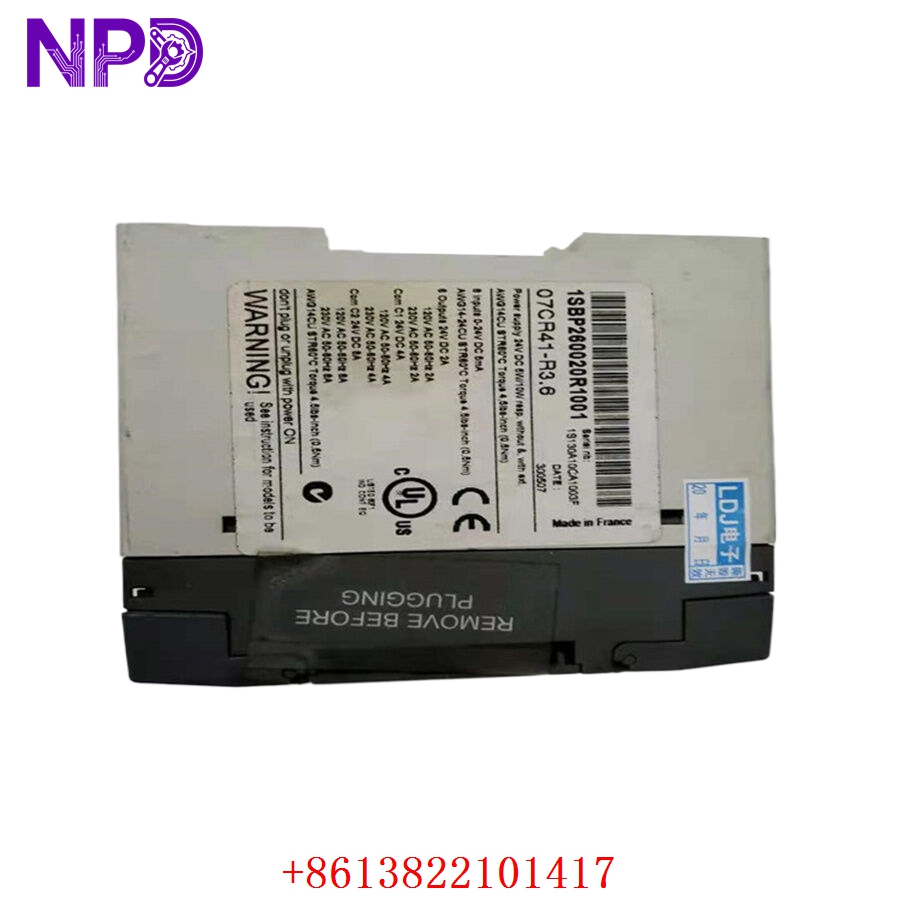
ABB 1SBP260020R1001 07CR41
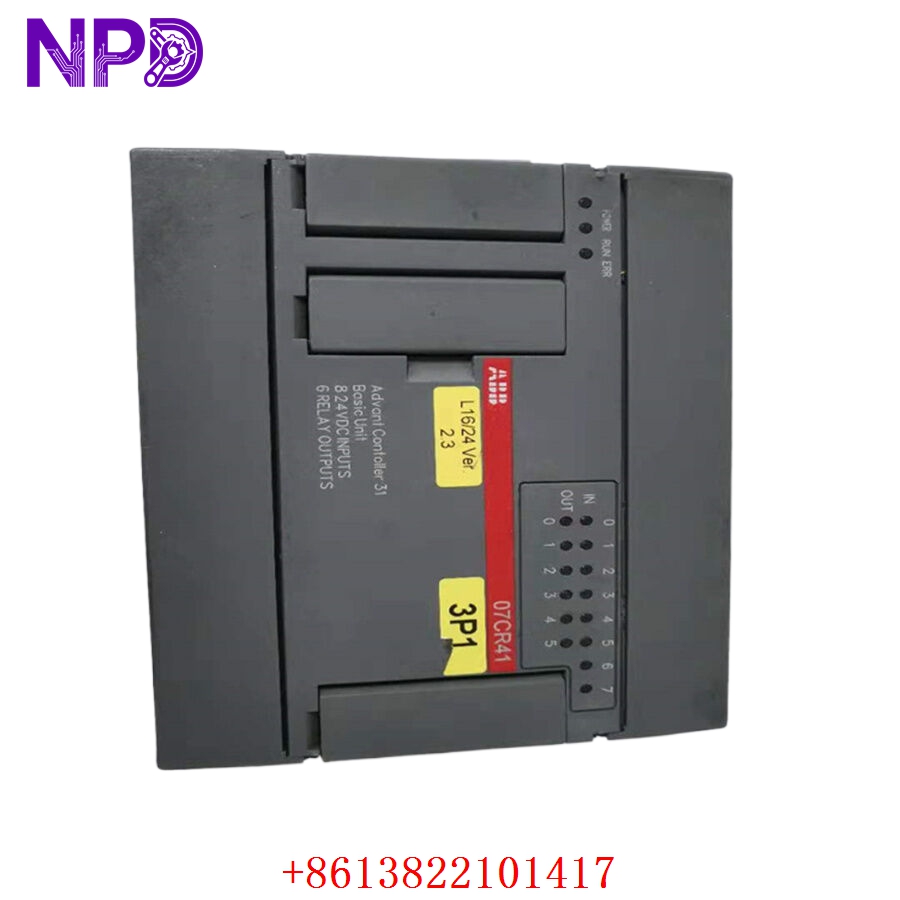
ABB 1SBP260020R1001 07CR41
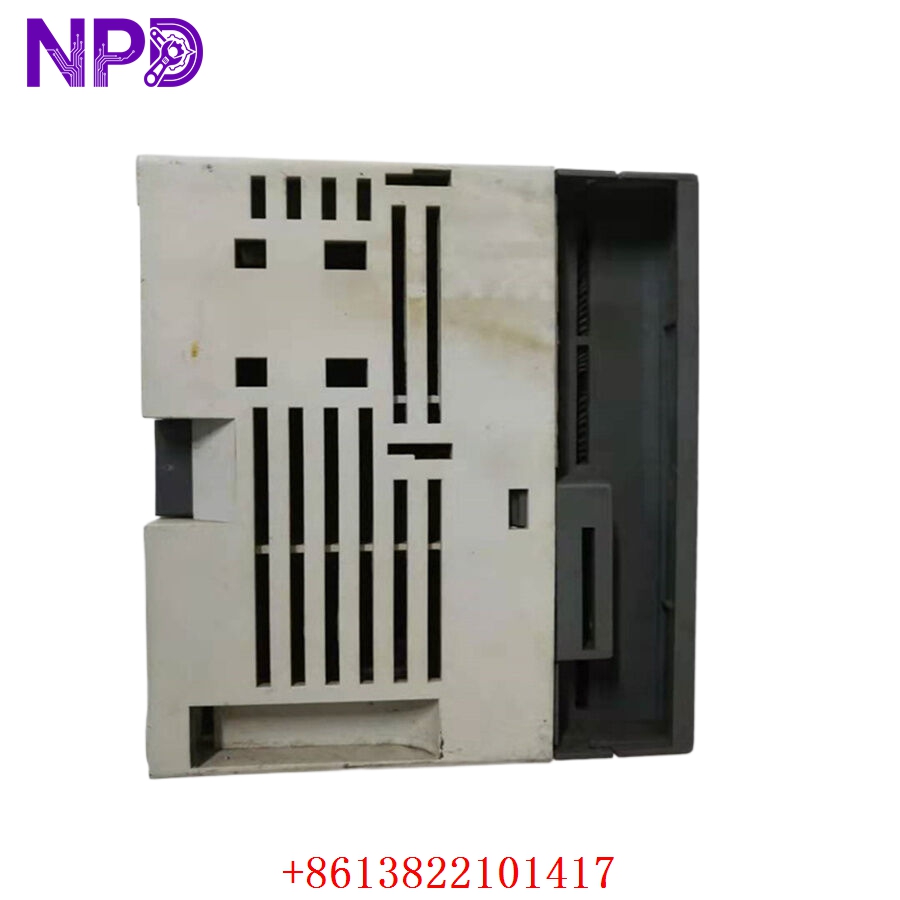
ABB 1SBP260020R1001 07CR41
Application Scenarios & Engineering Pain Points
When a legacy machine down on the factory floor throws a CPU fault, finding a reliable replacement becomes an absolute nightmare. The ABB Procontic CS31 series is a workhorse, but because components like the 07CR41 are no longer actively manufactured by the OEM, factory lines risk weeks of extended downtime waiting for a system-wide upgrade. Stocking this specific drop-in spare is often the only thing standing between a 2-hour fix and a $50,000 unplanned capital expenditure to replace the entire control panel.
Typical Field Deployments:
- Water and Wastewater – Remote Pumping Stations
Used for localized pump control, tank level monitoring, and lifting station automation, utilizing the CS31 bus to pass telemetry back to a master AC31 or AC800M system.
- Material Handling – Conveyor Routing Networks
Handles high-speed pallet detection, sorting gate pneumatics, and motor starter coordination where low-latency digital I/O processing is mandatory.
- Infrastructure – HVAC and Building Dampers
Manages large air handling units and zone dampers in older industrial facilities, operating reliably under fluctuating ambient panel temperatures.
Case Study: The Midnight Beverage Line Breakdown
- The Setup: A large regional bottling plant relied on an older, highly optimized packaging line controlled by an array of CS31 distributed blocks feeding back to a central processor. The localized controller on the capping station was a legacy 07CR41 unit.
- The Crisis: During a humid summer shift, an internal component on the capping controller failed due to thermal stress. The whole line ground to a halt. The plant’s internal store didn’t have the spare, and their usual local vendors quoted a 5-week lead time for a modern system migration because the original part was obsolete. Every day of downtime was costing them roughly $12,000 in unfulfilled orders.
- The Fix: The plant manager contacted our team at 9:00 PM. We confirmed physical possession of a brand-new 1SBP260020R1001 module in our warehouse. Our engineer pulled the unit, verified the basic power-on diagnostics, and put it on a priority overnight flight.
- The Outcome: The part arrived at the plant gate by 10:30 AM the next morning. The facility’s control tech pulled the old terminal blocks, verified the DIP switch addressing matched the old unit, and clicked the new module onto the DIN rail. The line was fully operational before the afternoon shift started, saving the plant over $40,000 in extended production losses.
Standard Operating Procedure (SOP) Quality Transparency
We treat legacy inventory with the same engineering rigor as a critical system asset. Every single 07CR41 module that enters our facility goes through a strict multi-point verification process before it is cleared to ship to your job site.
[Inbound Traceability] ➔ [Live Automated Testing] ➔ [Electrical Insulation Verification] ➔ [Firmware/Configuration Log] ➔ [ESD Protective Packaging] 1. Inbound Inspection and Verification
- Source Validation: We verify original factory packaging details, lot codes, and matching serial numbers against known genuine manufacturing runs to filter out counterfeits.
- Physical Audit: Using high-magnification optics, we inspect the plastic housing for embrittlement, yellowing, or structural hairline cracks. We examine the gold plating on the internal bus connectors for traces of fretting corrosion or past insertion wear.
2. Live Automated Testing (Live Bench Test)
- Test Bench Hardware: Testing is conducted on a dedicated rack utilizing a stabilized Mean Well 24 V DC lab power supply and an authentic ABB master unit for bus handshaking.
- Functional Sequence:
- Power-On Self-Test (POST): We monitor the boot sequence, ensuring the ‘Power’ LED illuminates immediately and the internal relay clicks clean without delay or chatter.
- CS31 Bus Handshake: We map the module onto a live CS31 network loop and verify stable data exchange with no CRC errors or dropped packets over a sustained period.
- I/O Loop Testing: Every single one of the 8 inputs is fired using a 24 V source loop, and all 6 transistor outputs are loaded to verify switching times and voltage drops under load using a Fluke 115 digital multimeter.
3. Electrical Insulation Verification
- Insulation Resistance: We execute a 500 V DC megohmmeter insulation check between the power terminals and the chassis ground terminal to confirm insulation resistance exceeds 10 MΩ, preventing field ground faults.
4. Firmware and Configuration Log
- Firmware Verification: The exact firmware revision printed on the micro-chip mask is documented in our database so we can match it precisely to your system’s requirements.
- Hardware State Backup: All internal hardware jumpers or DIP switches are set back to factory default, and a high-resolution photograph of the configuration state is archived with the shipment record.
5. ESD Protective Packaging and Dispatch
- Sealing: The module is placed directly into a static-shielding bag inside an ESD-safe workspace.
- Cushioning: We utilize heavy-gauge, multi-layer bubble wrap and custom-fit double-wall corrugated boxes capable of surviving a 1-meter drop test.
- Sign-off: A physical “QC Passed” label bearing the inspector’s initials and the exact test date is affixed to the package. We can gladly email you full video copies of your specific unit’s bench test prior to shipping.
Technical Pitfall Mitigation Guide
Replacing a compact controller like the 07CR41 isn’t difficult if you do your prep work, but there are a few classic landmines that can trap an unseasoned tech on a late-night shift.
1. The CS31 Bus Addressing Oversight
- The Risk: If you mount the new module straight out of the box, it won’t talk to your master controller if the bus address isn’t configured correctly.
- The Fix: Look closely at the side or front panel of the old module before you discard it. There is a small set of DIP switches or rotary dials that assign the station address on the CS31 network. Take a photo of it immediately with your phone. Duplicate those exact positions on the new 07CR41 before you supply power. If the master expects Address 02 and your new module is sitting on factory default Address 00, your network line will experience a bus fault.
2. Transistor Output Current Thresholds
- The Risk: The 07CR41 uses solid-state transistor outputs, not dry relay contacts. They are rated for a maximum of 0.5 A at 24 V DC.
- The Fix: If a previous technician field-modified the panel to drive a large, unbuffered inductive load (like an un-suppressed heavy-duty hydraulic solenoid valve) directly from the PLC card, you will burn out the output transistor of the new module within a few cycles.
- Real-World Nightmare: I worked on a site where an engineer burned through two brand-new modules back-to-back. He swore the module was defective. It turned out an interposing relay on the output line had shorted its coil, pulling nearly 2 A upon excitation. Always check your loop impedance before firing up a new card on an unverified field circuit!
3. Floating vs. Grounded 24 V DC Supplies
- The Risk: Noise on the 24 V DC bus can cause erratic CPU resets or intermittent packet dropouts on the CS31 line.
- The Fix: Ensure the 0 V line of your 24 V DC power supply is properly referenced to plant ground if your original system schematic calls for it. Do not run communication lines parallel to high-power 480 V AC motor leads in the wire duct. The 07CR41 does not have the heavy opto-isolation found on high-end modern modular systems; keep your signal wiring separated by at least 10 cm from power cables.
Compatible Replacement Models
If the exact 07CR41 model is out of stock or you are evaluating whether to patch the current system or execute a minor migration, check the following structural alternatives:
| Original Model | Potential Alternative | Compatibility Level | Key Differences | Necessary Field Action | Cost Impact |
| 07CR41 (1SBP260020R1001) | 07CT41 | ⚠️ Software Compatible | The 07CT41 contains subtle memory variations and is configured for alternate master-slave roles in specific topologies. | You must review the master system hardware configuration file in 907 AC 41 to ensure the system bus expects the correct identifier code. | Equivalent pricing on surplus markets. |
| 07CR41 (1SBP260020R1001) | 07CR42 | ❌ Hardware Incompatible | Increased onboard I/O count and a larger physical footprint. Terminal assignments do not line up. | Requires physical panel modifications, shifting DIN rails, and completely rewiring the terminal blocks to accommodate the wider frame. | Minor premium for the larger hardware footprint (+20%). |
| 07CR41 (1SBP260020R1001) | AC500-eCo Series (e.g., PM554) | ❌ Total Retrofit Required | Modern active product line. Uses Automation Builder software (Codesys-based) and communicates over Modbus TCP or Profinet rather than legacy CS31. | Complete system redesign. You will have to rewrite the ladder logic from scratch, replace the fieldbus masters, and rerun communication cables. | High upfront engineering and hardware cost (>250%), but protects the machine for the next 15 years. |
Troubleshooting Quick Reference
Got a down system right now? Use this quick matrix to determine if the 07CR41 itself is dead or if your issue lies elsewhere in the loop.
| Diagnostic Symptom | Root Cause Probability | Controller Relevance | Field Verification Steps | Recommended Remediation |
| All LEDs completely dark | Loss of primary control power or internal fuse failure. | ❌ Low (90% external) | Put a digital multimeter across the L+ and M terminals. Check for 24 V DC. | If 24 V is present directly at the terminal screws but the unit is dark, the internal power regulator is fried. Swap the module. |
| RUN LED flashing, won’t go solid | Missing or corrupted application program, or hardware initialization error. | ⚠️ Medium | Cycle power. Attempt to connect via your programming cable and check the CPU system status registers. | If memory won’t retain the application program after power cycling, the backup battery circuit or internal RAM chip is defective. Replacement required. |
| CS31 Bus Error LED active | Physical bus break, incorrect station address, or line termination issue. | ⚠️ Medium | 1. Check that the DIP switches match the original station address layout.
2. Verify that the 120 Ω end-of-line termination resistor is present if this module is the physical last node on the RS-485 run. |
Use an oscilloscope or line tester to verify the RS-485 signal integrity. If adjacent nodes are communicating normally, the CS31 transceiver chip on this module may be blown from a voltage surge. |
| Single I/O point won’t activate | Field wiring break, blown sensor, or burned out internal transistor channel. | ⚠️ Medium | Force the output through the software or jump 24 V to the input terminal directly. Watch if the specific channel status LED responds. | If the onboard channel LED lights up but no voltage appears on the corresponding terminal screw, the output transistor channel is blown open. Replace the unit or map the logic to an unused spare channel if available. |
Need immediate engineering backup? If your plant is down and you cannot pinpoint the failure node, drop our technical support desk an email with photos of your current indicator lights and a copy of your panel’s wiring diagram. We will have an integration engineer respond within 2 hours.