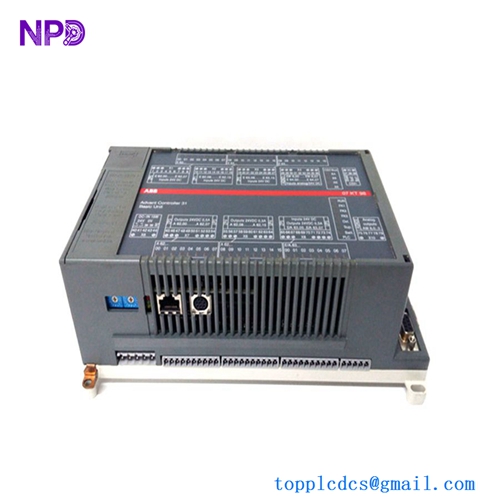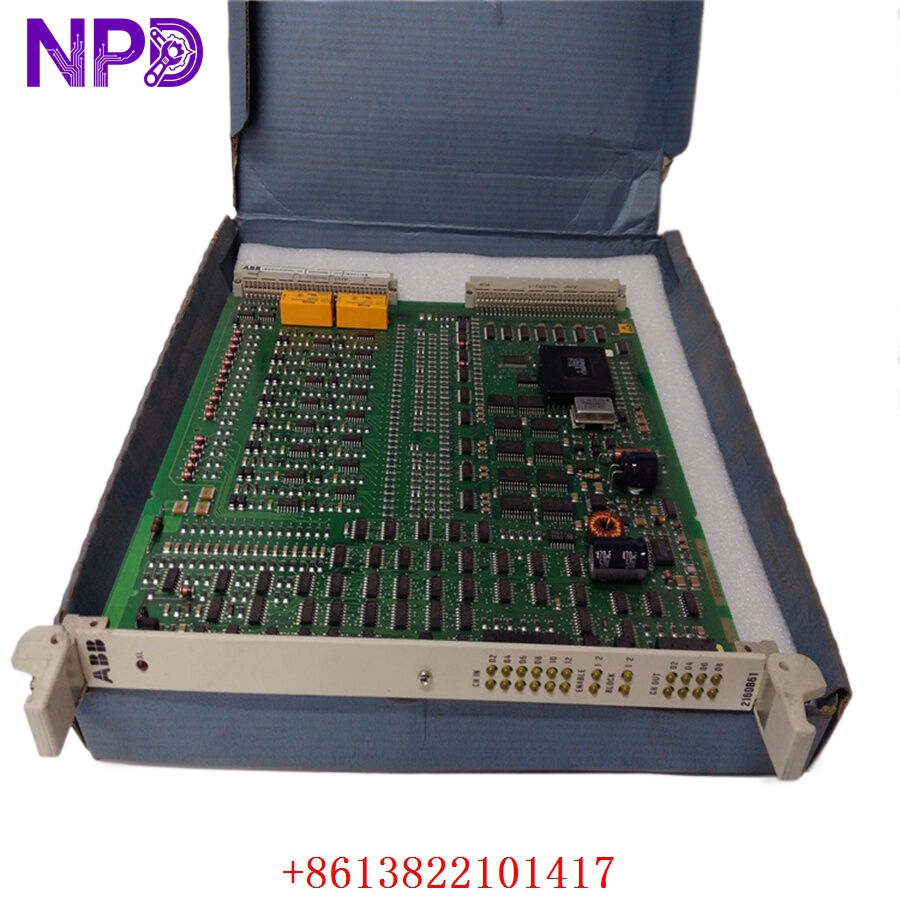

Description
Product Core Brief
| Attribute | Detailed Information |
| Model | ABB 216DB61 |
| Assembly Number | HESG324063R0100 / HESG216882A |
| Brand | ABB (Switzerland) |
| Series | Advant OCS / Master Piece Series |
| Core Function | Bus Connection and Communication Interface |
| Product Type | DB-Bus Communication Module |
| Key Specs | High-speed link / Fiber optic support (optional) / Multi-drop capability |
Key Technical Specifications
- Function: Acts as a bridge between the controller and decentralized I/O or other bus segments.
- Module Type: Connection Unit for DB-Bus (Distribution Bus).
- Interface: High-speed serial communication interface.
- Power Consumption: Typically 5 V DC supplied via the backplane.
- Status Indicators: Front panel LEDs for “Run,” “Error,” and “Traffic.”
- Compatibility: Compatible with Advant Controller AC 410, AC 450, and Master Piece 200/1 systems.
- Isolation: Galvanic isolation to prevent noise interference across bus segments.
- Connection Port: Standard DB-Bus connector for shielded twisted pair or fiber optic converters.
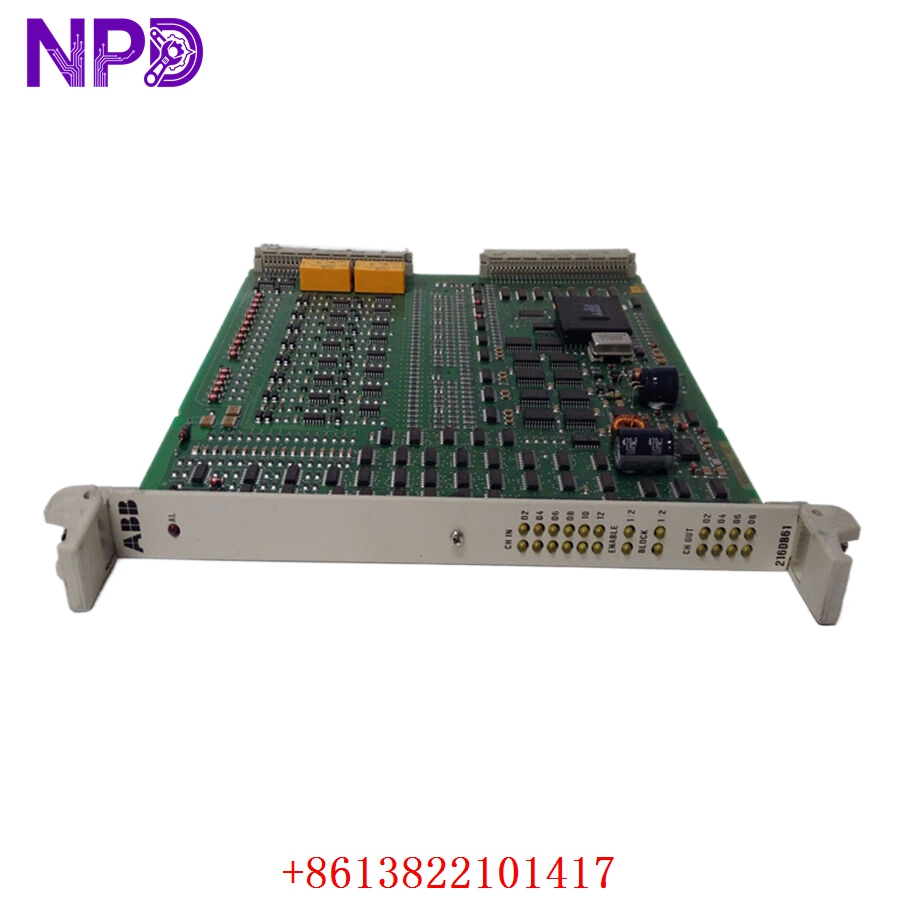
ABB 216DB61 HESG324063R0100 HESG216882A
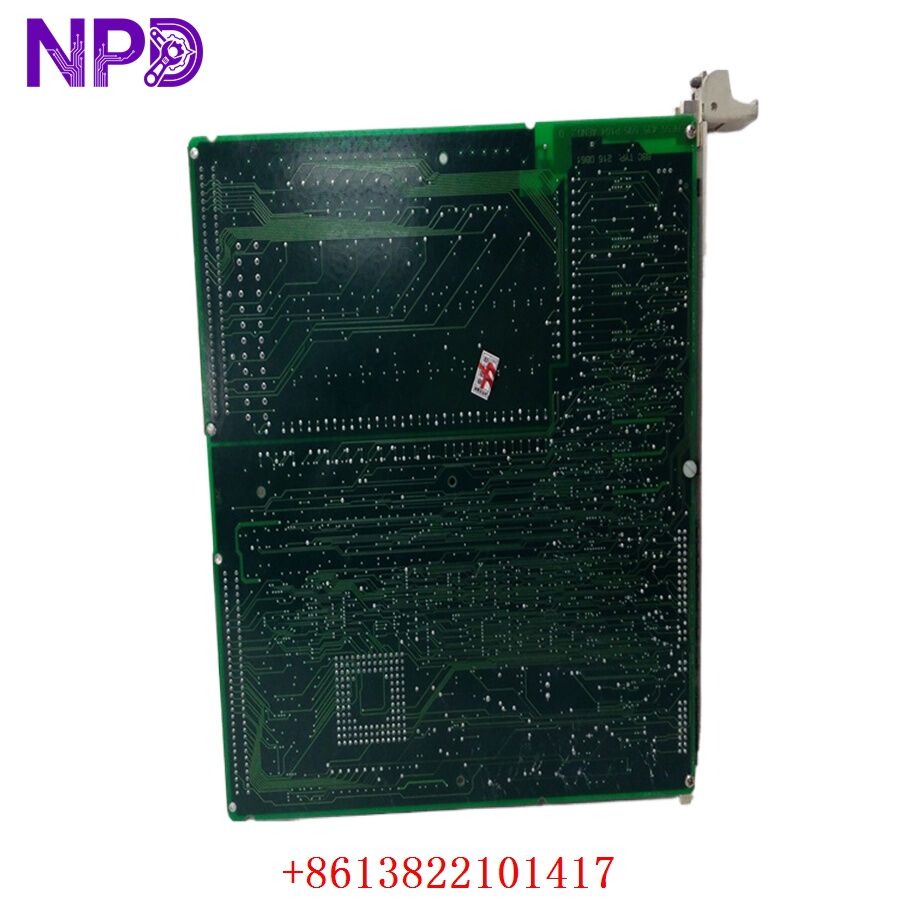
ABB 216DB61 HESG324063R0100 HESG216882A
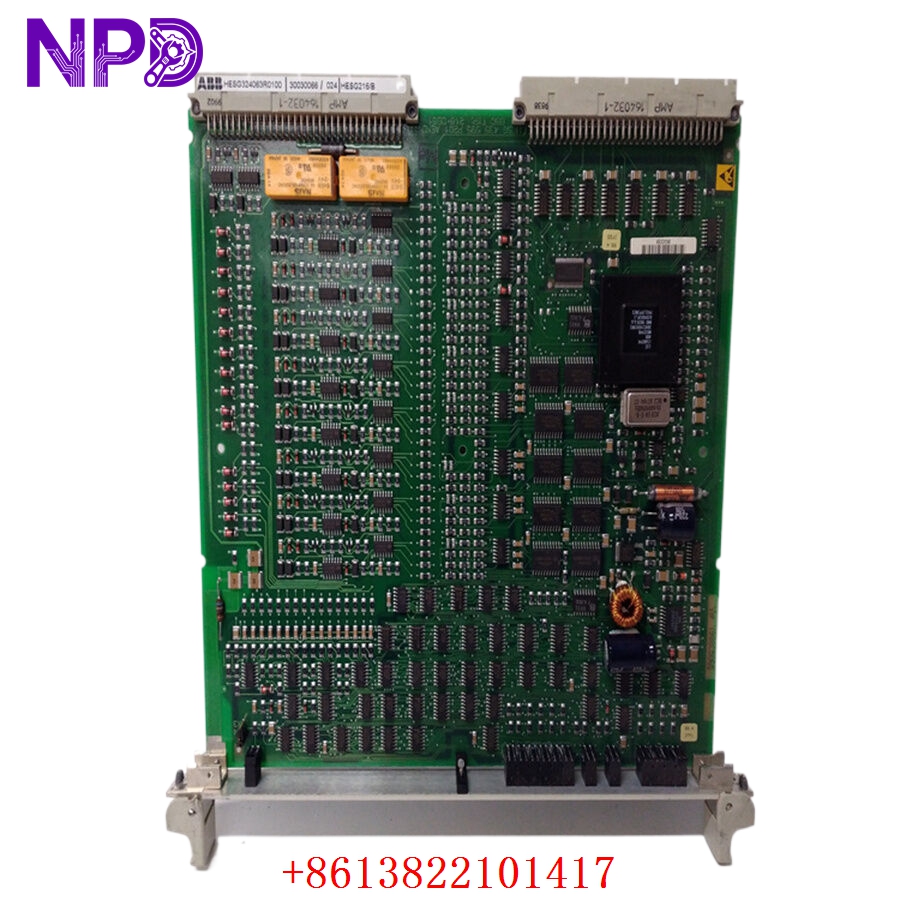
ABB 216DB61 HESG324063R0100 HESG216882A
Application Scenarios & Pain Points
In the ABB Advant OCS architecture, the 216DB61 is the “expressway” for data. It links the main controller processing unit to remote I/O racks or other controllers. If this module fails, the controller loses its “eyes and ears”—input signals stop updating, and output commands never reach the field.
The Engineering Challenge:
The Advant OCS is a legacy system that still controls massive infrastructure, from offshore oil platforms to global paper mills. Finding a 216DB61 with the correct hardware revision (HESG324063R0100) is a race against time when a bus failure occurs. Without a functional communication link, the entire control loop is broken, often forcing a complete plant shutdown.
Typical Application Scenarios:
- Pulp & Paper – Large Scale DCS
Linking centralized AC 450 controllers to decentralized I/O stations across a large paper machine.
- Oil & Gas – Offshore Platforms
Maintaining high-speed communication between redundant controller pairs in harsh, vibration-prone environments.
- Chemical Processing – Batch Control
Ensuring synchronized data transfer between different processing cells for precise recipe management.
- Metals & Mining – Smelter Control
Managing distributed I/O in high-electromagnetic interference (EMI) zones, relying on the module’s robust isolation.
Case Study: The “Blind” Controller at a Marine Terminal
Background: A marine loading terminal used an ABB Master Piece 200 system to manage fuel transfer logic.
Problem: The communication between the central rack and the jetty I/O failed intermittently. The diagnostic logs indicated “Bus Error on Link 1.” The maintenance team identified the 216DB61 (HESG324063R0100) had a failing transceiver chip, causing signal attenuation.
Solution: Local vendors had no stock and suggested a system-wide upgrade. We supplied a verified surplus 216DB61 within 48 hours.
Result:
- Cost Savings: Avoided a premature $500k system migration.
- Operational Recovery: Fuel loading resumed in less than 3 days, preventing contract penalties for delayed tankers.
Compatible Replacement Models
The 216 series has several variants; ensuring you have the “DB” (Distribution Bus) version is critical.
| Original Model | Alternative Model | Compatibility Level | Key Differences | Recommendation |
| 216DB61 | 216DB61b | ✅ Direct Replacement | Minor hardware revision, fully compatible | Interchangeable |
| HESG324063R0100 | HESG324063R0001 | ⚠️ Software Compatible | Earlier revision; may need firmware check | Preferred for older AC 110 systems |
| 216DB61 | 216VC61 | ❌ Incompatible | VC is for Vecto-Bus; different protocol | Do not use |
Troubleshooting Quick Reference
| Symptom | Possible Cause | Relevance | Quick Check | Action |
| “ERR” LED is Red | Internal Logic Failure | ✅ High | Reseat the module; check for 5V power at the backplane | Replace module if LED remains Red |
| “Traffic” LED is Off | Cable Break / No Comm | ⚠️ Medium | Test DB-Bus cable continuity; check terminating resistors | If cables are OK, the module port is likely dead |
| Intermittent Bus Drops | EMI / Ground Loop | ⚠️ Medium | Ensure the DB-Bus cable shield is properly grounded | If grounding is OK, replace module |
| Module Not Recognized | Address Conflict | ✅ High | Check the address switches on the module PCB | Match the switches exactly to the old module |
Field Engineer’s Insight:
When you replace a 216DB61, don’t just look at the front panel. You have to pull the module and check the jumper settings and DIP switches on the side or back of the board. These define the node address and bus speed. If these don’t match your system configuration, the controller will ignore the module entirely. Also, pay attention to the bus terminators—if the 216DB61 is at the end of a line, the terminator must be active.
ESD Caution: These Advant cards are built with sensitive high-speed logic. Always use an ESD wrist strap. I’ve seen modules “half-die” where they work for an hour and then drop out because of a static discharge during installation.
Need to confirm your node settings? Send me a photo of the PCB jumpers on your failed unit, and I’ll help you set up the replacement.