Description
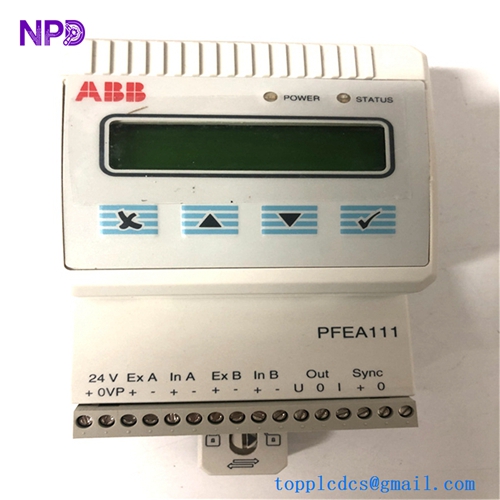
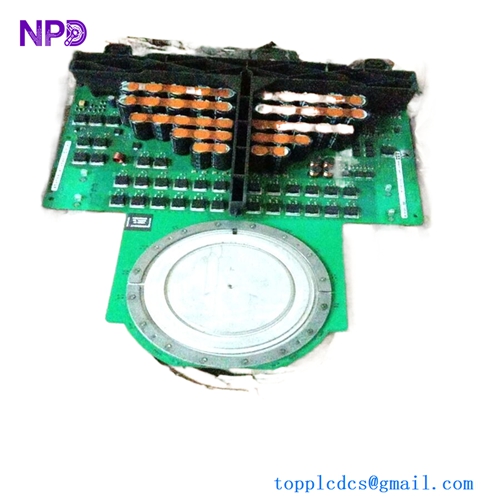
- Model: ABB GDB021BE / GDB021BE01 (Part No. HIEE300766R0001)
- Brand: ABB (Switzerland)
- Series: UNITROL / High Power Rectifier (HPR) Series
- Core Function: Pulse distribution and amplification for thyristor firing
- Condition: Brand New Surplus (Original New), Non-refurbished
- Type: Pulse Transformer / Distribution Board
- Key Specs: Multi-channel pulse output High isolation voltage Direct thyristor gate drive
- Input Signals: Low-level firing pulses from the controller (COB/CIO boards)
- Output Channels: 6 to 12 channels (configuration dependent)
- Isolation Voltage: Tested up to 5,000 V AC (Galvanic isolation)
- Pulse Transformation Ratio: Optimized for high-current thyristor gates
- Power Supply: Typically 24 V DC or 48 V DC (Bus powered)
- Gate Drive Current: High peak current capability for simultaneous firing
- Board Material: High-grade FR4 with conformal coating for industrial environments
- Connectors: High-retention ribbon cable or screw terminal interface
- MTBF: Rated for >100,000 hours in controlled environments
- Operating Temp: -10 °C to +70 °C
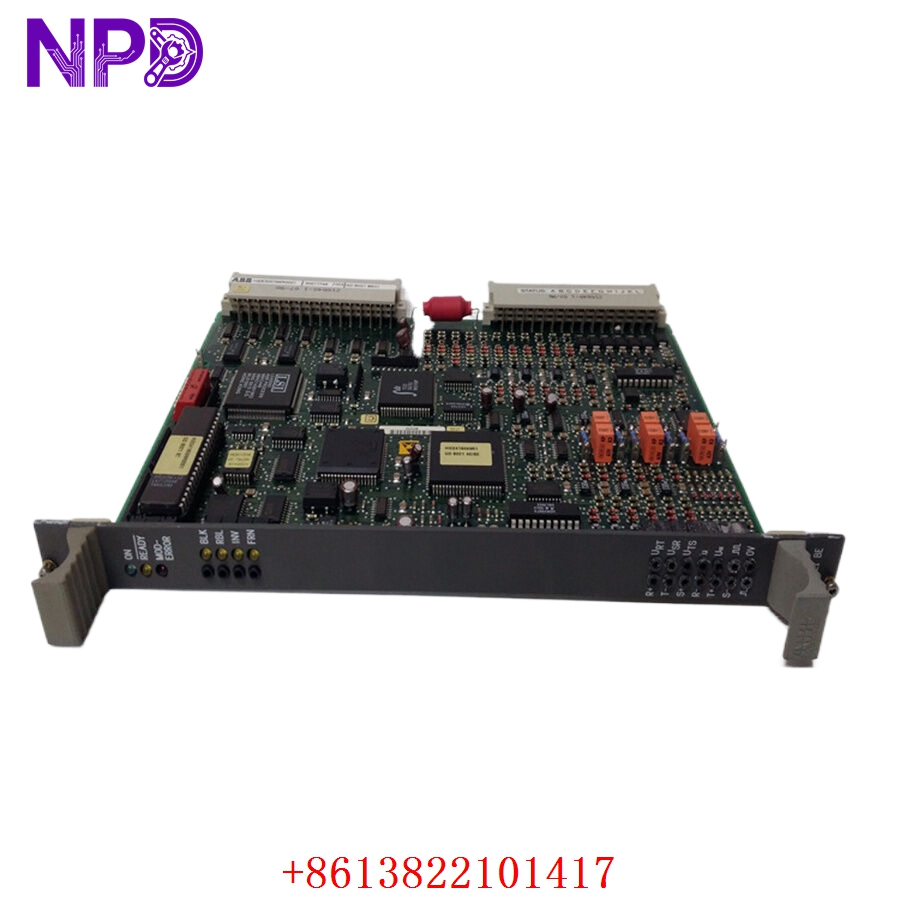
ABB GDB021BE GDB021BE01 HIEE300766R0001
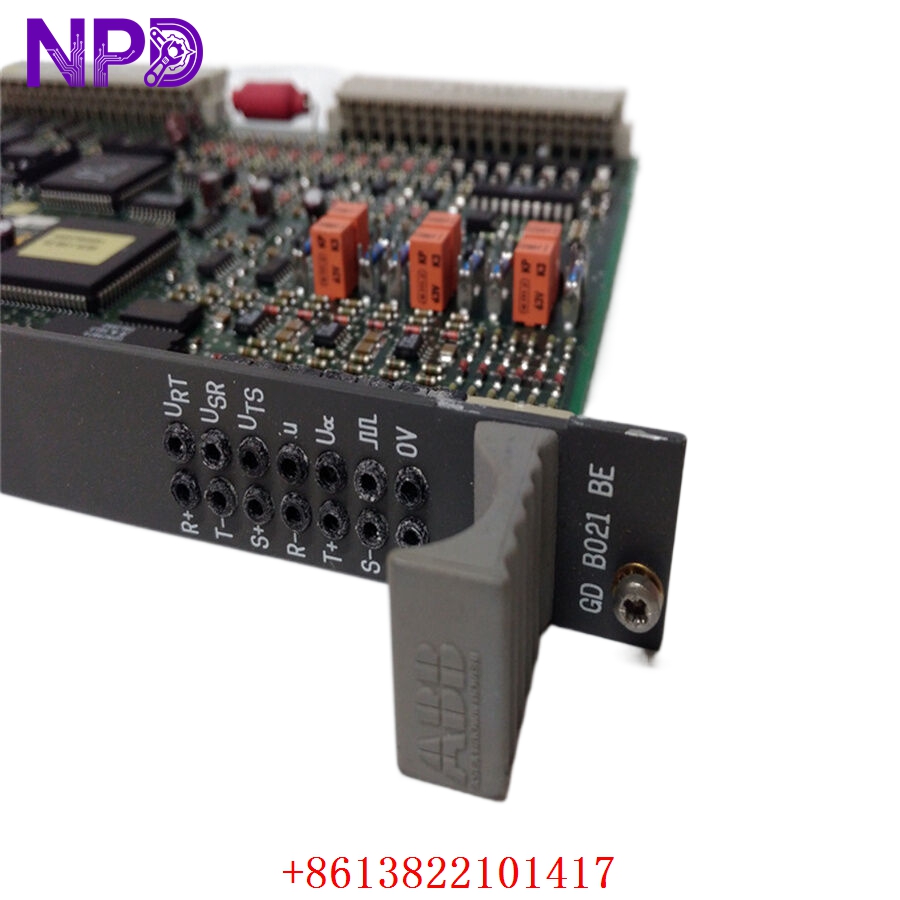
ABB GDB021BE GDB021BE01 HIEE300766R0001
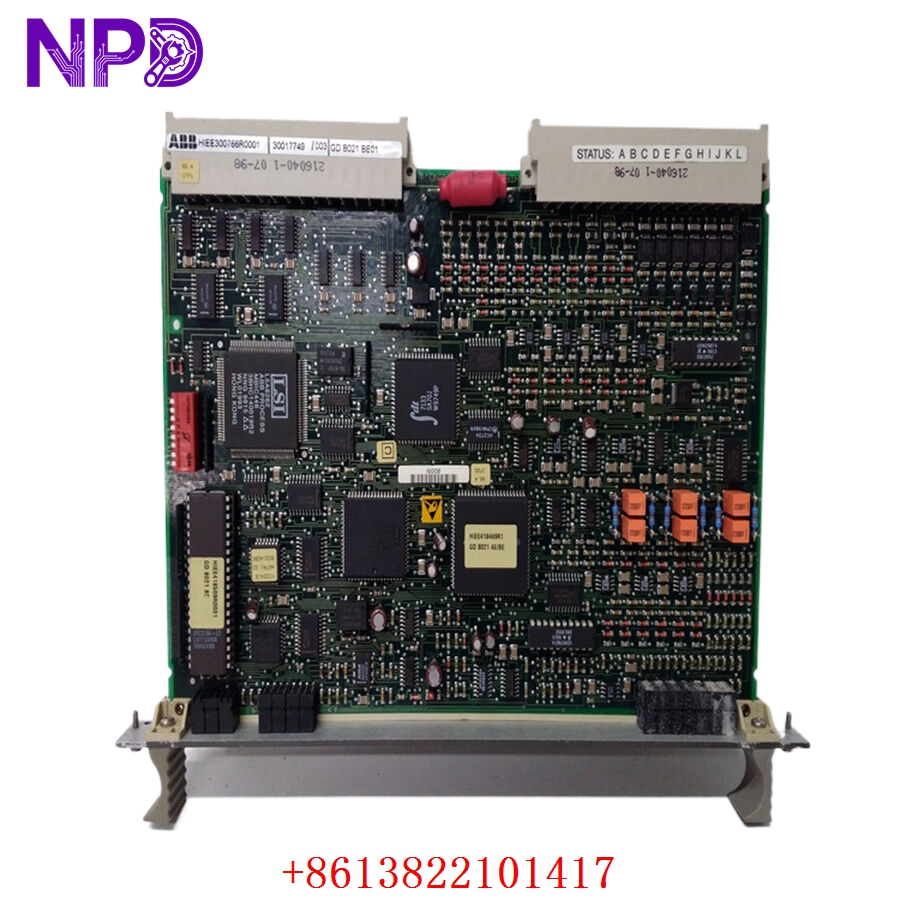
ABB GDB021BE GDB021BE01 HIEE300766R0001
Installation & Configuration Guide
Phase 1: Preparation (20 Minutes)
⚠️ Safety First:
- This board is used in high-power excitation and rectifier systems. Lethal voltages are present.
- Ensure the main breaker (AC side) and the field breaker (DC side) are locked out and tagged out (LOTO).
- Discharge all DC link capacitors. Verify zero voltage with a high-voltage probe before touching the board.
Tools & Protection:
- Insulated screwdriver set (1000V rated).
- Fluke 115 or equivalent multimeter.
- ESD strap (Mandatory—pulse transformers are sensitive to static-induced insulation breakdown).
Phase 2: Removal (10 Minutes)
- Marking: Use a fine-tip marker to label every pulse output cable. If you swap these, you risk firing the thyristors out of sequence, which can lead to a catastrophic short circuit.
- Disconnection: Gently remove the firing pulse cables. Check for any signs of heat damage or carbon tracking on the connectors.
- Hardware: Unscrew the four corner mounting standoffs. Keep the star washers; they are essential for proper grounding/EMI shielding.
Phase 3: Installation (25 Minutes)
- Comparison: Lay the new GDB021BE01 next to the old one. Check for any jumper settings or DIP switches. While most GDB boards are plug-and-play, some revisions have specific resistor jumpers for gate impedance matching.
- Mounting: Secure the board to the standoffs. Tighten firmly but do not crack the PCB.
- Cabling: Reconnect the gate lead wires. Ensure they are routed away from high-current busbars to prevent EMI interference with the firing pulses.
Phase 4: Power-On & Testing (40 Minutes)
- Static Test: Check the resistance across the gate-cathode leads of the thyristors from the board end. You should see a consistent low-ohm reading.
- Cold Test: Power up the control electronics only (keep the main power OFF). Check the status LEDs on the HIEE300766R0001.
- Pulse Verification: If you have a portable oscilloscope, verify the firing pulse shape at the board output. Look for a sharp rising edge; a “lazy” pulse can cause partial thyristor turn-on and overheating.
- Final Sync: Once verified, clear the LOTO and perform a low-voltage “soft start” to ensure the bridge is balanced.
Customer Cases & Industry Applications
Case 1: Hydroelectric Plant Excitation Failure
Situation: A hydroelectric station in Norway suffered a failure in their UNITROL system. The generator could not build up voltage because the firing pulses weren’t reaching the SCR bridge. Task: The site team identified the GDB021BE as the culprit—one of the pulse transformers had an open primary winding. ABB’s lead time for a new production unit was 10 weeks. Action: We shipped a New Surplus HIEE300766R0001 via “Next Flight Out” service. Result: The board arrived in 48 hours. The station was back on the grid within 3 days, saving tens of thousands in lost energy production and grid penalties.
Case 2: Steel Mill Rectifier Maintenance
Situation: A major steel mill uses high-power rectifiers for their arc furnace. During a routine audit, they found three GDB021BE01 boards with significant “yellowing” from long-term heat exposure. Task: To avoid an unplanned shutdown, the maintenance manager wanted to swap these for brand-new units during the annual 24-hour maintenance window. Action: We supplied three matching boards, each with a serialized test report showing 100% pulse integrity. Result: The swap was completed in 2 hours. The old boards were kept as emergency-only spares, and the mill’s uptime for the following year reached 99.9%.
Frequently Asked Questions (FAQ)
Q: What is the difference between GDB021BE and GDB021BE01? A: These are typically revision codes. The “01” version is the latest iteration of the HIEE300766R0001 design, often featuring improved heat dissipation or updated components. They are generally 100% backward compatible.
Q: Why can’t I just repair the pulse transformers on my old board? A: Technically, you can, but in a high-power excitation system, the insulation integrity is critical. A DIY repair might not meet the 5kV isolation requirement. If a transformer fails and shorts the control side to the power side, you will likely destroy the much more expensive CPU modules upstream.
Q: Do you offer the cables for this board as well? A: We usually stock the HIEE300766R0001 board itself. Firing cables are often custom-length for the specific cabinet. However, we can sometimes source the pre-terminated ribbon cables if you provide the length.
Q: Is this board compatible with UNITROL 5000 or 6000? A: The GDB021BE is frequently found in UNITROL 5000 and certain custom HPR (High Power Rectifier) systems. Always check your system’s “Bill of Materials” (BOM) to confirm the HIEE number matches.
Q: How do I know this isn’t a “pulled” board from a scrapped system? A: We provide high-resolution photos of the solder side and mounting holes. On a “pulled” board, you will see indentation marks from the screws. Our New Surplus boards are pristine, with no mounting marks and original factory markings intact.