Description
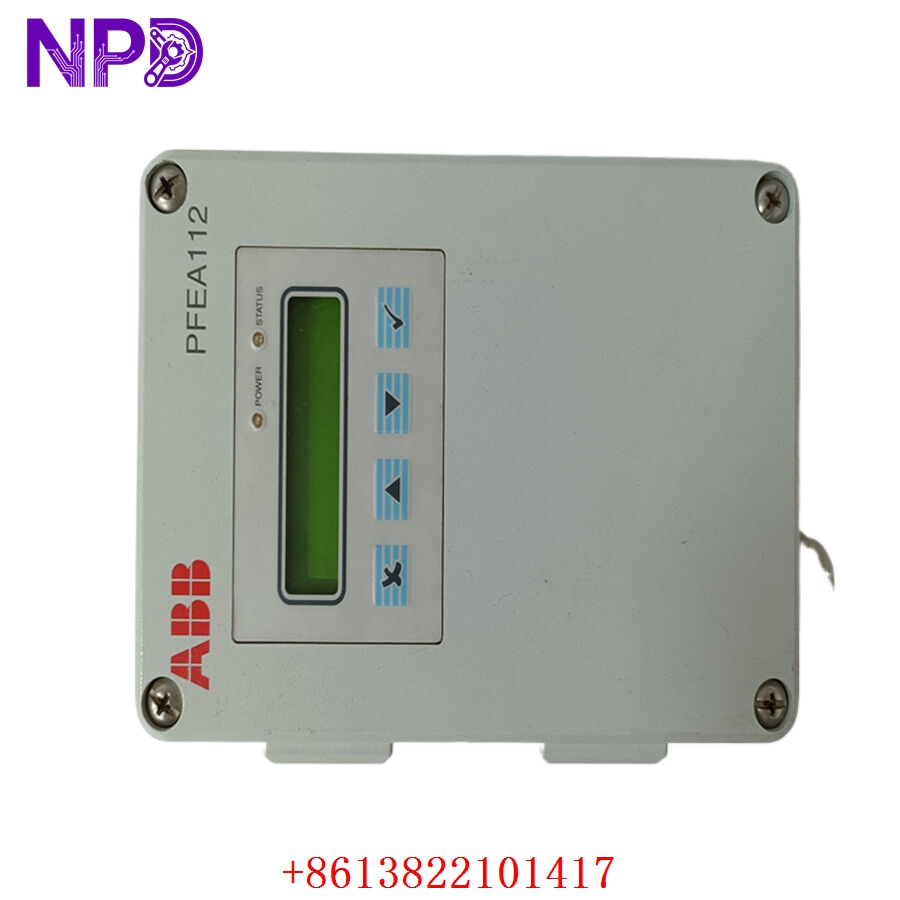
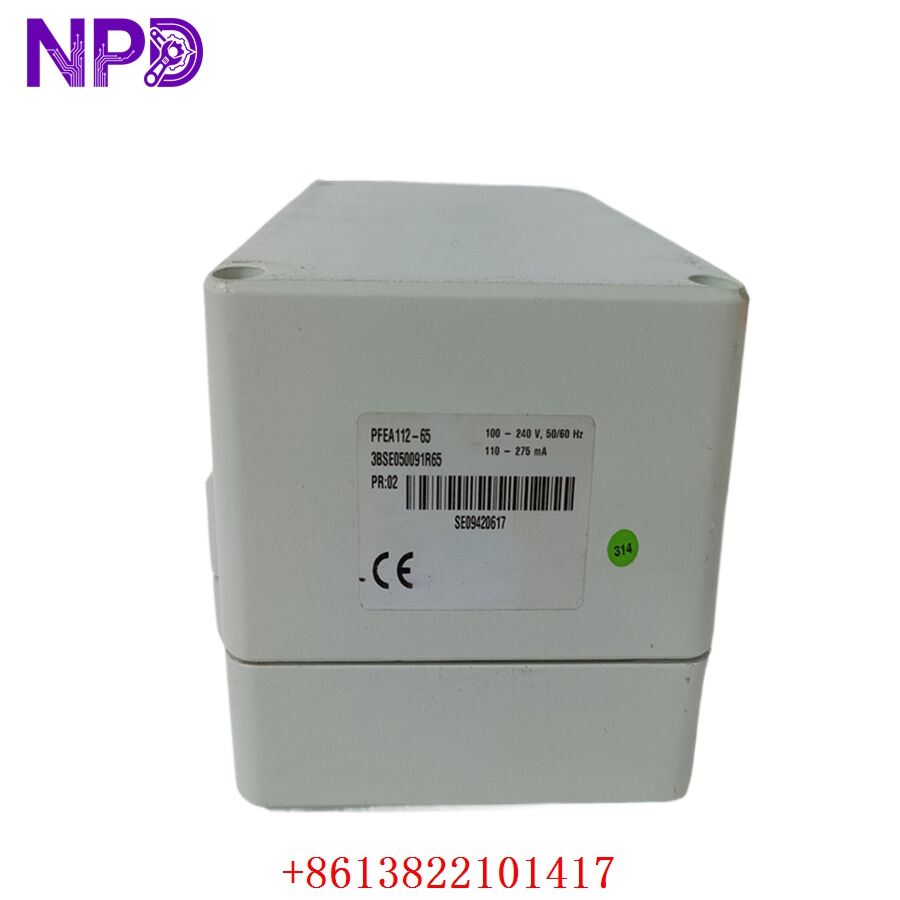
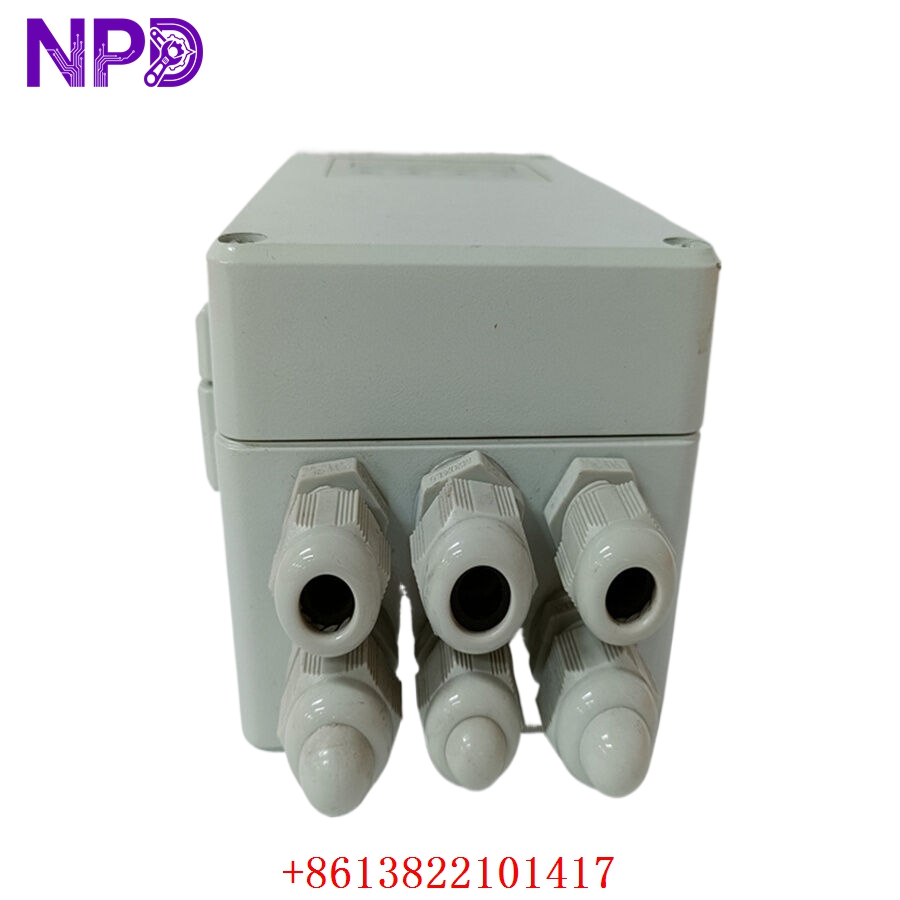
The ABB PFEA112-65 (Part Number 3BSE050091R65) is a high-performance tension electronics unit designed for industrial web tension measurement and control. As part of the PFEA110 series, this device provides precise signal processing for tension sensors (load cells). It is engineered to deliver accurate, stable, and repeatable tension measurement in demanding production lines, helping to optimize product quality and minimize web breaks.
Technical Specifications
| Parameter | Detail |
| Model | PFEA112-65 |
| Part Number | 3BSE050091R65 |
| Manufacturer | ABB |
| Device Type | Tension Electronics (Load Cell Interface) |
| Power Supply | 18-36 VDC |
| Input Type | Up to 4 Tension Sensors (Load Cells) |
| Output | 0/4–20 mA, 0–10 V, and Fieldbus options |
| Mounting | DIN Rail / Cabinet |
| Operating Temperature | -10°C to +55°C |
Fields of Application
The PFEA112-65 is essential for industries where web tension is critical to the manufacturing process:
- Pulp and Paper: Monitoring tension on paper machines and winders to prevent breaks.
- Converting & Printing: Ensuring consistent tension for printing, coating, and laminating processes.
- Plastic Film & Foil: Controlling tension for high-speed extruders and slitters.
- Metal Processing: Managing tension for thin metal strip rolling and processing lines.
Product Introduction
This unit functions as the “brain” of the web tension system. It receives micro-volt level signals from the tension sensors (load cells) installed on the machinery, amplifies these signals, filters out noise, and converts them into standardized industrial outputs. The “65” variant typically indicates advanced communication capabilities and specific enclosure or regional compliance ratings. Its robust design allows it to maintain accuracy even in environments with heavy electromagnetic interference.
Product Use Instructions
- Mounting: Secure the unit on a standard DIN rail within a climate-controlled electrical cabinet.
- Wiring: Connect the tension sensors to the designated input terminal blocks using shielded, twisted-pair cables to prevent signal noise.
- Configuration: Use the front-panel display and keypad (or the dedicated software tool) to perform a “zero-point calibration” and “gain calibration” based on the load cell manufacturer’s specifications.
- Integration: Connect the analog output (4-20mA) to the drive system or PLC that regulates the motor speed.
- Validation: Apply a known weight (calibration force) to the rollers to verify the display readout matches the actual applied force.
Product Use Precautions
The PFEA112-65 is sensitive to electrical ground potential differences; ensure the tension electronics and the machine frame share a common high-quality ground. Avoid routing tension sensor cables alongside high-voltage power lines to prevent signal interference. When cleaning the cabinet, ensure no liquids or conductive dust enter the unit, as this can cause internal shorts in the high-precision signal circuits. Always ensure the unit is kept within its operating temperature range to prevent thermal drift.
Frequently Asked Questions (Q&A)
Q: Can I use this with any brand of load cell?
A: It is designed primarily for ABB load cells; while it may interface with others, you must verify impedance and excitation voltage compatibility before installation.
Q: How do I perform a system reset if the readings are erratic?
A: First, verify the cable shielding integrity. If issues persist, check the calibration settings in the menu. A factory reset can be performed through the “Service” menu, but ensure you record your calibration constants first as these will be lost.
Q: What does the “PFEA112-65” indicate?
A: The PFEA112 is the model series for tension electronics with advanced fieldbus communication support, and the “-65” signifies the specific hardware configuration and connectivity features for that version.
Product Operation Methods
During runtime, the PFEA112-65 continuously monitors the sensors. It employs sophisticated digital filtering to differentiate between actual web tension changes and mechanical vibrations (like roller misalignment or motor ripple). It outputs the processed data in real-time, allowing the machine’s speed-control loop to dynamically adjust motor torque, keeping the web tension at the operator’s setpoint. The device requires no daily manual intervention, but the display should be checked periodically to ensure the “Ready” status is active.