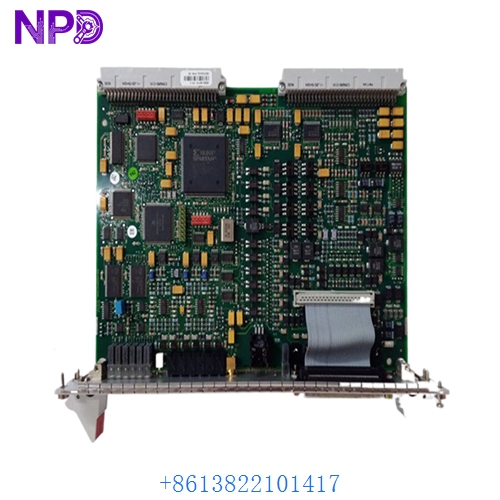

Description
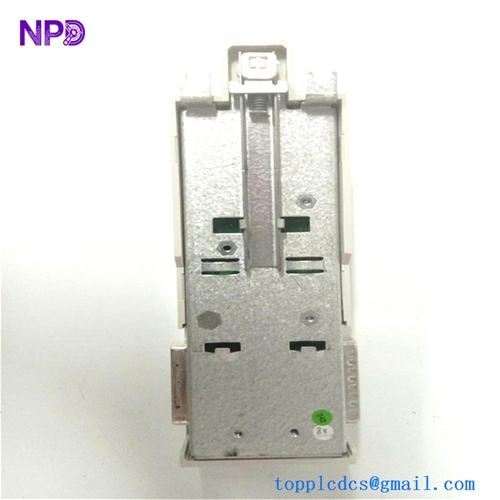
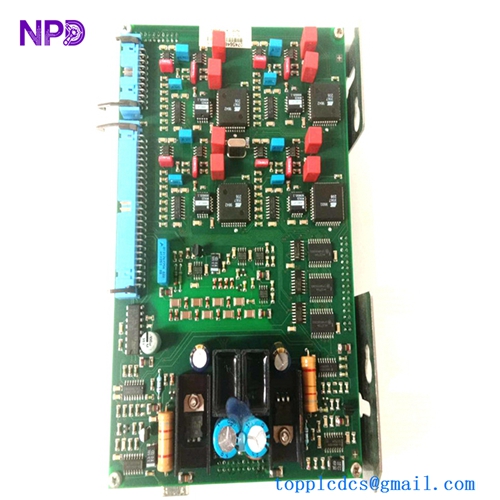
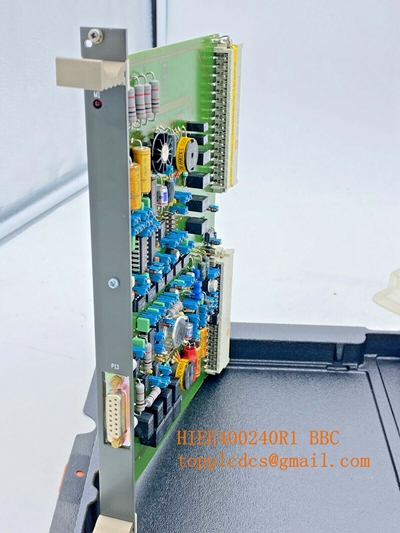
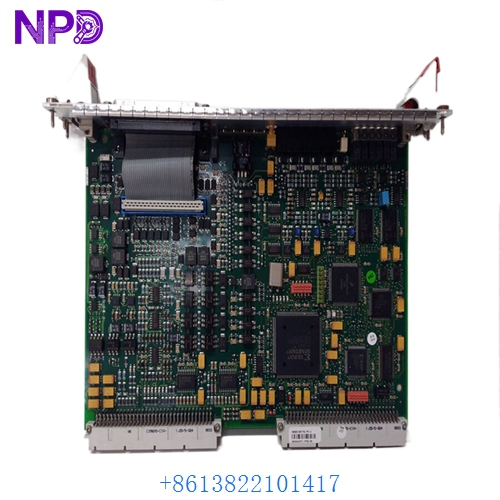
The ABB PFSK152 (Part Number: 3BSE018877R2) is a specialized Synchronization Interface Board used within the AC800M and S800 I/O system families. It is primarily designed to facilitate the high-speed synchronization of clock signals and data exchange between redundant controller pairs or between a master controller and high-precision communication modules.
Product Parameters (Datasheet)
- Model Number: PFSK152
- Part Number: 3BSE018877R2
- System Compatibility: Advant OCS, AC800M, and S800 I/O
- Function: Clock synchronization and redundancy link interface
- Interfaces: * Dedicated synchronization ports for peer-to-peer connection
- Backplane interface for integration with the module termination unit (MTU)
- Power Supply: 24 V DC (Supplied via the backplane)
- Status Indicators: LED for Run, Fault, and Sync Status
- Isolation: Built-in galvanic isolation to ensure signal integrity across redundant units
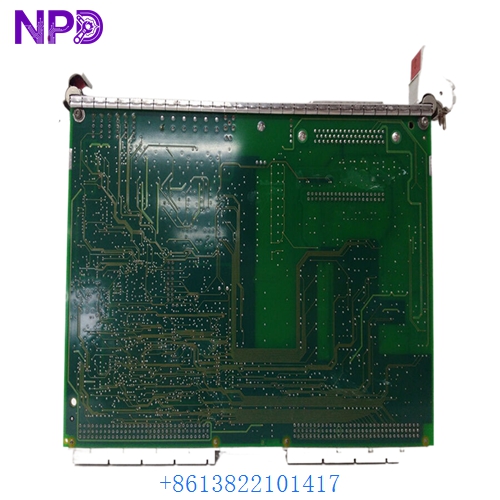
ABB PFSK152 3BSE018877R2
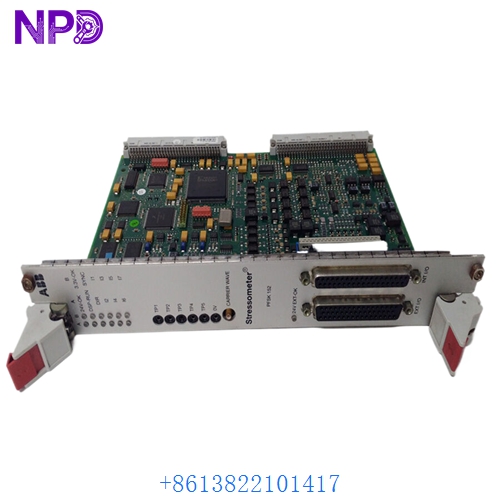
ABB PFSK152 3BSE018877R2
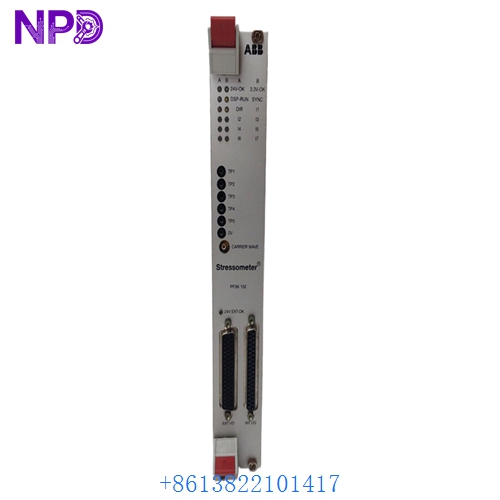
ABB PFSK152 3BSE018877R2
Country of Origin
This synchronization module is engineered and manufactured by ABB in Sweden, maintaining the rigorous quality standards required for the Advant and 800xA control platforms.
Application Fields
The PFSK152 is a critical component in systems where high availability and millisecond-level timing accuracy are mandatory:
- Power Generation: Coordinating redundant controllers in turbine control and generator protection.
- Oil & Gas Processing: Ensuring seamless failover in Emergency Shutdown (ESD) systems.
- Chemical Manufacturing: Managing time-critical batch processes where synchronization between I/O clusters is vital.
- Metals & Mining: Controlling high-speed rolling mills that require perfectly synchronized drive logic.
- Marine Propulsion: Providing redundant control stability for shipboard power management systems.
Product Usage Instructions
- Mounting: The PFSK152 is typically mounted on a specific Module Termination Unit (MTU) like the TU840 or TU847. Ensure the MTU is securely attached to the DIN rail.
- Redundancy Link: Connect the synchronization cables between the primary and secondary PFSK152 modules. This “heartbeat” link allows the standby controller to mirror the memory and clock of the active unit.
- Module Insertion: Gently slide the module into the MTU until the locking mechanism clicks. Avoid applying excessive force to prevent pin damage.
- Configuration: In the ABB Control Builder M or 800xA Engineering software, define the module in the hardware tree. Configure the synchronization interval and redundancy parameters as per the system requirements.
- Diagnostic Check: Verify the “Sync” LED is illuminated. A flashing or dark LED may indicate a cable fault or a configuration mismatch between the redundant pairs.
Product Technical Description
Technically, the PFSK152 acts as the hardware-level bridge for the Controller Redundancy feature. While standard Ethernet can handle data exchange, the PFSK152 provides a dedicated, low-latency path for CPU state synchronization. This ensures that in the event of a primary controller failure, the secondary controller can take over the process bumplessly—meaning the process outputs do not fluctuate during the transition. The board handles the alignment of the real-time clocks (RTC) across the system, ensuring that sequence-of-events (SOE) timestamps are identical across all I/O modules, which is essential for accurate post-trip forensic analysis.
Q&A (Common Questions)
- Q: Can the PFSK152 be used with any AC800M CPU?
- A: It is primarily used with CPUs that support hardware redundancy, such as the PM864, PM866, or PM891. Always check the CPU’s technical reference manual for specific MTU and interface board requirements.
- Q: What happens if the synchronization cable is disconnected?
- A: The system will typically trigger a “Redundancy Lost” alarm. Both controllers may attempt to become the “Primary” (split-brain scenario) unless the software-level arbitration (via Ethernet) prevents it.
- Q: Is the 3BSE018877R2 revision compatible with older versions?
- A: Generally, yes. Revision R2 often includes component updates for longevity, but it is best practice to have identical hardware revisions for both modules in a redundant pair.
- Q: Does this module require external 24V wiring?
- A: Usually, it draws power from the MTU’s internal bus. However, the MTU itself must be powered by a redundant 24V DC supply to ensure the synchronization function remains active.
Similar Model Recommendations
- ABB PFSK151: Earlier version or variant of the synchronization board.
- ABB PM866K02: Redundant Controller Kit (often includes these boards).
- ABB TU847: Redundant Module Termination Unit used with the PFSK series.
- ABB BC810: CEX-bus Interconnection Unit for extending the controller bus.
- ABB SS823: Voting Unit for redundant power supply configurations.
For technical documentation or a quote for the ABB PFSK152, please contact our automation technical support team.