Description
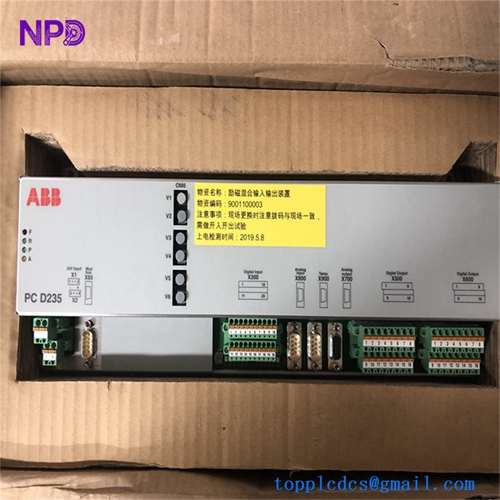
- Model: ABB UDD406A (3BHE041465P201)
- Brand: ABB (Switzerland)
- Series: UNITROL® 6000 / MEGATROL Power Electronics
- Core Function: Generation and distribution of firing pulses for large-scale thyristor bridges
- Product Type: Pulse Transformer / Trigger Interface Board
- Key Specs: Multi-channel pulse output High-isolation voltage Integrated diagnostics
Key Technical Specifications
- Function: Interface between control logic and power thyristors
- Input Signal: High-speed digital firing pulses from the UAD or USC control boards
- Output Capability: Capable of driving multiple high-power thyristor gates simultaneously
- Isolation: High-dielectric strength to protect low-voltage control circuits from power bridge transients
- Pulse Monitoring: Integrated feedback for pulse presence and quality
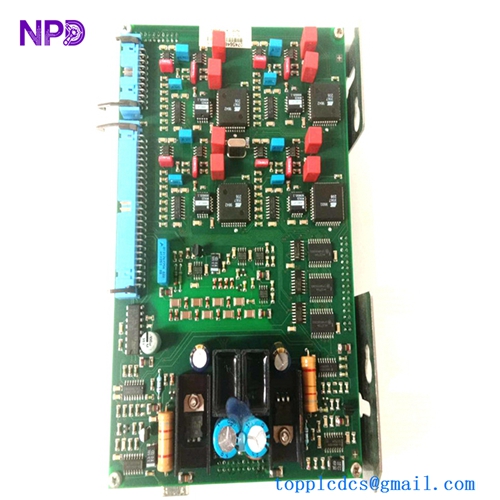
- On-board Components: Features specialized pulse transformers and snubbers
- Hardware Rev: P201 (Enhanced reliability version)
- Coating: Standard industrial tropicalization for moisture and chemical resistance
- Operating Environment: Specifically designed for high-EMI (Electromagnetic Interference) cabinet areas
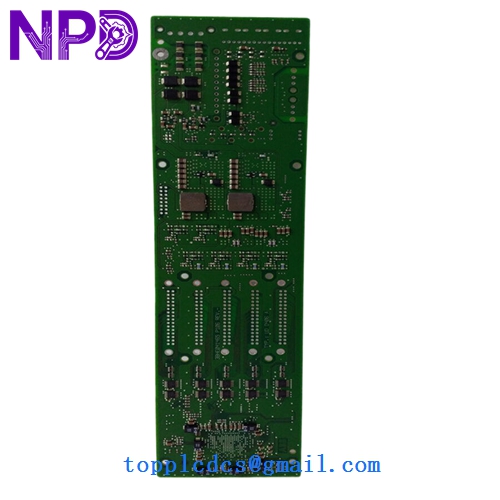
ABB UDD406A 3BHE041465P201
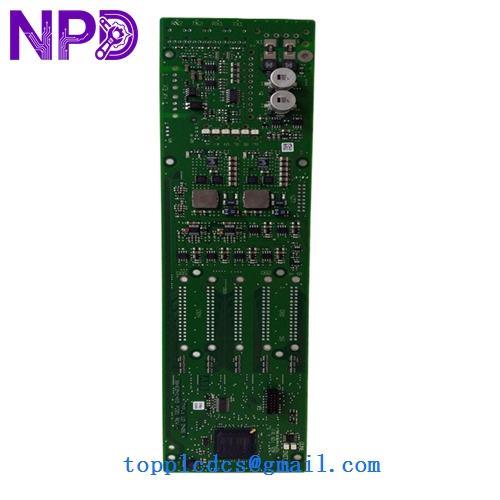
ABB UDD406A 3BHE041465P201
Installation & Configuration Guide
Phase 1: Preparation (Pre-Installation)
Estimated time: 20 minutes
⚠️ DANGER: High Voltage
- The UDD406A is directly linked to the thyristor power bridge. Lock out and tag out (LOTO) all AC and DC power sources before opening the cabinet.
- Discharge all DC link capacitors according to the UNITROL manual.
- Verify that the excitation system is in “Local/Manual” mode and effectively isolated from the generator field.
Required Tools:
- Insulated torque wrench (for terminal connections).
- Fluke 87V or equivalent multimeter.
- Oscilloscope (optional, for post-installation pulse verification).
Phase 2: Wiring and Fiber Optic Inspection
Estimated time: 15 minutes
Step 1: Check Fiber Optic Links Many UDD406A setups utilize fiber optics for pulse transmission. Inspect the ends of the cables for dust or scratches. Clean with an approved lint-free swab and isopropyl alcohol if necessary.
Step 2: Terminal Torque If your version uses wire-to-board connectors, ensure the crimps are tight. Vibration in power cabinets can often loosen these over time.
Phase 3: Replacement & Gating Test
Estimated time: 30 minutes
- Mounting: Secure the UDD406A onto the mounting standoffs. Ensure all ground straps are reconnected; floating grounds on a pulse board can cause “misfiring.”
- Connectivity: Re-attach the multi-pin ribbon cables or fiber links.
- Static Test:
- Power up the control supply ONLY (keep the power bridge de-energized).
- Use the CMT (Commissioning and Maintenance Tool) to force a “Test Fire” of the thyristors.
- Observe the LEDs on the UDD406A; they should flash in the correct sequence (1-2-3-4-5-6).
- Final Check: Ensure no tools are left in the thyristor area before closing the cabinet.
Customer Cases & Industry Applications
Case 1: Aluminum Smelter Rectifier Repair An industrial aluminum smelter using ABB MEGATROL units experienced a “Phase Loss” trip. Troubleshooting revealed that the pulse transformer on the UDD406A board had shorted due to carbon dust accumulation. A new unit was dispatched from our stock via priority air. The plant avoided a catastrophic “freeze” of the smelting pot, which would have cost millions in recovery expenses.
Case 2: Nuclear Power Plant Excitation Maintenance During a refueling outage, a nuclear facility’s preventive maintenance check found that the pulse-shaping capacitors on their 20-year-old trigger boards were nearing end-of-life. To ensure another cycle of zero-failure operation, they replaced all six UDD406A boards with our New Surplus 3BHE041465P201 units. The modules provided identical timing characteristics to the originals, requiring zero software recalibration.
Frequently Asked Questions (FAQ)
Q: Can I use UDD406A to replace a UDD406? A: In most UNITROL 6000 configurations, the UDD406A is a direct, enhanced replacement for the older UDD406. However, always verify that the “P” number (e.g., P201) matches your existing engineering drawings to ensure the output current levels are compatible with your specific thyristors.
Q: Does this board require firmware? A: No. The UDD406A is a hardware-level interface board. It processes signals sent from the main processor. There is no software to “load” into this board, making it a “plug-and-play” hardware replacement.
Q: Why do the LEDs flash during operation? A: Each LED corresponds to a firing channel. In a standard 6-pulse bridge, you will see a rapid sequence of flashes. If one LED remains dark while the others are active, it usually indicates a failure in that specific firing channel or the incoming signal from the controller.
Q: How do you ensure these boards work since they are “Surplus”? A: We perform a “dry fire” test where we simulate the input signals and verify the transformer output waveforms using a high-speed oscilloscope. We ensure the pulse rise time and amplitude meet ABB’s factory specifications before the board is sealed in an anti-static bag.
Q: Is there a risk of using an older “New Surplus” board? A: We store all our power electronics in a climate-controlled, humidity-monitored environment to prevent electrolytic capacitor degradation. These boards are “New-in-Box” and have never seen the heat or stress of an active power cabinet, giving them a much longer expected life than a refurbished unit.