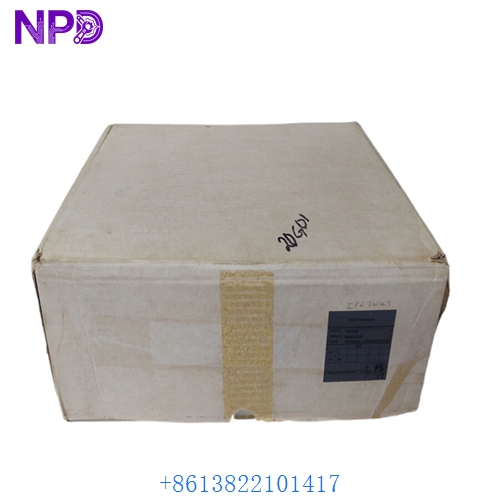

Description
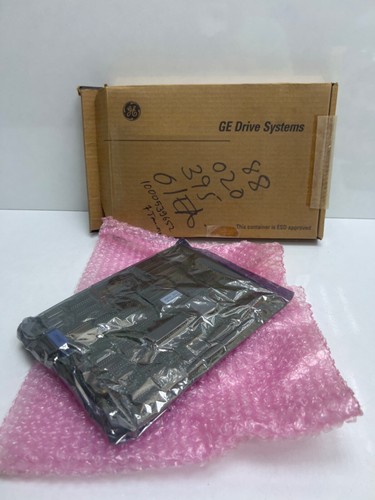
The GE DS3800HLNE1B1B is a high-performance LAN (Local Area Network) interface board specifically designed for the Speedtronic Mark IV and Mark V turbine control systems. This board functions as the primary communication link for the “High Level Network” (HLNE), facilitating high-speed data exchange between the turbine control cores and external operator interfaces (HMIs) or data loggers. The “1B1B” revision code indicates a specific hardware configuration featuring dual processing logic and enhanced parity checking for communication integrity.
- System Compatibility: GE Speedtronic Mark IV / Mark V
- Network Protocol: HLNE (High Level Network) / ARCNET based
- Data Transfer Rate: 2.5 Mbps (ARCNET standard)
- Onboard Logic: Dual-processor architecture for protocol management
- Memory: Integrated EPROM for firmware and RAM for data buffering
- Interface: Front-panel BNC or D-sub connectors for network coaxial cabling
- Diagnostic Indicators: LED array for “Transmit,” “Receive,” and “Board Fault” status
Product Datasheet
| Feature | Specification |
|---|---|
| Model | GE DS3800HLNE1B1B |
| Board Code | 6BA00 C-ESS |
| Dimensions | 245 x 185 x 28 mm |
| Weight | 0.45 kg |
| Country of Origin | USA |
| Connector Type | Coaxial BNC / RS-232 / Backplane edge connector |
| Configuration | Field-programmable via DIP switches and jumpers |
Application Fields
This communication board is a vital infrastructure component for turbine-wide data management:
- Gas Turbine Control: Linking the Mark V <R>, <S>, and <T> cores to the <I> Operator Interface for real-time monitoring.
- Data Historian Integration: Transmitting high-resolution turbine performance data to remote plant historians (OSIsoft PI, etc.).
- Redundant Networks: Serving as the primary communication node in dual-redundant LAN architectures.
- Remote Diagnostics: Enabling remote engineering access for troubleshooting and control software updates.
Product Instructions
- Safety Protocol: Power down the control core before board insertion. The Mark IV/V system is not designed for “hot-swapping” the HLNE board, and doing so can cause bus contention or hardware damage.
- ESD Handling: This board contains sensitive CMOS microprocessors. Handle the DS3800HLNE1B1B only by the plastic extractors or board edges while wearing a grounded ESD wrist strap.
- Jumper & Switch Setup: Before installation, verify that the DIP switches for “Node Address” are set to match the previous board. The node address must be unique on the HLNE network.
- Network Connection: Ensure the coaxial BNC connectors are securely locked. If this board is the last node on the network segment, a 93-ohm terminator must be installed on the T-connector.
- Initialization: Upon power-up, observe the “OK” LED. If the “RX” (Receive) LED is flickering, the board is successfully detecting network traffic from other nodes.
Q&A – Common Questions
Q1: What does the “C-ESS” designation on the board mean? A1: “C-ESS” is an internal GE manufacturing designation referring to the “Electronic System Section” configuration. It ensures that the board has the specific component load-out required for High-Level Network processing rather than general I/O.
Q2: How do I troubleshoot a “Network Offline” alarm for this board? A2: Check the BNC cabling and T-connectors for physical damage. Verify the Node Address DIP switches. If the “Fault” LED is lit, the onboard EPROM firmware may have failed, or the local processor has crashed.
Q3: Can a DS3800HLNE1B1B replace a DS3800HLNE1A1A? A3: Generally, yes. The “1B1B” is a later revision with improved components. However, after swapping, you should verify the communication stability via the “LST” (List) command on the operator interface to ensure no packet drops are occurring.
Related Product Recommendations
- GE DS3800HMPC1A1A | Microprocessor Control Board
- GE DS3800HCRP1A1A | Relay Output Board
- GE DS3800HPRG1A1A | Programming Interface Board
- GE DS3800HAIC1A1A | Analog Input Card
- GE DS3800HXPS1A1A | Auxiliary Power Supply Board