
Description
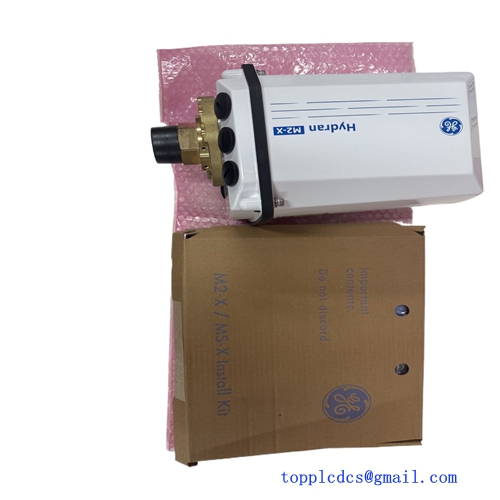
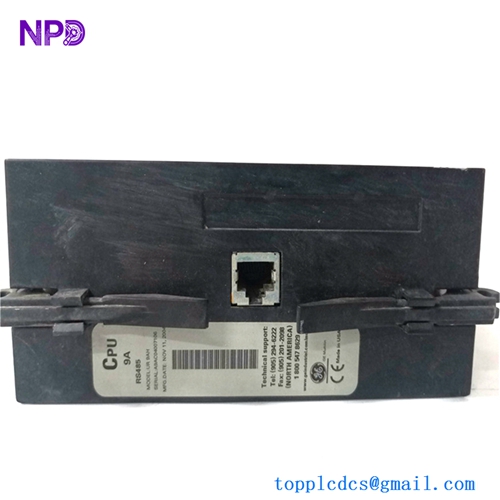
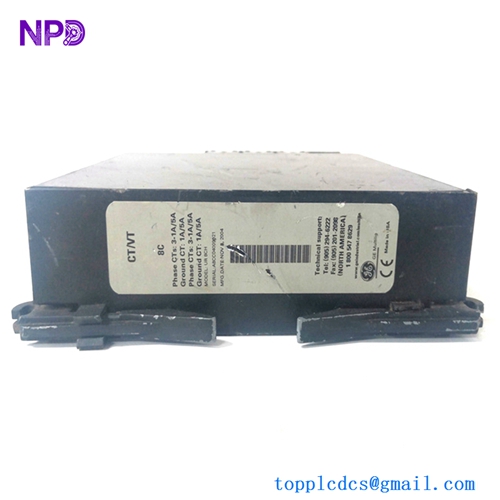
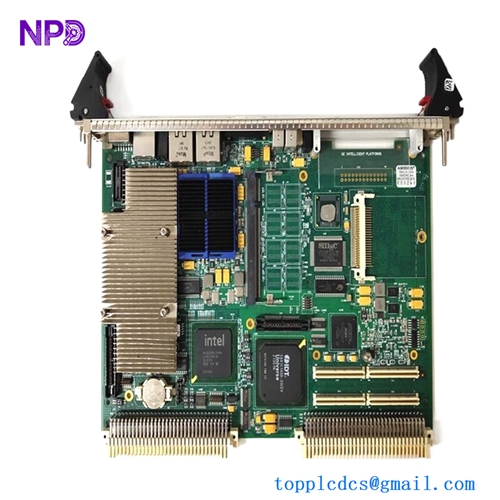
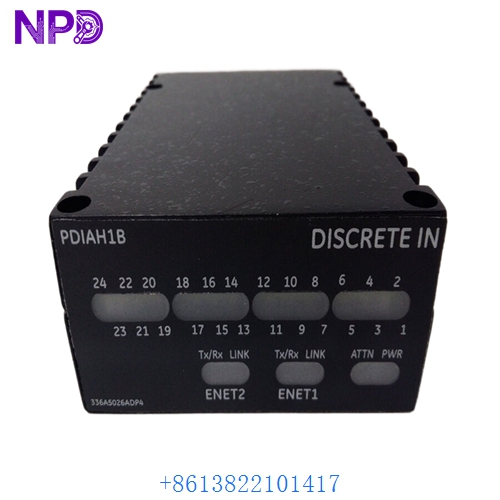
The GE IS220PDIAH1B (part number 336A5026ADP4) is a high-density Packaged Discrete Input (PDI) module designed for the GE Mark VIe Distributed Control System (DCS). This module serves as a critical I/O interface, capturing digital state information from field-level devices such as limit switches, proximity sensors, and push-buttons. Engineered for high-speed signal processing and reliability in harsh industrial environments, the IS220PDIAH1B converts incoming field signals into digital data transmitted over the Mark VIe I/O Ethernet network. It is widely used in power generation, heavy industrial control, and turbine management systems where precise monitoring of binary status is essential for system safety and operational sequencing.
Product Specifications
- Model Number: IS220PDIAH1B 336A5026ADP4
- Manufacturer: GE (General Electric / Emerson)
- Product Series: Mark VIe Control System
- Function: Packaged Discrete Input (PDI) Module
- Dimensions: 130 mm x 100 mm x 40 mm (Compact modular I/O form factor)
- Weight: 0.45 kg (1.00 lbs)
- Country of Origin: United States (USA)
- Number of Channels: 24 discrete input channels
- Input Voltage: Configurable via terminal board (typically 24V DC or 125V DC)
- Communication: Ethernet (I/O network)
- Isolation: Galvanically isolated inputs to ensure controller protection
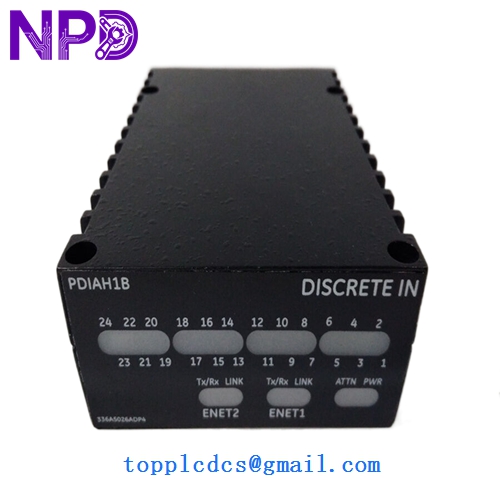
GE IS220PDIAH1B
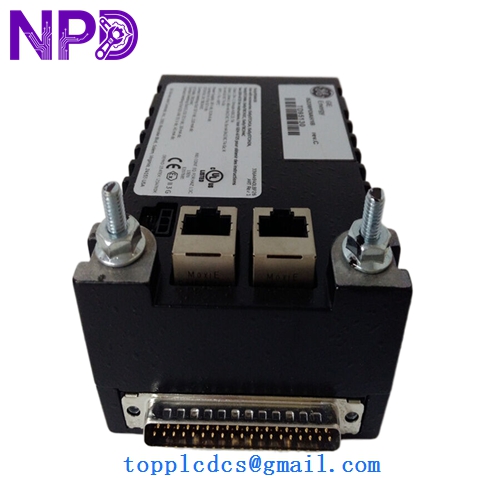
GE IS220PDIAH1B
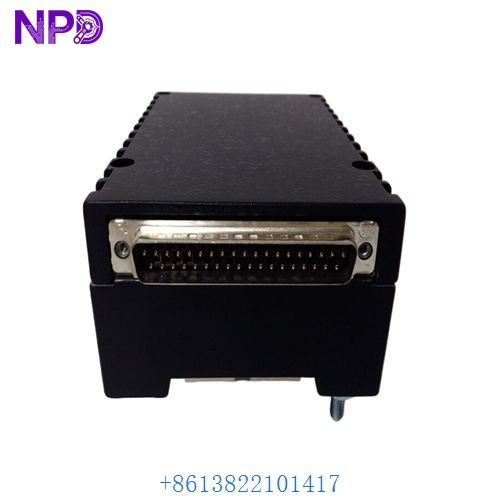
GE IS220PDIAH1B
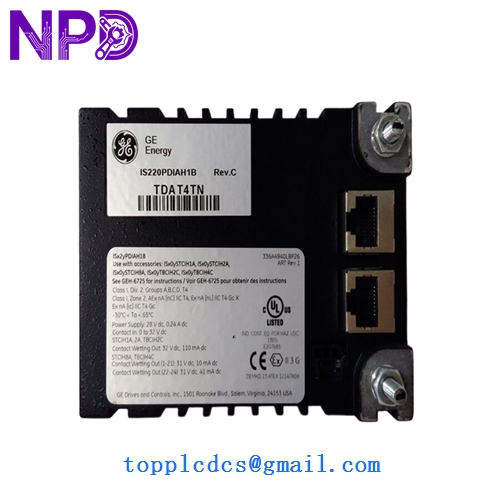
GE IS220PDIAH1B
Applications
- Turbine Control Systems: Monitors status signals for valve limit switches, emergency stop buttons, and auxiliary pump contactors in gas and steam turbine configurations.
- Power Plant Automation: Provides high-density digital input aggregation for centralized control and diagnostic systems in electrical utility substations.
- Heavy Manufacturing: Used in automated assembly lines and heavy motor control centers for real-time status feedback from safety interlocking systems.
- Emergency Shutdown Systems (ESD): Interfaces with critical field sensors to trigger rapid shutdown sequences when operational boundaries are exceeded.
Product Usage Instructions
- Physical Installation: The IS220PDIAH1B is designed for use with a dedicated terminal board (e.g., STBA, STBN). Mount the module onto the terminal board by aligning the connector pins and pressing firmly until the retention latches secure it into place.
- Electrical Wiring: Wire your discrete field inputs to the corresponding terminals on the associated terminal board. Ensure that the field power supply matches the voltage rating configured for the module to avoid hardware damage.
- System Configuration: Using the GE ControlST software suite, configure the module within the I/O tree. You must define the signal name, logic state (Active High/Low), and hardware assignment to match the physical terminal connections.
- Diagnostic Verification: Upon powering up the system, monitor the “Link” and “Status” LEDs on the front of the module. A solid green light indicates successful network communication, while a flashing amber light typically suggests a configuration mismatch or loss of Ethernet connectivity.
Frequently Asked Questions (Q&A)
- Q: Is the IS220PDIAH1B field-replaceable while the Mark VIe system is running? A: Yes, the module supports “hot-swapping.” Because the Mark VIe system is designed for high availability, you can remove and replace a failed module without shutting down the entire control system, provided you are following your facility’s safety lockout procedures.
- Q: What is the purpose of the “336A5026ADP4” part number suffix? A: This identifies the specific hardware version and revision level of the assembly. It is crucial to use the exact revision (ADP4) when ordering replacements to ensure it is compatible with your existing I/O network protocols and control system firmware baseline.
- Q: How does this module handle transient spikes or noise on input lines? A: The IS220PDIAH1B incorporates integrated input filtering (de-bouncing) and opto-isolation for each channel. This architecture effectively suppresses electromagnetic interference (EMI) and electrical noise commonly found in industrial environments, ensuring only valid input states reach the processor.
- Q: Can I use this module for high-speed pulse counting? A: No, this is a discrete (on/off) input module. While it can detect input state changes, it is not optimized for high-speed pulse frequency measurement or encoder feedback. For those applications, specialized frequency input modules should be utilized.