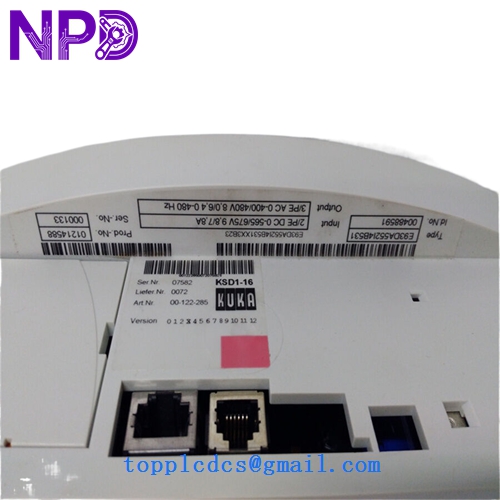

Description
Product Specifications
- Origin: Germany
- Weight: 11.20 lbs (5.08 kg)
- Dimensions: 13.5 inches x 11.0 inches x 2.1 inches
- Current Rating: 16 Amps (Continuous)
- Compatible Controller: KUKA KR C2 / KR C2 Edition 2005
- Communication: Interbus interface for high-speed drive bus synchronization.
- Part Number (KUKA): 00-122-285
- Manufacturer Code (Lenze/KUKA): E93DA552I4B531
The KUKA KSD1-16 is a high-precision digital servo drive module utilized in the KR C2 robot controller to regulate the movement of individual robotic axes. This module serves as the power electronics interface, converting the DC bus voltage into a controlled three-phase AC output for the robot’s brushless servomotors. The “16A” rating makes it a mid-range power module, typically assigned to major axes (A1, A2, or A3) on medium-payload robots. It features integrated thermal monitoring and short-circuit protection, ensuring that the robot can perform high-speed, repetitive tasks with millimetric accuracy while maintaining a fail-safe electrical profile.
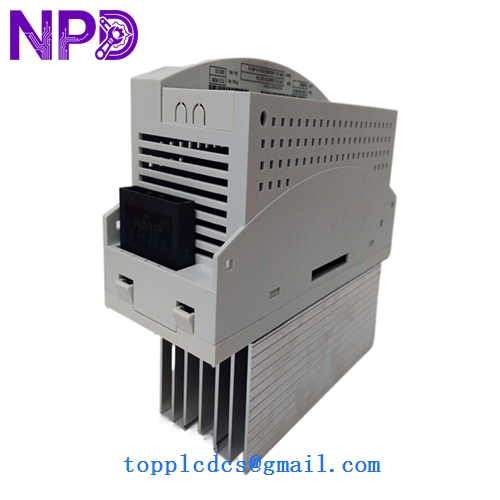
KUKA KSD1-16 E93DA552I4B531 00-122-285
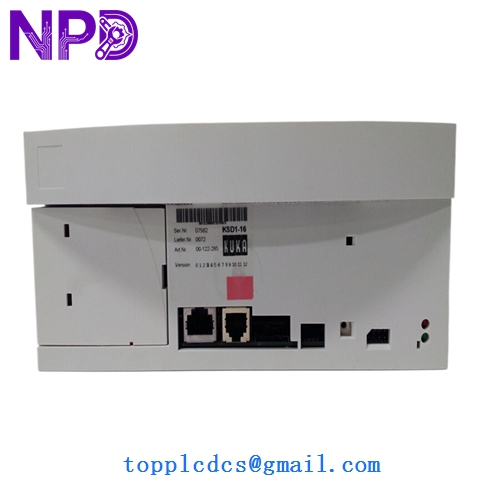
KUKA KSD1-16 E93DA552I4B531 00-122-285
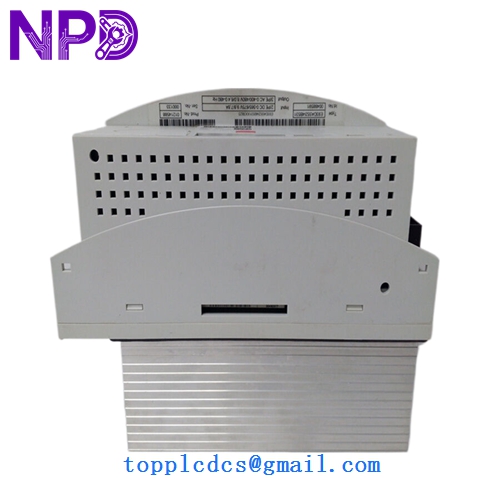
KUKA KSD1-16 E93DA552I4B531 00-122-285
Model Comparison: KSD1-16 vs. Similar Models
The KSD1-16 (00-122-285) is distinguished from the smaller KSD1-08 and larger KSD1-32 or KSD1-48 primarily by its output current capacity. While the KSD1-08 is restricted to smaller wrist axes (A4-A6), the KSD1-16 provides the necessary torque-producing current for the robot’s larger structural joints. This specific part number (00-122-285) represents a hardware revision optimized for the KR C2 “Edition 2005” cabinets, offering improved heat dissipation efficiency and more robust internal DC bus capacitors compared to the very early KSD series modules found in standard KR C1 or initial KR C2 units.
Operational Guidelines
-
- DC Bus Safety: High-voltage DC remains in the capacitors after power-off; wait at least 5 to 10 minutes for the bus to discharge before removing the module or touching any terminals.
- Fiber Optic Care: The Interbus communication uses fragile fiber optic links; ensure the cables are not kinked and the connectors are free of dust before insertion to avoid “Drive Bus” errors.
- Thermal Compound: When replacing the module, verify that the heatsink surface is clean; although these modules are often plug-in, ensuring unobstructed airflow through the cabinet’s cooling tunnel is vital for maintaining the 16A peak performance.
- Axis Assignment: After installation, the drive must be correctly mapped to its specific axis in the KUKA software (KRC) to ensure the power parameters and brake logic are synchronized with the mechanical motor requirements.