
Description
📝 Product Overview
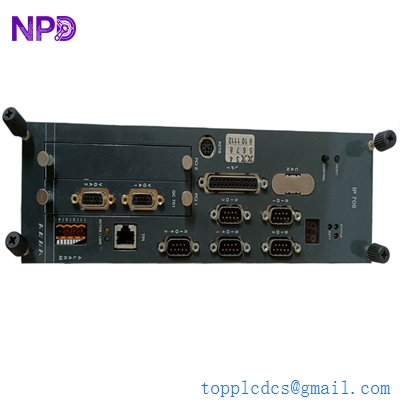
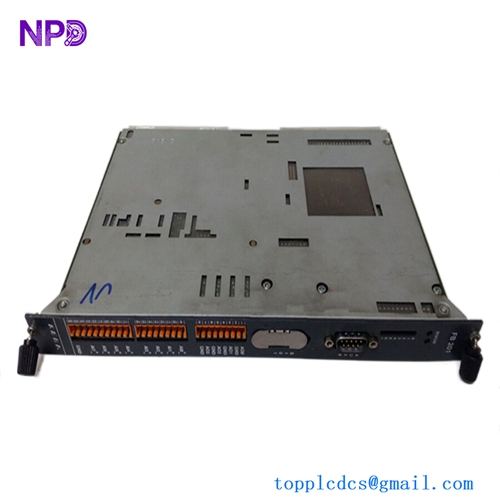
The Rolls-Royce UN929 is a high-performance, marine-certified control unit designed specifically for the processing and regulation of marine propulsion thrusters, including tunnel thrusters and azimuth propulsion units. Built to operate as a core node within integrated bridge and dynamic positioning networks, the UN929 modules process complex hydraulic valve commands, pitch angle adjustments, and motor speed regulations to deliver precise thrust vectoring and steering control for commercial vessels and offshore platforms.

⚙️ Technical Specifications
- 📐 Dimensions: 240 mm x 165 mm x 90 mm
- ⚖️ Weight: 2.85 kg
- 🌍 Country of Origin: Norway / United Kingdom
🚢 Applications
- Controllable Pitch Propeller (CPP) tunnel thruster modulation
- Azimuth thruster steering and engine speed regulation interfaces
- Dynamic Positioning (DP) class-certified hardware loops
- Marine power management load-shedding control systems
🛠️ Usage Instructions
- Verify that the thruster system hydraulic pumps are running within nominal pressure bands before initializing the UN929 control loop.
- Use the system’s calibration menu to align the physical feedback potentiometer readings with the software’s digital zero-thrust values.
- Monitor internal diagnostic LEDs during power-up sequences to ensure the core microprocessor executes its safety self-test cleanly.
- Do not switch command authority between the main bridge and local engine room panels while the thruster is under high load conditions.
🔧 Mechanical Installation Requirements
- Fixing Method: Standard horizontal or vertical surface backplate installation using four M6 vibration-damping isolation screws secured through the heavy-duty aluminum casing tabs.
- Space Clearance: Maintain a minimum perimeter clearance envelope of 65 mm on all sides to prevent cable tension and to allow simple access to pluggable terminal blocks.
- Heat Dissipation: Ensure ambient cabinet temperatures remain below 55°C. For tightly sealed enclosures, active forced-air ventilation is recommended to dissipate local component thermal build-up.
🔌 Electrical Wiring Guide
- Terminal Definitions: * Terminals 1–4: Redundant 24V DC Main and Emergency Power Feeds (+/-)
- Terminals 5–12: 4-20mA Analog Inputs/Outputs for Command Lever and Feedback signals
- Terminals 13–20: Isolated Digital Inputs/Outputs for interlock and alarm loops
- Grounding Lug: M5 threaded copper chassis post located on the lower casing rim
- Wire Gauge: Implement minimum 0.75 mm² (18 AWG) multi-strand, twisted, shielded marine cables for all analog command lines, and up to 2.5 mm² (14 AWG) for primary power paths.
- Grounding Norms: The outer tinned copper shield of all signal lines must be terminated directly to the cabinet ground bus bar using specialized high-frequency EMC grounding clamps. Do not daisy-chain shield paths.
📡 Communication Configuration
- IP Address: Default internal Ethernet backbone configuration sits at 192.168.100.90 (Subnet: 255.255.255.0) for interfacing with upstream monitoring networks.
- Station ID: Assigned physically via two rotary hex-switches beneath the front protection flap to map the node’s position (e.g., Bow Thruster 1, Stern Thruster 2).
- Baud Rate: Configured via onboard software profiles; interfaces natively with redundant CANopen topologies running at 250 kbps or 500 kbps speeds.
❓ Frequently Asked Questions (Q&A)
- Q: What does a “Feedback Loop Open” error signify on the unit?
- A: This indicates a disconnection or signal drop below 4mA on the analog feedback loop wire running from the thruster’s physical position sensor back to the UN929 module.
- Q: Can this unit handle direct control of high-voltage AC propulsion drives?
- A: The UN929 acts as the intelligence layer, generating standardized 4-20mA or digital bus commands that connect directly to the high-voltage Variable Frequency Drive (VFD) or hydraulic valve amplifier.
- Q: How should I resolve a “Dual Power Source Failure” warning?
- A: Check both the primary 24V DC breaker and the secondary backup battery/emergency distribution grid breaker to ensure correct independent input voltage thresholds are present.