
Description
Product Description
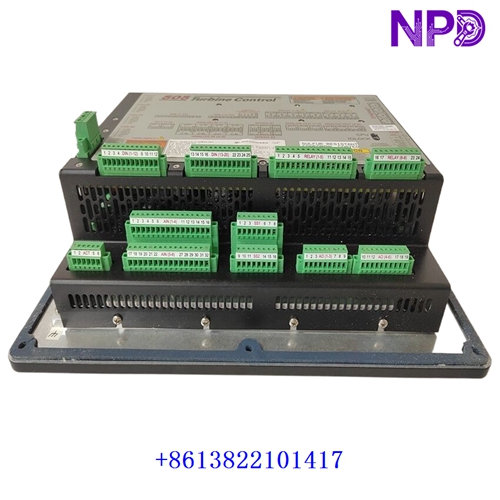
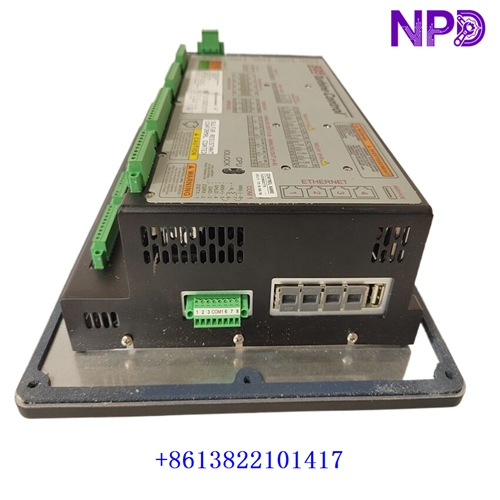
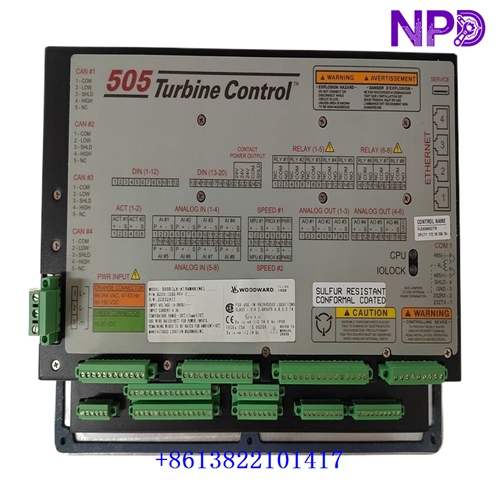
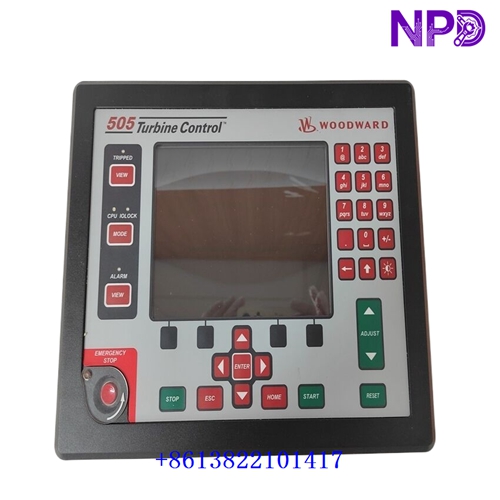
The WOODWARD 8200-1300 is a 505 series digital steam turbine control designed to regulate and monitor steam turbine operation. It combines control electronics with an integrated graphical operator interface, allowing operators to configure control parameters, monitor operating conditions, and manage turbine functions.
The controller supports single-actuator and dual or split-range actuator applications. Its control functions can include turbine speed and load regulation, configurable PID control, alarm monitoring, and integration with a plant Distributed Control System (DCS). The 8200-1300 version is designed for low-voltage DC power and ordinary-location installations. It is suitable for turbine control applications in power generation and industrial process plants when configured for the specific turbine and actuator system.
8200-1300
Product Parameters
Brand: Woodward
Model: 8200-1300
Series: 505 Digital Steam Turbine Control
Product Name: Digital Steam Turbine Governor Controller
Controller Type: Integrated digital controller with graphical HMI
Application: Steam turbine speed and load control
Actuator Support: Single or dual / split-range actuator configurations
Display Size: 8.4-inch graphical display
Operator Interface: Integrated keypad with 34 keys
Power Supply: Low-voltage DC, 18–36 V DC per Woodward manual
Installation Environment: Ordinary-location version
Protection Rating: IP20
Operating Temperature: -30°C to +70°C, with display, according to product specifications
Dimensions: Verify against the official installation drawing for the exact revision
Weight: Verify with the nameplate or supplier
Country of Origin: Not independently confirmed for the individual unit
Product Status: Confirm actual condition with the seller
Discontinued Status: Confirm current lifecycle and service support with Woodward
Recommended Models
- WOODWARD 8200-1301 – 505 digital steam turbine control with AC/DC power input.
- WOODWARD 8200-1302 – 505 series low-voltage DC controller for Zone 2 hazardous locations.
- WOODWARD 8200-2302 – 505 series low-voltage DC controller with ATEX compliance.
- WOODWARD 8200-1310 – 505-XT low-voltage DC steam turbine control.
- WOODWARD 8200-1311 – 505-XT controller with AC/DC power input.
- WOODWARD 8200-1312 – 505-XT low-voltage DC controller for Zone 2 hazardous locations.
- WOODWARD 8200-1330 – 505-DR low-voltage DC turbine controller.
- WOODWARD 8200-1331 – 505-DR controller with AC/DC power input.
- WOODWARD 8200-1500 – Peak200 bulkhead-mounted low-voltage steam turbine controller.
- WOODWARD 8200-1501 – Peak200 bulkhead-mounted high-voltage controller.
- WOODWARD 8200-1502 – Peak200 low-voltage controller for Zone 2 hazardous locations.
- WOODWARD 8200-1503 – Peak200 front-panel-mounted low-voltage controller.
- WOODWARD 8200-1504 – Peak200 front-panel-mounted high-voltage controller.
- WOODWARD 8200-1505 – Peak200 front-panel-mounted low-voltage controller for Zone 2 hazardous locations.
- WOODWARD 8269-1073 – 17-inch TouchPanel operator control panel accessory for supported turbine-control systems.
Q&A
Q1: What is the primary function of the Woodward 8200-1300?
A: It provides digital governing and operator-interface functions for steam turbines, including speed and load control.
Q2: What power supply does the 8200-1300 require?
A: The Woodward manual specifies low-voltage DC power at 18–36 V DC for this model. Confirm the exact requirements in the manual for the installed hardware revision.
Q3: Can it control split-range actuators?
A: Yes. The 505 control family supports single or split-range actuator configurations, subject to correct application configuration.
Q4: Can it connect to a plant DCS?
A: It can be configured for integration with a plant DCS or used as a standalone turbine controller, depending on the system design and communication configuration.
Q5: Is the 8200-1300 suitable for hazardous locations?
A: The 8200-1300 is the ordinary-location version. For hazardous-location applications, select a model with the required certification and verify the site requirements.
Q6: What should be checked before ordering a replacement?
A: Confirm the full part number, hardware revision, power supply, actuator configuration, control application, display and keypad condition, and the turbine system’s approved replacement requirements.