
Description
Product Specifications
| Attribute | Specification |
|---|---|
| Model Number | SBM54D-000 S1 |
| Product Type | Relay Board / Output Module |
| System Compatibility | CENTUM VP / CENTUM CS 3000 |
| Relay Channels | 16-Channel |
| Contact Rating | 250 V AC/30 V DC, 2 A |
| Dimensions | 130 mm x 130 mm x 35 mm |
| Weight | 0.45 kg |
| Origin | Japan |
| Power Consumption | 24 V DC, 100 mA |
Application Fields
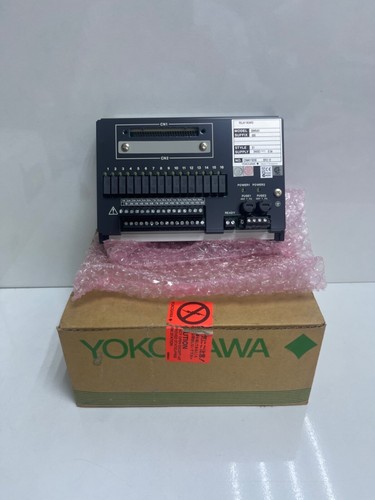
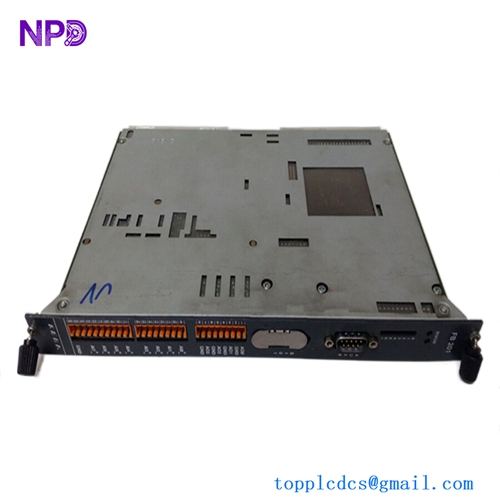
The YOKOGAWA SBM54D-000 S1 is a robust relay interface module used within Distributed Control Systems (DCS). It is primarily applied in:
- Power Plant Automation: Switching of high-voltage circuit breakers and auxiliary relays.
- Chemical & Refining: Controlling solenoid valves and motor starters in hazardous environments.
- Water Treatment: Sequencing of pump operations and valve actuators.
- Emergency Shutdown (ESD): Providing isolated digital outputs for safety-critical interlocks.
Product Instructions
- Mounting: The board is designed for installation within a Yokogawa I/O node or field control unit (FCU). Ensure the module is aligned with the backplane connectors and secured with the front-facing screws.
- Wiring: Field wiring should be connected to the terminal block. Ensure that the total current across all 16 relays does not exceed the backplane’s thermal limits.
- Isolation: This board provides galvanic isolation between the internal logic of the DCS and the external field circuits, protecting the controller from electrical noise and surges.
- LED Monitoring: The S1 version features status indicators. Monitor the status LEDs to verify which relay channels are energized and to check for system-level communication health.
Product Q&A
Q1: What does the “S1” suffix represent on this board? A1: The “S1” suffix indicates a specific hardware revision or functional style. In Yokogawa systems, this often refers to the style of the board or specific firmware/component optimizations for that series.
Q2: Can this board be used for high-frequency switching? A2: No, because it utilizes electromechanical relays, it is best suited for steady-state switching (on/off) rather than high-frequency pulse-width modulation (PWM), which would lead to premature mechanical wear.
Q3: How do I handle a single failed relay on the 16-channel board? A3: Since the relays are integrated onto the PCB, a failure in one channel typically requires the replacement of the entire module unless specialized component-level repair is performed by an authorized technician.
Related Product Models
- YOKOGAWA SBM54D-001
- YOKOGAWA SBM54D-100
- YOKOGAWA SVI137
- YOKOGAWA SDV531
- YOKOGAWA SAI143