
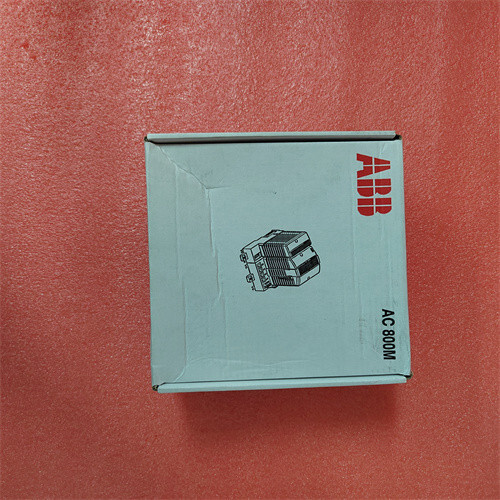
The ABB 3BSE056767R1 CI871K01 is a high-performance communication interface kit designed for the AC 800M controller family. This module enables seamless integration of ABB automation systems with PROFINET IO networks, allowing the controller to act as a PROFINET IO controller. The kit is a complete package that typically includes the CI871 Communication Interface and the TP867 Baseplate.
For stock availability, pricing, or technical support, please visit our CI871K01 contact page.
Technical Description and Parameters
The CI871 provides the AC 800M with a 10/100 Mbps Ethernet port dedicated to PROFINET IO traffic. It is powered directly via the CEX-Bus, eliminating the need for external wiring for its internal logic.
- Module Type: PROFINET IO Interface
- Protocol: PROFINET IO (Ethernet-based)
- Data Transfer Rate: 100 Mbps (Full Duplex)
- Connector Type: 2 x RJ45 (located on the TP867 baseplate)
- Max Units on CEX-Bus: 12 modules per controller
- Current Consumption: 160 mA typical (at 24V DC from CEX-Bus)
- Power Dissipation: 3.8 W (Typical)
- Hot Swap Support: Yes (allows replacement without system shutdown)
Product Datasheet Specifications
- Dimensions: 185 mm (H) x 59 mm (W) x 127.5 mm (D)
- Weight: 0.7 kg (including baseplate)
- Hardware Compatibility: AC 800M (e.g., PM861, PM864, PM866, PM891)
- Operating Temperature: 0°C to +55°C
- Storage Temperature: -40°C to +70°C
- Protection Rating: IP20
- Compliance: RoHS, CE-marked, G3 Corrosion Protection (ISA 71.04)
Application Fields
The CI871K01 is utilized in modern industrial environments requiring high-speed distributed I/O:
- Process Automation: Connecting System 800xA to remote I/O stations, drives, and instrumentation.
- Power Plants: Monitoring and controlling auxiliary systems via PROFINET-enabled relays.
- Manufacturing: Integrating high-speed sensors and actuators in packaging or assembly lines.
- Substation Automation: Interfacing with intelligent electronic devices (IEDs) for power distribution.
Product Instructions for Use
- Mounting: Install the TP867 Baseplate onto a standard DIN rail. The baseplate features a Code Lock mechanism—ensure it is correctly set to prevent the accidental insertion of the wrong module type.
- Module Insertion: Slide the CI871 module onto the baseplate until the locking mechanism clicks. The module receives its 24V DC power through the CEX-Bus.
- Network Connection: Use the CH1 port on the TP867 for the PROFINET IO connection. While the baseplate has two ports, CH1 is specifically designed for 100 Mbps PROFINET communication.
- Configuration: Use Control Builder M (or ABB Engineering Suite) to define the PROFINET IO topology. Import the GSDML files for third-party devices to configure the I/O mapping.
- Status Monitoring: Use the front-panel LEDs (Run, Fault, Primary, RxTx) for real-time diagnostics.
Q&A: Frequently Asked Questions
Q: Does the CI871 support PROFINET Line Redundancy? A: No, standard line redundancy is not supported on this specific interface. However, module redundancy (having two CI871 modules in a redundant controller setup) is supported.
Q: Can I use both RJ45 ports for two different networks? A: Typically, CH1 is used for the primary PROFINET connection. Always refer to the system firmware version (e.g., 6.0+) to confirm if the second port can be used for specific diagnostic or secondary roles.
Q: Is the CI871 compatible with all AC 800M controllers? A: It is compatible with the AC 800M series, but requires the controller to be running a compatible firmware version (usually System 800xA 5.1 or later).
Related Product News
As of 2026, ABB has released specialized firmware updates for the CI871 series to enhance compatibility with PROFIsafe profiles, allowing for safety-related communication over the same hardware. Additionally, the CI871K01 remains a core part of the “Legacy-to-Future” bridge, supporting the migration of older Advant systems to the latest PROFINET-centric architectures without requiring a complete rewrite of the application logic. Operators are increasingly utilizing the CI871’s ability to report granular network health data to ABB Ability™ Asset Manager for predictive maintenance of the network infrastructure.


