
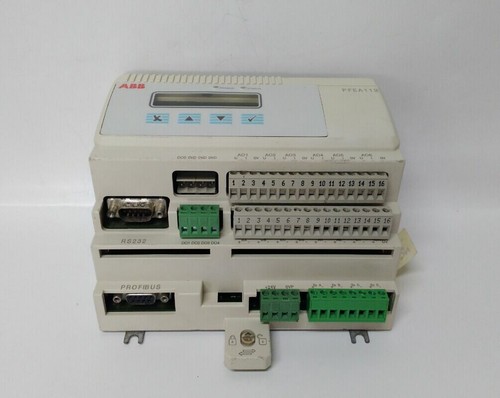
The ABB PFEA113-20 (Part Number: 3BSE028144R0020) is a sophisticated Tension Electronics controller designed for use in web processing industries such as paper, steel, and converting. This module provides the interface between Load Cells (tension transducers) and the higher-level control system. The PFEA113-20 is a specialized version featuring Fieldbus communication capabilities, allowing for seamless integration into automated networks. It processes low-level signals from the load cells with high precision and speed, providing accurate tension measurement even in the most demanding high-speed production environments.
Technical Specifications
The following details define the technical profile of the PFEA113-20 module:
- Model Number: PFEA113-20
- Part Number: 3BSE028144R0020
- Manufacturer: ABB
- Type: Tension Electronics (Fieldbus Version)
- Dimensions: 155mm x 110mm x 50mm
- Weight: 0.60 kg
- Country of Origin: Sweden
- Power Supply: 24V DC (18–36 V DC)
- Degree of Protection: IP20 (Cabinet mounted)
- Communication Interface: PROFIBUS-DP (or other Fieldbus protocols depending on configuration)
- Analog Outputs: 0–10V, 0–20mA, or 4–20mA
Application Fields
The PFEA113-20 is an essential component in processes where precise tension control is vital for product quality:
- Paper and Pulp: Measuring web tension on paper machines and winders.
- Metal Industry: Controlling strip tension in rolling mills and processing lines.
- Converting: Used in laminating, coating, and printing machines to prevent material breakage or wrinkling.
- Textile Industry: Monitoring yarn and fabric tension during high-speed processing.
Product Instructions and Handling
The PFEA113-20 should be DIN-rail mounted within a clean, dry industrial cabinet. It is critical to ensure that the cabling between the load cells and the controller is properly shielded to prevent electromagnetic interference from affecting the sensitive tension readings. When commissioning the unit, use the integrated display or the Fieldbus interface to perform a “zeroing” procedure when the web is slack, followed by a calibration with a known weight (hanging weight method). Because this module contains sensitive electronic circuits, always utilize ESD-safe handling procedures. Ensure the PROFIBUS termination is correctly set if the module is the last device on the network segment.
Questions and Answers
Q: What is the difference between the PFEA111 and PFEA113-20? A: The PFEA111 is a basic version typically used for local display and analog output, whereas the PFEA113-20 is a more advanced version that includes Fieldbus communication (like PROFIBUS-DP) for digital integration with a PLC or DCS.
Q: Can this module support more than one load cell? A: Yes, the PFEA113-20 is designed to support up to two load cells (measuring a single web tension), providing an averaged or summed signal depending on the application requirement.
Q: Is it possible to calibrate the module without a physical weight? A: Yes, the PFEA113-20 supports “data-entry calibration,” where you enter the sensitivity values from the load cell’s certificate. However, a manual weight calibration is generally more accurate for final system tuning.
Product Related News: Enhancing Web Quality through Precision Control
As manufacturing speeds increase to meet global demand, the role of tension electronics like the ABB PFEA series has moved from a secondary monitoring tool to a primary quality control driver. Modern production lines now integrate these controllers directly into AI-driven predictive maintenance models. By analyzing the high-frequency tension data provided by the PFEA113-20, systems can now detect bearing wear in rollers or subtle changes in raw material elasticity before they cause a web break. This shift toward “smart tensioning” is significantly reducing waste in the paper and metal foil industries, aligning with global sustainability goals by decreasing material scrap and energy consumption.


