
The GE DS200TCEAG1BTF is a critical component of the GE Mark V Speedtronic turbine control system. It functions as the Emergency Overspeed Board, providing a redundant safety layer designed to protect the turbine from catastrophic failure by detecting excessive rotational speeds and initiating an immediate trip sequence. This board is typically located within the core (Protective Core) of the Mark V system, ensuring it operates independently of the primary control processors.
For inquiries regarding procurement, lead times, or technical replacement of this GE board, please visit our DS200TCEAG1BTF contact page.
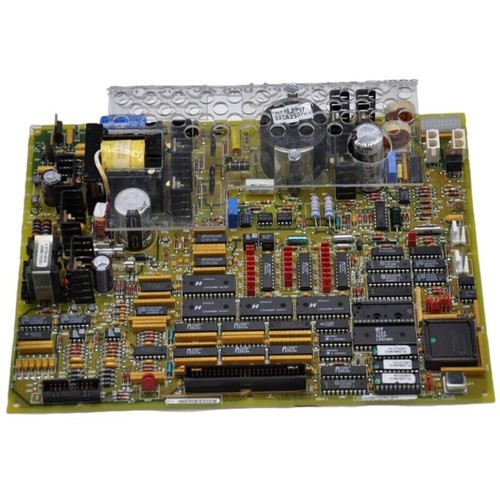
Technical Description and Parameters
The TCEAG1B board processes signals from magnetic pickups (MPUs) mounted on the turbine shaft. It continuously monitors these frequencies and compares them against hard-wired and software-defined setpoints.
- Module Type: Emergency Overspeed Protective Board
- Series: Mark V Speedtronic
- Revision: T (Standard revision), BTF (Specific functional revision/firmware build)
- Inputs: Passive Magnetic Speed Pickups (MPUs)
- Outputs: Relay trip signals to the TREG (Turbine Emergency Trip) board
- Redundancy: Integrated into the Triple Modular Redundant (TMR) safety architecture
- Isolation: High-voltage isolation between speed sensing and logic circuits
Product Datasheet Specifications
- Dimensions: 16.5 cm x 11.4 cm (Standard Mark V small-form board)
- Weight: 0.38 kg (0.84 lbs)
- Country of Origin: USA
- Mounting: Mounted via plastic standoffs in the Core cabinet
- Operating Temperature: -30°C to +65°C
- Connectors: 2PL (Power/Signal), JG (Internal Bus), and multiple test points
Application Fields
The DS200TCEAG1BTF is found in high-performance turbine control environments:
- Gas Turbines: Primary safety oversight for GE Frame 5, 6, 7, and 9 heavy-duty gas turbines.
- Steam Turbines: Monitoring overspeed conditions during load rejection or startup sequences.
- Power Generation: Ensuring the integrity of the generator set in utility-grade power plants.
- Oil & Gas Compression: Protecting high-speed mechanical drive turbines in refinery and pipeline applications.
Product Instructions for Use
- Installation Safety: Before replacing the TCEAG1BTF, the turbine must be in a complete lockout/tagout state. Since this is a protective board, its removal will likely trigger an immediate trip if the system is live.
- Jumper Configuration: Carefully match the hardware jumpers (e.g., JP1, JP2) from the old board to the new board. These jumpers define the speed pickup sensitivity and trip threshold logic.
- Speed Pickup Calibration: After installation, verify the frequency-to-voltage conversion at the designated test points on the board while the turbine is at “crank” speed to ensure the MPUs are providing clean signals.
- Trip Test: Perform a “Digital Overspeed Trip Test” through the operator interface to confirm that the board’s relays effectively communicate with the TREG board to close the fuel/steam valves.
Q&A: Frequently Asked Questions
Q: What is the difference between the TCEAG1B and the TCEAG2B? A: The TCEAG1B is typically the standard version, while the 2B version may feature different relay configurations or be designed for specific high-voltage pickup types. They are usually not directly interchangeable without checking the system’s control topography.
Q: Why is my board reporting a “Pulse Input Failure”? A: This usually indicates an issue with the magnetic pickup or the cabling. Check the gap between the MPU and the gear teeth, and verify that the shield is properly grounded at the cabinet entry.
Q: Can this board be repaired? A: Yes, many Mark V boards are repairable as they utilize discrete components. However, for a safety-critical component like the overspeed board, using a certified new or refurbished unit is highly recommended.
Related Product News
As the GE Mark V system has transitioned into the “Mature” and “Legacy” support phases, boards like the DS200TCEAG1BTF are increasingly sought after for life-extension projects. GE Vernova and specialized distributors continue to support the installed base by providing tested spares that meet original 2026 safety compliance standards. Recent technical bulletins highlight the importance of inspecting the electrolytic capacitors on boards manufactured prior to 2010, as aging components can lead to nuisance trips. Many operators are choosing to upgrade their cores with refurbished TCEAG boards to ensure another decade of reliable protection for their critical turbine assets.


