
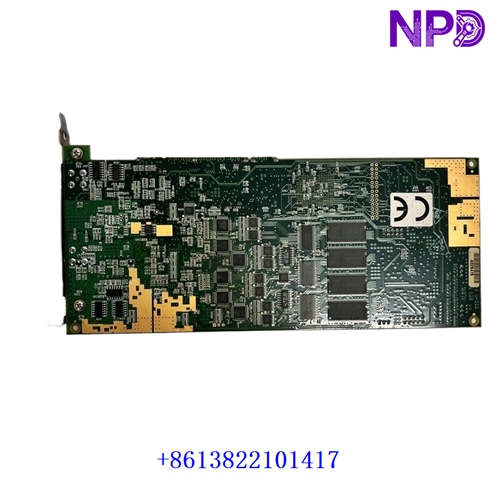
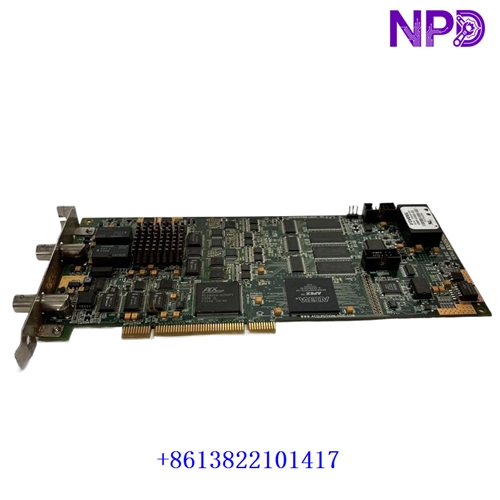
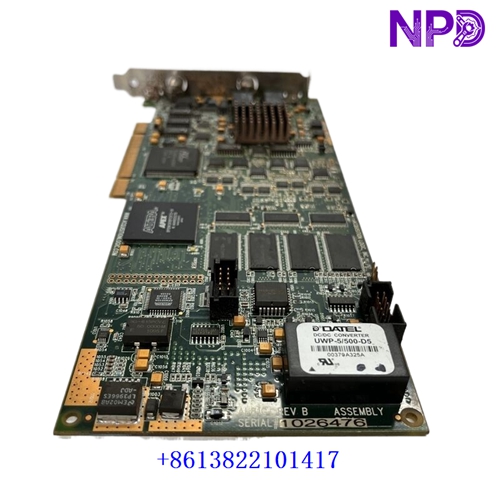
The Acquisition Logic AL81G (frequently associated with UTEX scientific and industrial testing ecosystems) is a high-performance, single-channel high-speed data acquisition and analog-to-digital (A/D) converter board. Engineered for high-frequency signal capture, it is predominantly utilized in advanced non-destructive testing (NDT), ultrasonic inspection systems, high-resolution automated scanners, and laboratory research environments requiring precise capture of rapid transient radio frequency (RF) waveforms.
Product Specifications (Datasheet)
📌 Brand: Acquisition Logic / UTEX
📌 Model: AL81G (1 GHz A/D Converter Board)
ArtisanTG
📌 Series: AL8xG / High-Speed Digitizer Series
abb dcs heavy equipment
📌 Product Name: 1 GHz High-Speed Data Acquisition / Digitizer Module
abb dcs heavy equipment
📌 Place of Manufacture: United States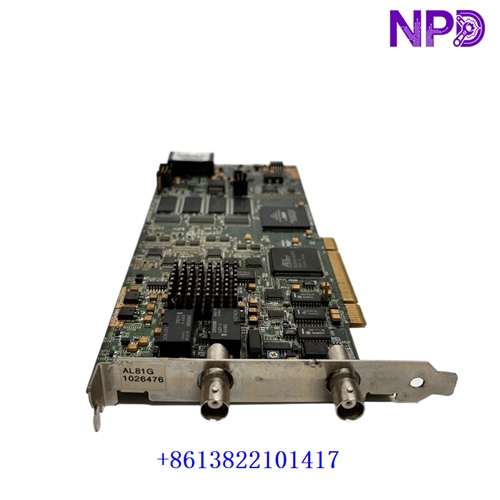
📌 Product Status: Refurbished / Surplus / Legacy Test Equipment Available
ArtisanTG
📌 Form Factor: Standard PCI plug-in instrumentation board
abb dcs heavy equipment
📌 Weight: Approx. 2.3 kg (5 lbs)
ArtisanTG
📌 Core Performance: 1 channel, up to 1 GHz sampling rate, 8-bit resolution, ~100 MHz input bandwidth, and 64 MSamples onboard acquisition memory
abb dcs heavy equipment
Parameter Configuration & Modification Methods
⚙️ Hardware Interface & Connections: Analog signals are routed directly via a front-edge BNC connector. The board also features dedicated encoder inputs (supporting quadrature or step-and-direction signals) to synchronize data acquisition seamlessly with high-speed mechanical scanning movement.
Support
⚙️ Software & Trigger Setup: Acquisition parameters, trigger thresholds (signal threshold triggering), and clock configurations are managed via host computer software drivers and application suites (such as UTEX inspection software environments).
ArtisanTG
🔄 Manual & Automatic Mode Switching
⚙️ Automatic Mode: During active scanning or testing cycles, the digitizer automatically tracks encoder pulses, captures high-frequency transient waveforms upon crossing pre-set amplitude thresholds, and streams data into its deep onboard memory buffer without manual oversight.
⚙️ Manual / Maintenance Mode: Operators can execute manual system calibrations, test signal loopbacks, adjust software trigger criteria, or verify baseline noise performance using diagnostic software utilities during system setup phases.
Frequently Asked Questions (Q&A)
❓ Q1: What is the primary application of the AL81G module? 💡 A1: It is primarily used to digitize high-frequency ultrasonic signals (such as those from UT340 pulser-receivers) for material flaw detection, thickness gauging, and advanced NDT scanning.
Support
❓ Q2: What type of input connector does the board use for signal capture? 💡 A2: It features a standard BNC connector designated for high-frequency analog signal input.
ArtisanTG
❓ Q3: How does the AL81G handle high-speed mechanical movement? 💡 A3: It includes specialized inputs for quadrature encoders or step-and-direction signals, allowing the digitizer to stay precisely synchronized with fast physical scanning systems.
Support
Recommended Related Models
⭐ UT340 (High-Frequency Ultrasonic Pulser-Receiver)
⭐ VMIVME-7700 (VMEbus Processor Board)
⭐ VMIVME-7807 (Intel Processor VMEbus SBC)
⭐ VMIVME-4100 (Analog Output Board)
⭐ VMIVME-3122 (Analog Input Board)
⭐ IS215UCVEH1A (Controller Module)
⭐ IS215CCVCH1AE (Controller Communication Board)
⭐ IS2020RKPSG3A (Rack Power Supply Group Module)
⭐ DS200TCQBG1B (Terminal Board Control Circuitry)
⭐ DS200PTBAG1ABB (Potential Transformer Board)


