
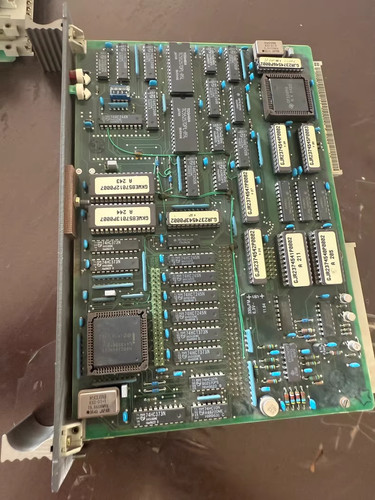
The ABB 88QT03E is a specialized drive control module typically utilized within ABB’s high-power industrial drive systems and thyristor-based power converters. Functioning as the intelligent interface between the central automation system and the power electronics, the 88QT03E manages firing pulses, torque regulation, and localized monitoring of the drive’s power stage. It is engineered for heavy-duty applications where high-current control and precise speed regulation are critical for process stability.
Key Product Specifications
- Model Number: 88QT03E
- Module Type: Drive Unit / Power Converter Control Module
- System Series: Compatible with specialized ABB Power Electronics & Drive Cabinets
- Logic Voltage: 24V DC Internal Supply
- Signal Interface: Multi-channel fiber-optic or high-speed serial links for firing pulse transmission
- Protection Features: Integrated over-current, thermal monitoring, and phase-loss detection
- Mounting: Rack-mount or DIN-integrated depending on the subrack assembly
- Dimensions: 233 mm x 160 mm x 28 mm (Standard industrial card format)
- Weight: 0.68 kg
- Country of Origin: Switzerland / Sweden
Application Fields
The 88QT03E is found in large-scale power conversion and motion control sectors:
- Metals & Mining: Controlling high-torque motors for rolling mills and heavy conveyors.
- Marine & Offshore: Managing propulsion drive systems and large winch controls on specialized vessels.
- Power Transmission: Utilized in excitation systems and static VAr compensators (SVC) for grid stabilization.
- Pulp & Paper: Synchronizing the speed of large rollers in continuous production lines.
Usage & Installation Instructions
- System Power-Down: Before removing or installing the 88QT03E, ensure the main drive bus and control power are fully isolated. High-power drives can retain lethal residual energy in capacitors; allow sufficient discharge time (typically 15-20 minutes).
- Fiber-Optic Handling: If your version uses fiber-optic links for gate firing, do not bend the cables beyond their minimum radius and ensure the tips are clean. Any dust on the connectors can lead to intermittent “Drive Fault” alarms.
- Module Insertion: Align the card with the subrack guides. Press firmly until the connectors are fully engaged with the backplane. Tighten the front panel screws to ensure a solid ground reference and protection against vibration.
- Commissioning: Upon startup, check the “Status” or “Run” LED. If the module is replaced, it may require a firmware synchronization or parameter download from the drive’s central control unit via ABB’s specialized commissioning software.
Q&A – Frequently Asked Questions
Q: Can the 88QT03E be used in place of an 88QT02? A: Generally, the “03E” indicates a specific revision or enhanced feature set. While they may appear physically similar, the internal logic and timing parameters for the firing pulses might differ. You should verify the drive’s firmware compatibility list before substitution.
Q: What does a flashing “Fault” LED indicate on this module? A: A flashing LED usually signifies a communication error between the 88QT03E and the power stage or the central controller. This is often caused by a loose interface cable or a synchronization mismatch during boot-up.
Q: Does this board require manual calibration? A: Most 88QT03E modules are factory-calibrated. However, when integrated into a new drive system, the gain and offset values are typically managed through the drive’s main software interface rather than physical potentiometers on the board.
Product News: Optimizing Power Converter Reliability
The ABB 88QT03E remains a vital component for facilities maintaining high-power legacy drive infrastructure. As global industries move toward increased energy efficiency, these control modules are being utilized in “Smart Retrofit” projects where existing thyristor bridges are upgraded with modern control logic. Technical service providers are seeing a trend where 88QT03E modules are proactively replaced during major shutdowns to prevent unplanned downtime in critical sectors like steel production and power generation. Recent batches of these modules feature upgraded surface-mount components that offer better thermal resistance, extending the operational life of the overall drive unit in high-heat environments.


