
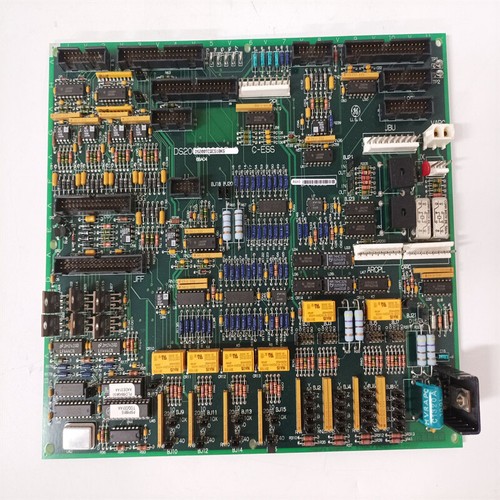
The GE DS200TCQCG1BKG is a specialized printed circuit board designed for the Mark V Speedtronic™ Turbine Control System. Operating primarily within the core protective sections of the control panel, this board functions as an Over-Speed Protection and Control board (often categorized within the TCQC board family). It works directly alongside the <R>, <S>, and <T> emergency control cores to monitor turbine speed via magnetic pickups and execute fast-acting trip logic if an over-speed condition is detected, safeguarding the entire turbine string from catastrophic mechanical failure.
Key Product Specifications
- Part Number: DS200TCQCG1BKG
- System Series: Mark V Speedtronic (DS200 Series)
- Module Type: Over-Speed Protection / Turbine Control Board
- Functional Revision: G1 (Group 1 Architecture)
- Artwork/Component Modifier: BKG (Indicates specific factory-loaded component variations, specialized hardware straps, or EPROM configurations)
- Inputs: High-frequency magnetic speed pickup signals, trip contact feedback
- Outputs: Trip relay driver signals, status signals to the IONET
- Dimensions: 165 mm x 165 mm x 35 mm
- Weight: 0.72 kg
- Country of Origin: USA
Application Fields
The DS200TCQCG1BKG is crucial for heavy-duty rotary asset safety, including:
- Gas Turbine Power Plants: Monitoring high-inertia shaft speeds on GE Frame 6, 7, and 9 turbines.
- Steam Turbine Governing Systems: Interfacing with emergency trip systems (ETS) and hydraulic dump valves.
- Co-Generation Facilities: Managing discrete protection logic for synchronized generator units.
- Heavy Industrial Compressor Drives: Providing independent backup over-speed protection in petrochemical applications.
Usage Instructions & Installation
- Hardware Safety: Ensure the turbine is completely at rest and all active power sources to the Mark V control cabinet are completely isolated. Discharge any residual energy before handling.
- ESD Grounding: This board contains highly static-sensitive electronic components. Always use a grounded anti-static wrist strap when removing the card from its protective ESD bag or placing it into the rack slot.
- Jumper and Hardware Matching: Before installing the new board, verify that all hardware jumpers and EPROM chip configurations on the DS200TCQCG1BKG match the exact layout of the board being replaced. Differences in jumper settings can lead to system configuration mismatches or unexpected trip signals.
- Ribbon Cable Seat Check: Securely attach all ribbon cables to their respective plugs. Ensure that the locking side tabs on the connectors click firmly into place to maintain reliable signal transmission despite normal turbine deck vibration.
Q&A – Frequently Asked Questions
Q: What do the specific letters “BKG” signify in the part number? A: In GE Mark V nomenclature, the three-letter suffix indicates backward-compatible revisions and internal component selections. “BKG” denotes a specific collection of hardware updates or firmware variations optimized for a particular sub-set of turbine control configurations.
Q: Can this board be hot-swapped while the turbine is running? A: No. Because this board processes critical safety-trip and over-speed signals, extracting or inserting it while the system is powered will likely interrupt the protective voting logic, resulting in an immediate emergency turbine trip (RESTART or TRIP).
Q: How do I read diagnostic faults for this specific board? A: Faults are communicated via the IONET network to the operator interface (HMI). Specific diagnostic alarms will point to a discrepancy in the <RST> protective cores, indicating whether a sensor input or the TCQC board itself is reporting an internal failure.
Product News: Extending the Lifecycle of Proven Assets
As industrial operations navigate the later lifecycles of Speedtronic hardware, components like the DS200TCQCG1BKG serve as critical spare parts to avoid premature, high-cost system migrations. Because GE has designated the original Mark V series as legacy, certified control repositories have stepped in to provide fully tested, exact-match boards carrying the “BKG” firmware profile. These specialized units undergo stringent simulation testing to match precise over-speed frequency thresholds, allowing power plants to maintain strict compliance with machine safety regulations while continuing to run their existing, highly reliable control panels.


