
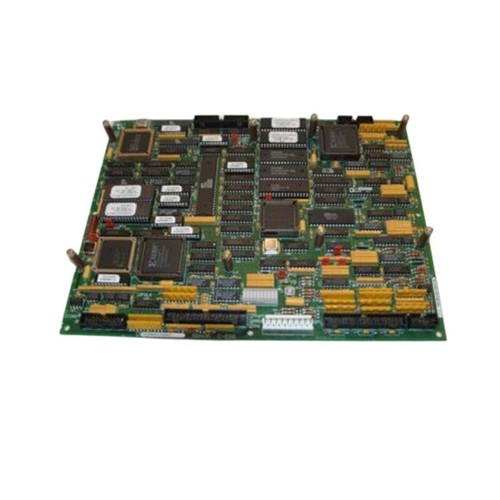
The GE IS200TDBTH2A (TDBT) is a specialized Discrete Input Terminal Board designed for General Electric’s Mark VIe Speedtronic control system. It operates as the physical interface layer where field wiring connects to the control system. The TDBT board filters and conditions incoming discrete (digital) signals before passing them along to a compact I/O pack (such as the PDIA) for logic processing.
The “H2A” designation indicates a specific hardware variant, often featuring distinct voltage ratings or conformal coating configurations to withstand demanding industrial environments.
For inquiries regarding stock availability, pricing, or technical migration support, please visit our IS200TDBTH2A contact page.
Technical Description and Parameters
The TDBT board handles high-density contact inputs and can be configured for simplex, dual, or Triple Modular Redundant (TMR) routing depending on the application’s reliability requirements. It contains extensive surge suppression circuitry to shield the internal processor networks from external electrical faults.
- Module Type: Discrete Input Terminal Board
- Series: Mark VIe Speedtronic
- Input Channels: Supports up to 24 discrete inputs
- Wetting Voltage: Typically configured for 24V DC, 48V DC, or 125V DC (varies by group and board configuration)
- Redundancy Support: Compatible with Simplex or TMR configurations via dedicated D-type connectors
- Isolation: Optically isolated input channels to prevent ground loops and electrical interference
- Diagnostics: Onboard tracking of loop diagnostics, monitoring input open-circuits and voltage drops
Product Datasheet Specifications
- Dimensions: Approximately 17.8 cm x 33.0 cm (Standard rectangular terminal board footprint)
- Weight: 1.10 kg (2.42 lbs)
- Country of Origin: USA
- Mounting: Backplane or sheet metal chassis mounting within a Mark VIe control cabinet
- Connectors:
- Barrier terminal blocks for direct field wiring
- 3 x DC-37 pin connectors (labeled JR1, JS1, JT1) for mounting I/O packs
- Operating Temperature: -30°C to +65°C (-22°F to +149°F)
Application Fields
The IS200TDBTH2A is deployed globally across heavy-duty industrial automation layouts:
- Gas & Steam Turbines: Gathering digital feedback from limit switches, pressure switches, and emergency stop buttons on GE Frame 6, 7, and 9 fleets.
- Power Substation Monitoring: Monitoring the open/closed status of high-voltage circuit breakers and disconnect switches.
- BOP (Balance of Plant): Managing interlocking logic for auxiliary pumps, cooling fans, and lubricating oil units.
- Process Automation: Interfacing safety-critical field contacts with centralized control logic in petrochemical and chemical refining operations.
Product Instructions for Use
- Enclosure Protection: Handle the board with proper ESD (Electrostatic Discharge) precautions. Ensure the control cabinet power is isolated if you are performing field wiring adjustments to prevent accidental short circuits.
- Field Wiring: Strip field wires to the recommended length and secure them into the heavy-duty barrier terminals. Ensure that shielding wires are grounded strictly at the designated cabinet entry ground bar.
- I/O Pack Installation: Align your Mark VIe I/O pack (e.g., IS220PDIAH1A) with the corresponding DC-37 connector (JR1 for Simplex; JR1, JS1, and JT1 for TMR systems). Secure the pack utilizing its integral thumb screws.
- Software Initialization: Open ToolboxST to configure the board parameters. Verify that the hardware macro selections match the physical wetting voltage supplied to the TDBT board to avoid incorrect signal scaling or diagnostic faults.
Q&A: Frequently Asked Questions
Q: Can I hot-swap an I/O pack attached to the TDBTH2A board? A: Yes. The Mark VIe architecture allows individual I/O packs (like the PDIA) to be hot-swapped while the terminal board remains active. However, ensure the system redundancy is stable before removing any active control pack.
Q: What is the significance of the “H2A” suffix over an “H1A” version? A: Group numbers (H1, H2, etc.) usually define the onboard terminal configuration or specific voltage thresholds for the input channels. An H2A board might feature a different default wetting voltage configuration or specific hardware component ratings compared to an H1A variant.
Q: Why is ToolboxST throwing a “Diagnostic Voltage Unbalanced” alarm? A: This usually points to a drop or interruption in the external wetting voltage source feeding the inputs, or a blown onboard fuse on the terminal board. Check your incoming power supply lines and check the board’s diagnostic LEDs.
Related Product News
As energy infrastructures adapt to cleaner energy configurations, GE Vernova continues to prioritize life-extension parts for the widespread Mark VIe platform. The IS200TDBTH2A remains a highly requested spare component for asset modernization programs. Recent field updates highlight the integration of these robust boards into digital twin diagnostic networks. By pairing the TDBT’s signal feedback with advanced cloud analytics, operators can monitor discrete signal chatter and predict field switch failures before they result in a turbine trip. Concurrently, manufacturing lines for the H2A revision feature improved environmental sealing to resist accelerated aging in hot, humid, or sulfur-heavy coastal deployment zones.


