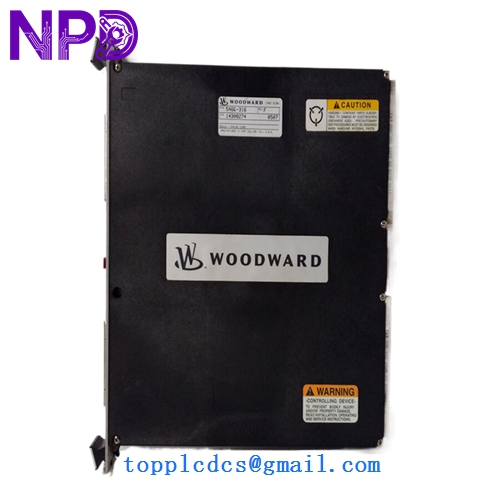
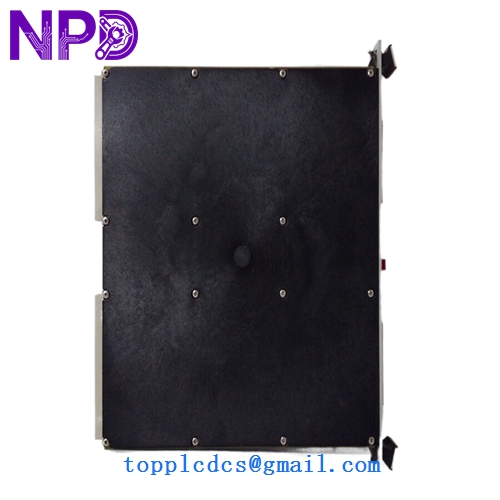

Description
- Model: WOODWARD 5466-316
- Brand: Woodward (USA)
- Series: MicroNet TMR (Triple Modular Redundant) / MicroNet Safety Control System
- Core Function: High-reliability main processor module responsible for executing critical turbine control algorithms and system logic.
- Condition: Brand New Surplus (Original factory packaging, non-refurbished)
- Product Type: Main CPU Controller Module
- Key Specs: Motorola PowerPC architecture | Triple Modular Redundancy support | Dedicated Ethernet and Serial ports
- Processor Architecture: Motorola PowerPC
- System Redundancy: Supports TMR (Triple Modular Redundant) and duplex configurations
- Operating Voltage: Dedicated backplane power derivation (supplied by MicroNet power chassis)
- Communication Interfaces:
- 2 x RJ45 Ethernet ports (10/100 Base-T)
- 1 x RS-232 Serial Port (9-pin Sub-D)
- 1 x RS-422/485 Serial Port
- Configuration Software: Woodward GAP (Graphical Application Program) / Toolkit
- Real-Time Clock: Internal hardware clock with battery backup
- Diagnostics: Onboard front-panel LED matrix for kernel, application, and network fault tracking
- Operating Temperature: 0 °C to +60 °C
- Storage Temperature: -40 °C to +85 °C
- Relative Humidity: 5% to 95% non-condensing
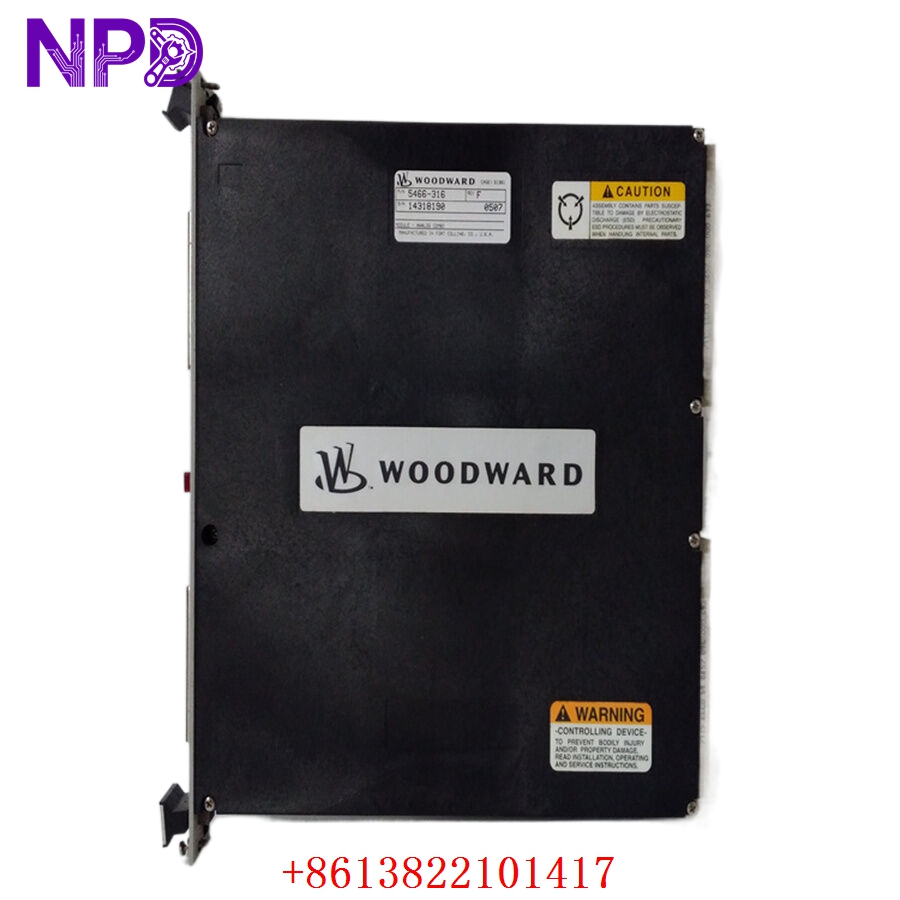
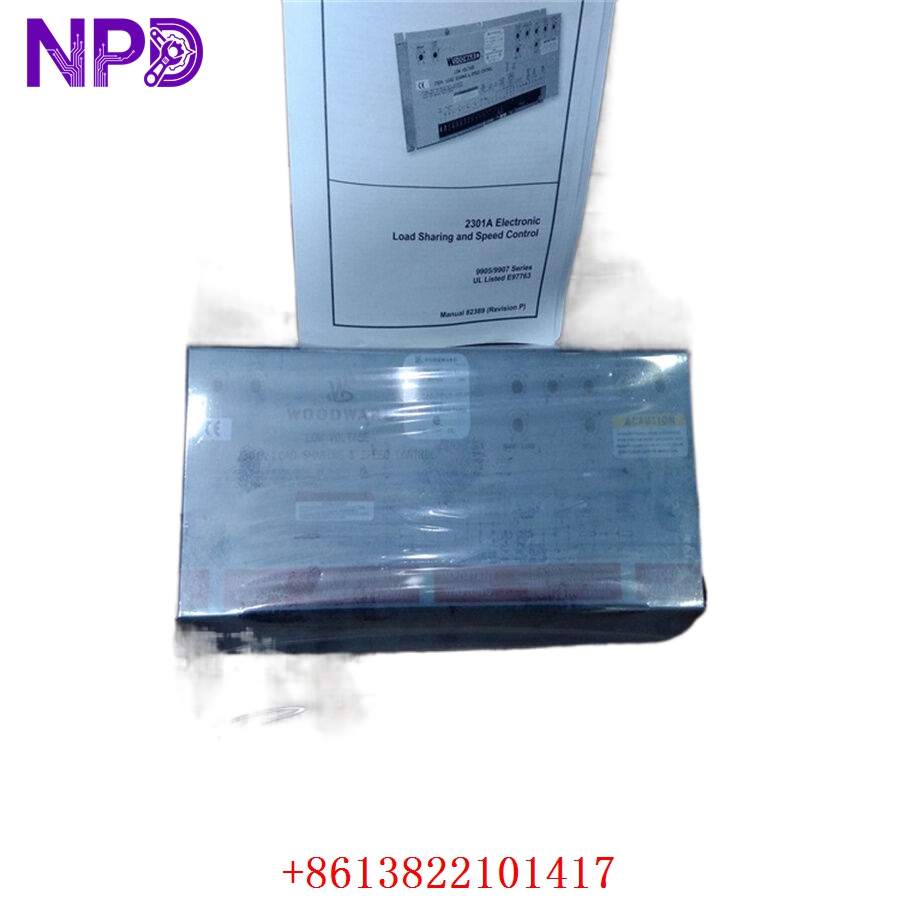
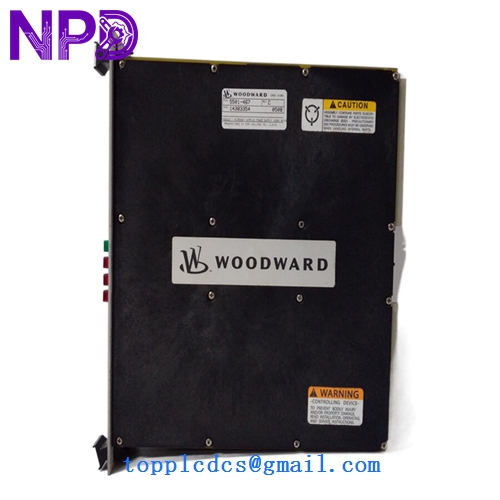
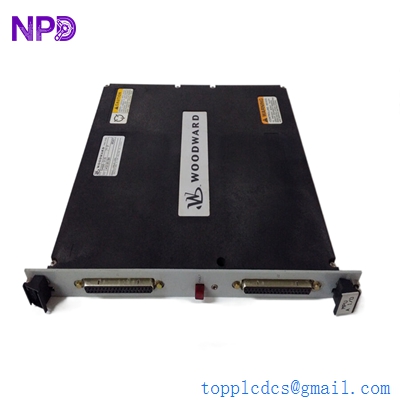
WOODWARD 5466-316
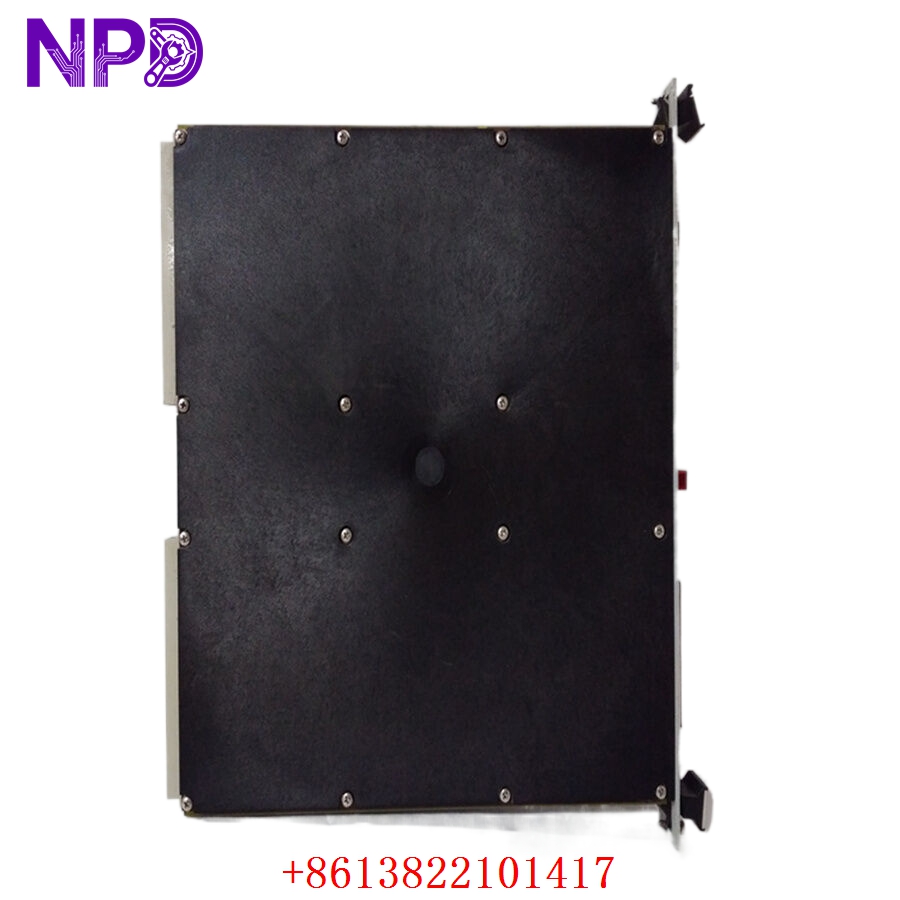
WOODWARD 5466-316
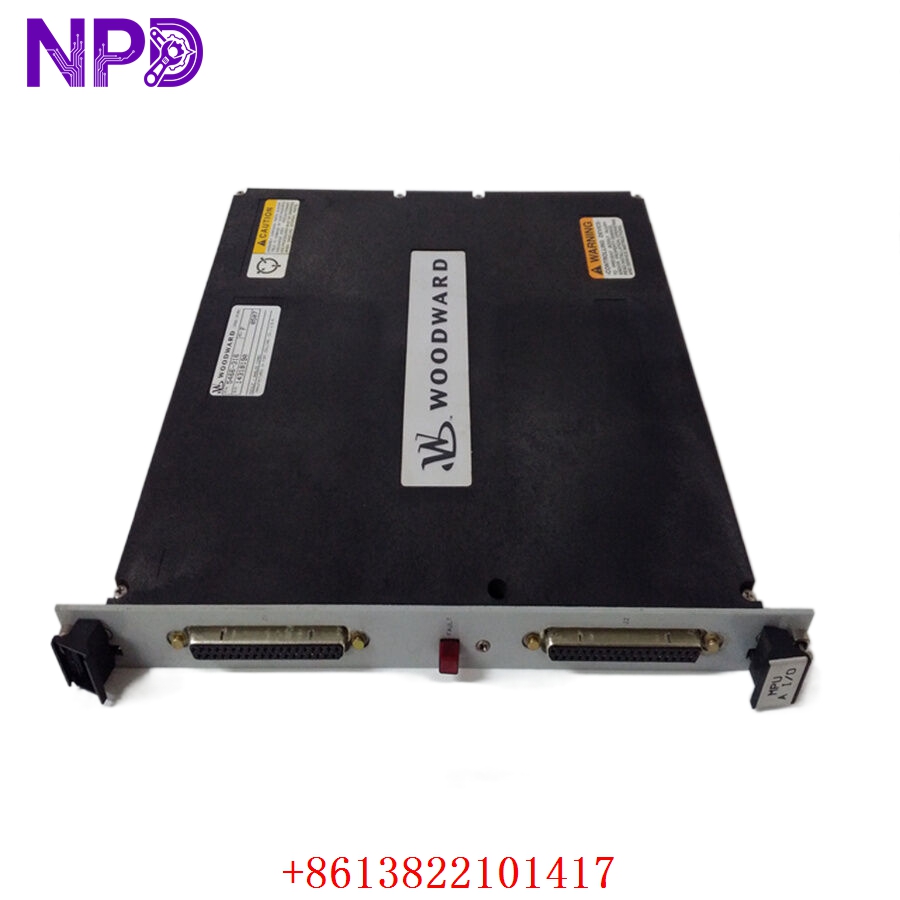
WOODWARD 5466-316
Application Scenarios & Engineering Pain Points
When managing massive industrial rotating machinery—like a multi-megawatt steam turbine or a critical gas compressor station—unplanned control system failure is not an option. The Woodward MicroNet platform, utilizing the 5466-316 CPU module, is specifically engineered to run these high-stress operations where a single false trip or calculation lag can catastrophically damage multi-million dollar assets. Because these control architectures are often specialized and highly customized, if a primary CPU locks up or suffers memory degradation after years of continuous execution, the lead time from an OEM for legacy modules can stretch into months, paralyzing your operations.
Typical Field Deployments:
- Power Generation – Main Steam Turbine Governance
Executes high-speed speed/load control algorithms, valve positioning loops, and overspeed protection logic requiring deterministic response times under 5 milliseconds.
- Oil & Gas – Critical Turbo-Compressor Trains
Manages anti-surge valves and fuel-gas metering systems for large-scale extraction and transport lines, ensuring mechanical stability during rapid load shifts.
- Marine & Aerospace – Large Engine Test Cells
Provides high-density data collection and safety-interlock controls for complex engine test beds that require high reliability and massive communication throughput.
Case Study: Saving an Offshore Gas Platform from Evacuation Downtime
- The Setup: A production platform operating in the South China Sea utilized a Woodward MicroNet TMR system equipped with 5466-316 processor cards to control a critical gas export compressor turbine.
- The Crisis: During a routine maintenance window, a high-voltage transient penetrated the panel ground loop during an auxiliary generator test, destabilizing the main application memory on one of the operational CPU modules. The TMR architecture initially masked the failure by maintaining operation on the other two legs, but the system status flag began throwing a high-priority “System Degraded” warning. If a second module failed before replacement, the platform would auto-trip, stopping gas export entirely and costing an estimated $180,000 per day in deferred production.
- The Fix: The logistics coordinator searched globally but faced a minimum 6-week factory build schedule for this legacy revision. They reached out to our emergency inventory desk. We pulled a brand-new, factory-sealed 5466-316 unit from our clean storage facility, verified the electrical parameters, and coordinated hot-shot customs clearance to get the component on an offshore supply helicopter within 36 hours.
- The Outcome: The platform instrumentation crew unboxed the unit, verified that the system jumpers matched their original configuration parameters, and hot-swapped the faulty processor card while the turbine remained running. The MicroNet immediately ran its background initialization routines, resynchronized the application code from the adjacent operational CPUs, and restored full triple-redundant safety margins without dropping a single pound of line pressure.
Standard Operating Procedure (SOP) Quality Transparency
High-reliability turbine components demand strict quality protocols. We follow a meticulous five-stage evaluation and preparation sequence for every 5466-316 module before it is authorized to leave our facility:
[Inbound Traceability Check] ➔ [Live Backplane Verification] ➔ [Communication Loop Test] ➔ [Environmental Status Check] ➔ [ESD Safe Sealing] 1. Inbound Traceability and Authenticity Check
- Hardware Profile Audit: We match the physical board revision levels, circuit trace artwork, and component manufacturer stamps against original Woodward production runs to eliminate any risk of unauthorized modifications or refurbishments.
- Microscopic Layout Analysis: Circuit board paths, surface-mount soldering points, and the gold contact fingers on the backplane pin connector are checked under high-magnification optics for microscopic fractures or degradation.
2. Live Backplane Verification (Live Bench Test)
- Test Architecture: The module is inserted into an authentic Woodward MicroNet chassis powered by an isolated industrial power unit.
- Boot Diagnostics: We monitor the CPU boot sequence via terminal emulators, verifying that the internal kernel initializes without memory allocation errors or parity faults.
3. Communication Loop and Interface Verification
- Network Testing: Both high-speed RJ45 Ethernet ports are put through a continuous data-ping test to verify zero packet loss.
- Serial Handshaking: The RS-232 and RS-422/485 serial lanes are connected to automated testing nodes to ensure clean data transmission without frame errors.
- Redundancy Validation: In a duplex configuration setup, we force a manual failover sequence to guarantee that the hardware transfers control cleanly within specified real-time operating parameters.
4. Environmental Status and Parameter Validation
- Thermal Readout Monitoring: The module is kept under active operating conditions for over 12 hours while onboard internal thermal sensors are logged to verify that no abnormal localized hot spots form across the PowerPC processor core.
5. ESD Safe Sealing and Protective Packing
- Antistatic Barrier: The card is sealed inside a heavy-duty, multi-layered anti-static shield wrap under climate-controlled conditions.
- Transit Cushioning: Wrapped in dense shock-absorbing foam inserts and housed inside rigid dual-wall boxes designed to neutralize transit vibrations.
- Certification Tagging: A physical QC clearance sticker showing the formal test date is attached to the exterior packaging. Full testing logs can be provided to your automation team prior to dispatch.
Technical Pitfall Mitigation Guide
When upgrading or replacing a high-level processor card like the 5466-316, paying attention to a few critical system realities can save you from severe field-commissioning delays.
1. The GAP Software and Application Revision Match
- The Risk: A new CPU module does not contain your specific turbine’s application program out of the box. Simply sliding it into the rack will not work; the system will fault out on a blank application error.
- The Fix: Ensure you have a verified, compiled backup of your site’s specific Woodward GAP (Graphical Application Program) application file. Before inserting the replacement processor into a non-redundant system, connect your engineering workstation via the serial or Ethernet port using Woodward Toolkit, check the operating system kernel compatibilities, and download the verified site logic file.
- Critical Redundancy Note: If you are inserting the module into an active, running TMR system as a replacement for a single failed leg, ensure the new module’s operating system/kernel version matches the running legs exactly. The TMR architecture will handle the application synchronization automatically, but a kernel mismatch will cause the module to be rejected by the active voting cluster.
2. Backplane Configuration Jumpers and Hardware Switches
- The Risk: Different hardware revisions or site-specific slot orientations may require adjusting physical hardware jumpers located on the processor board surface.
- The Fix: Before sliding the new module into the chassis slot, lay it flat on an ESD mat next to the unit you are replacing. Carefully audit every single jumper position. If your application maps specific network handling to an RS-422 line instead of RS-485, that physical jumper state must be manually mirrored on the replacement module before boot-up.
3. Strict ESD Safety Handling Protocols
- The Risk: High-speed processor modules utilize dense, static-sensitive surface components. Touching the card edges without proper grounding can introduce microscopic electrostatic damage that won’t show up immediately but can cause the CPU to randomly crash or reboot months down the line.
- ❗ Crucial Warning: Never handle the 5466-316 card without a properly grounded antistatic wrist strap. Keep the card inside its shielding bag until the exact moment it is ready to be inserted into the physical card cage guide rails.
Compatible Replacement Models
If you are planning for future platform migrations or face an absolute zero-stock emergency scenario, review these relative hardware paths:
| Original Model | Potential Alternative | Compatibility Level | Key Differences | Necessary Field Action | Cost Impact |
| 5466-316 | 5466-416 | ⚠️ Software Compatible | Upgraded processor speeds, increased onboard memory density, or updated network physical layers. | Requires updating the platform hardware definition maps inside your Woodward GAP project file and re-compiling before site deployment. | Premium cost increase (+25%). |
| 5466-316 | 5466-216 | ❌ Hardware Incompatible | Older generation component revision with entirely different kernel structures and reduced network bandwidth limitations. | Not recommended for modern TMR systems. May cause voting synchronization timeouts if mixed with newer revisions. | Variable based on legacy surplus markets. |
| 5466-316 | MicroNet Plus Architecture | ❌ Total Retrofit Required | Complete evolutionary jump to a modern control platform shell utilizing updated programming environments and updated backplane buses. | Requires a full panel overhaul, re-engineering all safety-interlock logic, and a multi-day commissioning window for complete system validation. | Very high capital and engineering resource layout (>300%). |
Troubleshooting Quick Reference
Use this diagnostic breakdown to isolate system errors before deciding to replace a primary processor module:
| Diagnostic Symptom | Root Cause Probability | Controller Relevance | Field Verification Steps | Recommended Remediation |
| Front-panel ‘Power’ LED is dark | Loss of backplane voltage supply or critical power stage failure inside the CPU. | ⚠️ Medium | Check adjacent slots in the MicroNet chassis. If all cards are dark, the problem is your main power supply module, not the CPU. | Replace the chassis power supply module. If only the CPU remains dark while receiving verified backplane power, the module’s internal power components are blown. Swap the card. |
| ‘Fault’ LED remains solid Red | Kernel initialization failure, watch-dog timer timeout, or hardware self-test rejection. | ✅ High | Connect an engineering PC to the CPU serial diagnostics port and view the boot logs during a power cycle. | If logs indicate a “Watchdog Timeout” or severe “RAM Check Fail,” the core processing hardware is compromised. Immediate module replacement is necessary. |
| ‘Net’ LED flashing or dark during active runs | Network configuration conflict, physical cable damage, or a blown Ethernet transceiver port. | ⚠️ Medium | Swap the RJ45 cable with a verified patch cord. Verify that the network switch port is active and that no duplicate IP addresses exist on the subnet. | If the network environment is stable but the port remains completely non-responsive to ping commands, the communication interface on the board has failed. Swap the module or reroute via the secondary port if allowed by your software configuration. |
| CPU continuously reboots or drops sync randomly | Thermal overloading, unstable backplane power, or application-level memory leaks. | ⚠️ Medium | 1. Use Woodward Toolkit to check internal module operating temperatures.
2. Clean out panel fan filters to ensure unobstructed airflow across the rack. |
If the module continues to drop out randomly despite stable temperatures and verified power inputs, the internal flash memory stability has degraded. Replace the unit. |
Need immediate engineering backup? If your plant is down and you cannot pinpoint the failure node, drop our technical support desk an email with photos of your current indicator lights and a copy of your panel’s wiring diagram. We will have an integration engineer respond within 2 hours.