
Description
- Product Parameters
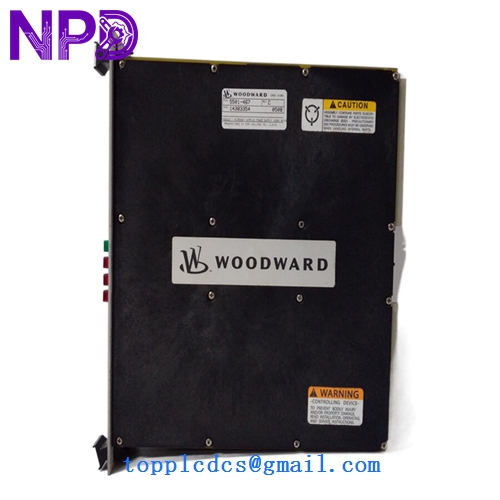
- Model Designation: WOODWARD 5466-348
- Processor: Freescale P1020 Dual-Core Processor
- Memory: 256 MB DDR3 RAM / 128 MB Flash Memory
- Clock Speed: 533 MHz to 800 MHz (Configuration Dependent)
- System Platform: MicroNet TMR (Triple Modular Redundant)
- Communication Ports: 2x Ethernet (10/100/1000 Base-T), 2x RS-232, 1x CAN Port
- Real-Time Clock: Integrated with Battery Backup
- Operating Temperature: -40°C to +70°C (-40°F to +158°F)
- Isolation: 500 Vrms to Chassis
- Power Consumption: 15 W Typical
The Woodward 5466-348 is a high-performance CPU module based on the PowerPC P1020 architecture, specifically designed to serve as the central processing heart of the MicroNet TMR control system. It executes complex control algorithms, manages high-speed I/O communication across the backplane, and handles network synchronization between the three redundant processors in a TMR set. Built for mission-critical turbine and compressor control, this module provides the computational power required for advanced PID loops, sequence-of-events (SOE) logging, and high-level industrial Ethernet connectivity.
Distinctions from Similar Models
- Processing Power: Utilizing the P1020 dual-core chip, the 5466-348 offers significantly higher throughput and lower cycle times compared to the older Motorola-based 5466-series CPUs.
- Memory Capacity: Features 256 MB of DDR3 RAM, which is a substantial upgrade over legacy controllers, allowing for larger GAP (Graphical Application Programmer) application files and more extensive data logging.
- Network Integration: Unlike earlier versions that required separate communication cards, this module includes onboard Gigabit Ethernet ports for direct SCADA and HMI integration.
Product Operation Guidelines
- TMR Synchronization: In a Triple Modular Redundant setup, ensure that all three 5466-348 modules are running the same software version and GAP application to maintain proper voting and synchronization.
- Flash Management: Use the Woodward AppManager tool for all software uploads and firmware updates; do not manually interrupt the power during a flash write to avoid corrupting the system bootloader.
- Battery Maintenance: Check the internal real-time clock battery status periodically via the system diagnostics; replace the battery during scheduled outages to ensure SOE logs remain time-accurate after a power cycle.
- Thermal Clearance: Because this CPU generates more heat (15W) than standard I/O modules, ensure the chassis fan tray is functional and the intake filters are clean to prevent processor throttling.