
Product Introduction
The HIMA F2108 Time Function Module, part number 984210802, is a safety-related timing component designed for use in HIMA industrial safety and automation systems. It is identified in industrial spare-parts catalogs as a fail-safe delay module, supporting time-dependent control functions within safety-related applications. The F2108 is intended for integration into its designated HIMA system architecture, where timing behavior can form part of a larger interlock or protective sequence. Because this is a legacy module and detailed OEM technical documentation is not readily available, users should verify the exact timing function, electrical interface, system compatibility, and configuration requirements against the original system drawings and HIMA documentation before installation or replacement.
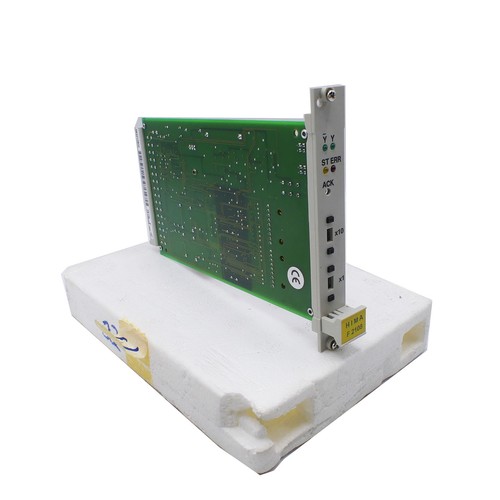
Technical Parameters
- Brand: HIMA
- Model: F2108
- Part Number: 984210802
- Alternative Part Number Format: 98 4210802
- Series: HIMA F-Series
- Product Name: Time Function Module
- Product Type: Safety-related timing / delay function module
- Primary Function: Fail-safe time delay
- Application: Industrial safety control and process automation
- System Compatibility: Designated HIMA safety-system configurations; verify the exact platform and rack requirements
- Timing Configuration: Exact timing ranges and adjustment method are not reliably published; consult OEM documentation
- Electrical Requirements: Verify supply voltage, current consumption, and terminal assignments from the module label and system drawings
- Signal Interface: Confirm input and output signal characteristics before wiring
- Mounting: Original HIMA system mounting arrangement; confirm rack or carrier compatibility
- Dimensions: Not reliably published; verify against the physical unit
- Weight: Approximately 0.23 kg (0.51 lb), based on a distributor listing
- Place of Manufacture: Not independently verified
- Country of Origin: Confirm from the product nameplate or supplier documentation
- Product Status: Listed by an industrial parts distributor as discontinued by the manufacturer; confirm current OEM support
- Discontinued: Reported as discontinued; remaining availability is generally through spare-parts channels
- Condition: Depends on the individual seller’s inventory; verify whether supplied as new, unused surplus, or refurbished
Technical Features
- Fail-Safe Delay Function: Identified as a timing module for fail-safe delay applications in HIMA safety-related control systems.
- Time-Dependent Control: Supports safety sequences in which a defined delay is required before a control action is permitted or completed.
- Safety-System Integration: Intended for use within its designated HIMA architecture rather than as a general-purpose standalone timer.
- Legacy System Support: Can be relevant to maintenance and spare-part replacement projects involving installed HIMA equipment.
- Part Number Identification: F2108 and 984210802 should both be checked when matching the replacement to the installed component.
- System-Level Verification: The module’s actual safety function depends on the complete system design, configuration, wiring, and validation.
Typical Application Areas
- Emergency shutdown system timing sequences
- Process interlock and permissive logic
- Delayed activation or deactivation of safety-related signals
- Industrial process protection systems
- Power generation and utility control installations
- Chemical and petrochemical process automation
- Maintenance of legacy HIMA safety systems
The exact application must be confirmed from the installed system’s safety logic and engineering documentation. Do not assume that the F2108 supports every delay mode or timing range used by other HIMA timing modules.
Operating Procedures
1. Pre-Installation Inspection
- Confirm that the module label identifies HIMA F2108 and part number 984210802.
- Inspect the PCB, connectors, terminals, and housing for corrosion, cracks, contamination, or mechanical damage.
- Check for loose components, damaged contacts, and signs of overheating.
- Compare the module revision and hardware markings with the installed system documentation.
- Confirm that the replacement is approved for the intended HIMA system configuration.
2. Installation
- Isolate the relevant control-system power supply and follow the plant’s lockout/tagout procedure.
- Verify that the system is in a safe maintenance state before removing the existing module.
- Record the original module position, wiring arrangement, and identification labels.
- Install the F2108 only in its specified mounting position.
- Check connector alignment and ensure that the module is fully seated.
- Do not modify wiring or connector assignments based solely on physical similarity to another HIMA module.
3. Startup and Power-On
- Recheck the module position, connections, and system power arrangements.
- Confirm that the installed module matches the approved engineering documentation.
- Restore power according to the plant’s approved startup procedure.
- Observe the system’s diagnostic indications and check for unexpected faults.
- Confirm that the timing function behaves as specified in the approved safety logic.
- Complete the required functional test before returning the safety function to service.
4. Normal Operation
- Monitor the associated safety-system diagnostics during normal plant operation.
- Confirm that time-dependent interlocks respond according to the approved cause-and-effect documentation.
- Investigate unexpected delays, missing signals, or abnormal system indications.
- Do not bypass a safety function to keep the process running.
5. Parameter Configuration and Modification
- Obtain the original HIMA engineering documentation before changing any timing-related settings.
- Verify the applicable configuration method and whether timing parameters are hardware-set or defined elsewhere in the system.
- Record the original settings before authorized modifications.
- Do not apply timing values taken from another module or application without an engineering review.
- Validate the complete safety sequence after any approved modification.
6. Shutdown and Removal
- Place the controlled process in an approved safe condition.
- Isolate the relevant power sources and verify that the module is de-energized.
- Follow the system-specific removal procedure.
- Release the module carefully without forcing connectors or PCB edges.
- Protect the removed module against electrostatic discharge and store it in suitable packaging.
Daily Maintenance
- Check system diagnostics for module-related faults.
- Inspect accessible connectors and mounting points during scheduled maintenance.
- Keep the control cabinet clean, dry, and within the environmental limits of the installed system.
- Check for abnormal temperature, vibration, dust accumulation, or moisture.
- Maintain an inventory record containing the model, part number, hardware revision, and installation location.
- Keep approved system drawings and maintenance records available to authorized technicians.
- Avoid unnecessary removal or reseating, which can introduce connector wear or electrostatic damage.
Troubleshooting
1. Module Not Recognized by the System
- Verify the module position and connector seating.
- Check the rack or carrier configuration.
- Confirm that the installed module type and revision are approved for the system.
- Review system diagnostics and wiring documentation.
2. Unexpected Timing Behavior
- Check the approved timing settings and associated logic.
- Verify the input signal conditions and downstream interlocks.
- Compare the observed sequence with the original cause-and-effect documentation.
- Do not change timing values until the safety impact has been assessed.
3. Safety-System Fault Indication
- Record the exact diagnostic message and fault history.
- Inspect the module and associated connections.
- Check the relevant system power and signal circuits.
- Follow the HIMA troubleshooting procedure for the installed platform.
4. Intermittent Operation
- Inspect connectors for contamination, oxidation, or mechanical looseness.
- Check cabinet environmental conditions.
- Review power-supply stability and associated signal wiring.
- Arrange qualified bench testing if the fault cannot be isolated in the installed system.
5. Replacement Module Does Not Operate as Expected
- Confirm the full part number, hardware revision, and system compatibility.
- Check whether the replacement has the correct configuration.
- Verify that the original module’s function has been correctly identified.
- Do not assume that a visually similar HIMA timing module is a direct substitute.
Frequently Asked Questions
Q1: What is the primary function of the HIMA F2108?
The F2108 is identified as a Time Function Module used for fail-safe delay functions in HIMA safety-related control systems.
Q2: What is the part number for this module?
The commonly listed part number is 984210802, also written as 98 4210802.
Q3: Is the F2108 a general-purpose timer?
No. It is identified as a HIMA safety-related function module. Its use should be limited to approved system configurations and documented safety applications.
Q4: Is the HIMA F2108 discontinued?
An industrial spare-parts distributor lists the F2108 as discontinued by the manufacturer. Buyers should confirm current lifecycle and support information with HIMA or an authorized service channel.
Q5: Can the F2108 replace another HIMA timing module?
Not automatically. Similar product descriptions do not establish electrical, functional, or safety compatibility. Verify the system configuration and OEM replacement guidance.
Q6: What is the operating voltage?
A reliable OEM electrical specification was not located for this exact model. Check the module label and original HIMA documentation before applying power.
Q7: How can I confirm the correct replacement?
Compare the complete part number, hardware revision, module markings, system drawings, and installed rack configuration. Obtain engineering approval before commissioning the replacement.
Q8: Is the F2108 suitable for safety-critical applications?
It is identified as a fail-safe timing module, but the safety integrity of an application depends on the complete validated system. Do not infer a SIL rating for the individual module without the applicable OEM safety documentation.
Safety Precautions
- ⚠️ Installation, testing, and replacement must be performed by qualified personnel familiar with HIMA safety systems.
- ⚠️ Never remove or install the module while energized unless the OEM procedure explicitly permits it.
- ⚠️ Do not bypass, defeat, or modify safety interlocks without an approved management-of-change process.
- ⚠️ Verify the exact electrical ratings and terminal assignments before connecting field wiring.
- ⚠️ Do not assume that another HIMA module is interchangeable based on appearance or similar naming.
- ⚠️ Perform the required functional validation and document the results before returning the system to service.
- ⚠️ Follow applicable plant safety procedures, electrostatic-discharge precautions, and HIMA technical instructions.
15 Related HIMA Models
The following are other HIMA modules and system components that may be relevant when sourcing spare parts for legacy HIMA installations. They are not confirmed drop-in replacements for the F2108.
- HIMA F2106 – Multifunctional delay module.
- HIMA F2108A – Related F2108A time function module designation; verify the complete part number and revision.
- HIMA F4204 – Logic function module.
- HIMA F4301 – Planar F logic module.
- HIMA F8650E – Central CPU module.
- HIMA F3329A – Switching amplifier module.
- HIMA F3226A – Fail-safe switching amplifier module.
- HIMA F3423 – Relay amplifier module.
- HIMA F3405 – Fail-safe relay amplifier module.
- HIMA F3113 – Output amplifier module.
- HIMA F4106 – Gate card.
- HIMA F4203A – Fail-safe diode pre-unit card.
- HIMA F4110A – Logic function module.
- HIMA F4111A – Logic function module.
- HIMA F1101 – PLC card.
Before ordering any related module, confirm the full order number, hardware revision, system family, and intended function against the installed HIMA equipment.


