
Product Description
The GE FVK364R is a 200 A fusible bus plug designed for use with GE Type FVK Flex-A-Power plug-in busway systems. Rated for 600 V AC, three-phase, three-wire service, this switch-type bus plug provides a connection point for supplying and protecting downstream electrical equipment through a compatible busway installation. It features an externally operated switching mechanism and fuse provisions for overcurrent protection. The standard configuration uses Class H fuse clips, while other fuse-class provisions depend on the installed configuration. The FVK364R is intended specifically for compatible Type FVK busway and should not be assumed interchangeable with other GE busway families or plug-in systems. Before installation, verify the busway profile, voltage rating, phase and wire configuration, fuse class, fuse rating, available fault current, and equipment nameplate information.
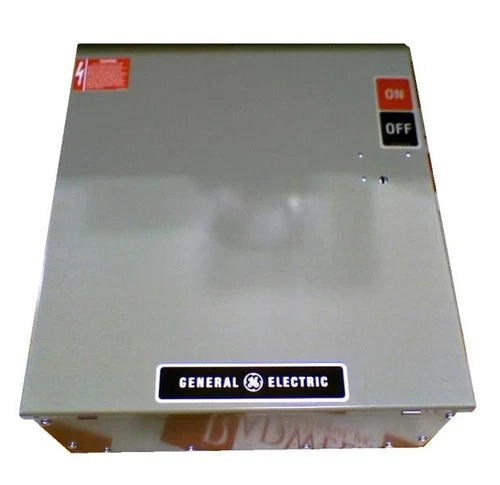
Key Technical Specifications
- Brand: General Electric (GE)
- Model: FVK364R
- Series: Type FVK Flex-A-Power
- Product Name: Fusible Bus Plug / Busway Switch Plug
- Product Type: Three-phase fusible busway plug
- Rated Current: 200 A
- Rated Voltage: 600 V AC maximum
- Phase: 3-phase
- Wire Configuration: 3-wire
- Switch Type: Externally operated switch
- Fuse Arrangement: Fusible, with Class H fuse clips in the standard catalog configuration
- Additional Fuse Provisions: Class R or Class J provisions may require the appropriate hardware configuration
- Interrupting / Short-Circuit Rating: 200 kA at 480 V, as listed by some supplier references; verify the applicable nameplate and system rating
- Busway Compatibility: GE Type FVK plug-in busway
- Connection Type: Plug-in busway connection
- UPC: 783175002825
- Place of Manufacture: Not confirmed for this specific unit
- Country of Origin: Verify from the product label and shipping documentation
- Dimensions: Not confirmed
- Weight: Supplier listings report approximately 40–52 lb; actual weight depends on configuration
- Power Requirements: No separate control power specified; the unit is installed in the compatible busway power distribution system
- Product Status: Legacy / discontinued product
- Discontinued: Listed as discontinued by industrial parts suppliers
Application Scenarios
- Industrial Power Distribution: Supplies power from a compatible GE FVK busway to downstream electrical loads.
- Manufacturing Facilities: Supports distribution to production machinery, process equipment, and industrial panels.
- Commercial Electrical Systems: Provides a plug-in power takeoff point for compatible building busway installations.
- Motor and Equipment Feeds: Can serve as a fusible disconnecting point for appropriately rated downstream equipment.
- Legacy Busway Maintenance: Suitable for maintenance and replacement planning in existing GE Type FVK installations.
Installation and Operating Instructions
- Confirm system compatibility: Verify that the existing busway is GE Type FVK. Check the busway nameplate, conductor arrangement, voltage, phase, wire count, and plug-in interface. Do not rely on physical appearance alone.
- Review electrical ratings: Confirm that the system voltage does not exceed the bus plug rating and that the 200 A rating is appropriate for the connected load and conductor sizing.
- Select the correct fuses: Check the equipment protection study, load characteristics, fuse class, and manufacturer requirements. The standard catalog configuration uses Class H fuse clips. Confirm any Class R or Class J conversion hardware before fitting alternative fuse types.
- Isolate the busway: De-energize the busway section using the approved upstream disconnecting procedure. Apply lockout/tagout and verify absence of voltage with appropriately rated test equipment.
- Inspect the bus plug: Check the enclosure, plug-in contacts, operating mechanism, fuse clips, terminals, and grounding provisions for damage, corrosion, overheating, or missing components.
- Prepare the installation: Confirm that the busway and plug-in opening are clean and undamaged. Check that the bus plug is correctly oriented and that its mechanical interlocks and retaining hardware are functional.
- Install the unit: Follow the GE Type FVK installation instructions. Engage the bus plug fully and secure it using the specified retaining and mounting arrangements. Never force the plug into the busway.
- Connect the load: Use conductors and mechanical lugs suitable for the load current, terminal ratings, and applicable electrical codes. Tighten all connections to the specified torque.
- Verify before energizing: Check fuse ratings, phase identification, conductor termination, grounding, enclosure closure, and mechanical engagement. Confirm that no tools or foreign materials remain inside the equipment.
- Restore power: Remove lockout/tagout only after the installation has passed inspection and the responsible personnel have authorized energization. Follow the approved upstream switching sequence.
- Normal operation: Operate the external switch using the designated handle and switching procedure. Monitor the connected load and investigate abnormal heating, noise, odor, or repeated fuse operation.
- Maintenance and configuration: Fuse replacement, fuse-class changes, and internal adjustments must follow the applicable manufacturer instructions and be performed only after electrical isolation.
Daily Maintenance and Inspection
- Check the enclosure for dents, corrosion, contamination, and signs of overheating.
- Inspect the operating handle and switching mechanism for abnormal resistance or mechanical damage.
- Review load current and operating conditions to identify possible overloads.
- During scheduled shutdowns, inspect accessible busway contacts and plug-in connections for discoloration, pitting, or thermal damage.
- Verify that installed fuses match the approved protection schedule.
- Check cable terminations and mechanical lugs for looseness in accordance with the equipment maintenance procedure.
- Keep the busway and surrounding electrical enclosure free from dust, moisture, and conductive debris.
- Record inspection findings, fuse replacements, and maintenance activities.
Troubleshooting Guide
1. Bus plug cannot be installed
Verify the busway is a compatible Type FVK system. Inspect the plug-in opening, contact arrangement, alignment, and retaining mechanism. Do not force installation into an incompatible busway.
2. Downstream equipment has no power
Check the upstream supply, switch position, fuse condition, load-side connections, and busway contact engagement. Perform electrical testing only under an approved safe-work procedure.
3. Fuse operates repeatedly
Investigate downstream overloads, short circuits, motor starting current, incorrect fuse selection, and damaged conductors. Do not install a higher-rated fuse without an approved protection review.
4. Bus plug or connections show excessive heat
De-energize the equipment and inspect the plug-in contacts, fuse clips, terminals, conductor sizing, and load current. Replace damaged components only with approved parts.
5. Switching mechanism does not operate normally
Stop operation and isolate the equipment. Check for mechanical damage, obstruction, or a defective operating mechanism. Do not bypass interlocks or force the handle.
Safety Precautions
- Installation and maintenance must be performed by qualified electrical personnel.
- Always de-energize and verify absence of voltage before installation, removal, fuse replacement, or internal inspection.
- Follow applicable lockout/tagout procedures and electrical safety regulations.
- Never exceed the rated voltage or current of the bus plug.
- Use only fuse types and ratings approved for the installed fuse clips and protection design.
- Do not assume compatibility with GE SB, SL, or other busway families; the FVK364R is designed for the Type FVK system.
- Verify short-circuit ratings against the available fault current at the installation point.
- Do not operate equipment with damaged contacts, exposed conductors, defective interlocks, or an unsecured enclosure.
- Complete all required inspection and electrical verification before returning the equipment to service.
Recommended Related GE FVK Models
The following models belong to the GE Type FVK bus plug family. They are related products with different current, voltage, or conductor configurations and are not direct replacements unless the electrical and mechanical requirements match.
- FVK361R – 30 A, 600 V, 3-wire fusible bus plug
- FVK362R – 60 A, 600 V, 3-wire fusible bus plug
- FVK363R – 100 A, 600 V, 3-wire fusible bus plug
- FVK365R – 400 A, 600 V, 3-wire fusible bus plug
- FVK366R – 600 A, 600 V, 3-wire fusible bus plug
- FVK461R – 30 A, 480 V, 4-wire fusible bus plug
- FVK462R – 60 A, 480 V, 4-wire fusible bus plug
- FVK463R – 100 A, 480 V, 4-wire fusible bus plug
- FVK464R – 200 A, 480 V, 4-wire fusible bus plug
- FVK465R – 400 A, 480 V, 4-wire fusible bus plug
- FVK466R – 600 A, 480 V, 4-wire fusible bus plug
- FVK321R – 30 A, 240 V, 3-wire fusible bus plug
- FVK322R – 60 A, 240 V, 3-wire fusible bus plug
- FVK323R – 100 A, 240 V, 3-wire fusible bus plug
- FVK324R – 200 A, 240 V, 3-wire fusible bus plug
Frequently Asked Questions
Q1: What is the GE FVK364R?
It is a 200 A fusible bus plug designed for GE Type FVK Flex-A-Power busway systems. Its rated voltage is 600 V AC, with a three-phase, three-wire configuration.
Q2: Does the FVK364R include fuses?
The standard catalog description specifies Class H fuse clips and indicates that fuses are not included. Confirm the actual unit’s fuse configuration and supplied accessories with the seller.
Q3: Can the FVK364R accept Class R or Class J fuses?
The manufacturer catalog describes additional Class R or Class J fuse provisions as configuration options. Confirm the installed fuse clips and required conversion hardware before using another fuse class.
Q4: Is the FVK364R compatible with other GE busway systems?
It is designed for Type FVK busway. Do not assume compatibility with GE SB, SL, or other busway families. Verify the exact busway series and plug-in interface.
Q5: Can a 400 A or 600 A FVK plug replace the FVK364R?
No, not as a direct substitution. Higher-current models have different electrical ratings and may require different upstream protection, conductor sizing, and load calculations.
Q6: What should be checked before purchasing?
Confirm the complete catalog number, nameplate rating, busway compatibility, enclosure condition, operating mechanism, fuse clips, plug-in contacts, and whether fuses or accessories are included. Also request photographs of the actual unit and confirmation of its stated condition.


