
1. Product Description
The GENERAL ELECTRIC HEA61B236-X2 is a high-speed, multi-contact auxiliary relay with a manual reset mechanism. Designed for electrical control and switching applications, this relay provides auxiliary contact functions for control circuits, status indication, and switching logic. Its hand-reset configuration allows the relay to remain in its operated or tripped state until manually reset, depending on the circuit design. The HEA61B236-X2 is listed by the supplier under the relay/socket category and is suitable for maintenance and replacement applications where the original relay specification and contact arrangement match. Before installation, verify the coil rating, contact configuration, operating characteristics, mounting arrangement, and wiring diagram against the original equipment documentation.
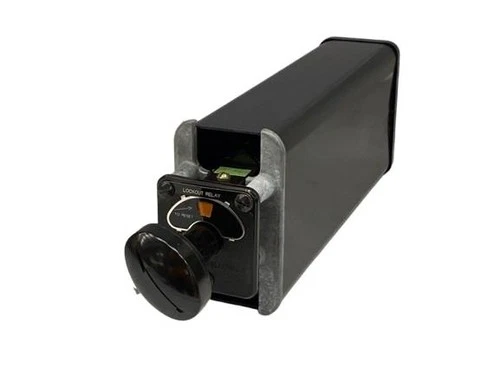
2. Key Technical Specifications
- Brand: General Electric (GE)
- Model: HEA61B236-X2
- Product Name: High-Speed Multi-Contact Auxiliary Relay
- Product Type: Auxiliary Relay
- Relay Category: Electromechanical Control Relay
- Operating Characteristic: High-speed operation, supplier-described
- Contact Configuration: Multi-contact; exact pole and contact arrangement not verified
- Reset Method: Manual / Hand Reset
- Coil Voltage: Not officially verified
- Coil Frequency: Not officially verified
- Contact Rating: Not officially verified
- Contact Material: Not officially published
- Mounting Arrangement: Verify against the original relay and equipment panel
- Socket Requirement: Verify the compatible socket or mounting base
- Place of Manufacture: Not independently verified
- Product Status: Legacy industrial spare; current manufacturer availability not confirmed
- Dimensions: Not officially published
- Weight: Not officially published
- Country of Origin: Not independently verified
- Power Requirements: Depends on the relay coil specification; confirm the nameplate before energizing
- Discontinued: Not independently confirmed
3. Application Scenarios
The HEA61B236-X2 may be used in industrial electrical control systems requiring auxiliary switching, multi-contact control logic, and manual-reset operation.
Potential application areas include:
- Industrial electrical control panels
- Motor and equipment control circuits
- Auxiliary switching and interlocking circuits
- Electrical status indication
- Control circuit isolation and switching
- Maintenance of legacy GE electrical equipment
- Replacement of an existing HEA61B236-X2 relay with matching specifications
The exact application depends on the original circuit design and relay contact configuration. Do not assume that this relay is suitable for a protection or safety function without confirming its approved application.
4. Installation and Operating Procedures
- Preparation: Check the complete HEA61B236-X2 model number, nameplate, coil rating, contact arrangement, and mounting configuration.
- Circuit identification: Review the original wiring diagram and identify all coil and contact terminals.
- Power isolation: Disconnect the control circuit and apply lockout/tagout before removing the existing relay.
- Removal: Label all conductors and carefully disconnect the relay from its socket or mounting base.
- Inspection: Check the socket, terminal contacts, wiring insulation, and mounting hardware for damage or overheating.
- Installation: Fit the replacement relay in the correct orientation and confirm that its terminal arrangement matches the original.
- Wiring verification: Reconnect the coil and contact circuits according to the approved electrical drawings.
- Pre-energization check: Verify wiring continuity, insulation condition, coil rating, and contact configuration.
- Functional testing: Energize the control circuit under an approved test procedure and verify relay pickup, contact transfer, and manual reset operation.
- Return to service: Confirm that the associated equipment responds correctly and that no abnormal switching or control alarms remain.
5. Operating and Configuration Guidelines
The HEA61B236-X2 is an auxiliary relay rather than a programmable electronic controller. Its operating characteristics are determined by its coil, mechanical structure, contact arrangement, and external control circuit.
Important verification points include:
- Coil voltage: Match the applied control voltage to the relay nameplate.
- Coil frequency: Confirm AC or DC operation and the specified frequency where applicable.
- Contact arrangement: Identify normally open and normally closed contacts from the manufacturer’s wiring diagram.
- Contact rating: Confirm that the switched load does not exceed the rated voltage and current.
- Manual reset: Follow the specified reset procedure after relay operation.
- Circuit logic: Verify interlocks and external control signals before returning the relay to service.
Do not apply power based solely on the model number. Obtain the original technical data or verify the nameplate first.
6. Daily Maintenance and Inspection
- Inspect the relay housing for cracks, discoloration, and mechanical damage.
- Check the mounting base and terminals for looseness.
- Inspect wiring insulation for overheating or deterioration.
- Check for abnormal contact noise or mechanical sticking.
- Verify that the manual reset mechanism operates correctly.
- Review the associated control circuit for repeated relay operations.
- Check terminal connections for corrosion or contamination.
- Record inspection results and any replacement history.
7. Troubleshooting Guide
Problem: Relay does not operate
Check the control supply, coil rating, wiring continuity, and control signal. Confirm that the applied voltage matches the relay nameplate.
Problem: Relay operates intermittently
Inspect loose terminals, unstable control voltage, damaged wiring, and mechanical wear. Check whether the relay is being operated beyond its specified duty.
Problem: Contacts do not switch correctly
Check the contact wiring, connected load, contact condition, and mechanical operation. Replace the relay if contacts are damaged or welded.
Problem: Manual reset does not work
Inspect the reset mechanism for obstruction or mechanical damage. Follow the manufacturer’s reset procedure and do not force the mechanism.
Problem: Relay overheats
Verify coil voltage, duty cycle, ambient temperature, and terminal condition. Disconnect the circuit if abnormal heating is detected.
8. Safety Precautions
- Installation must be performed by qualified electrical technicians.
- Isolate the power supply and apply lockout/tagout before working on the relay.
- Verify the coil voltage before energizing.
- Never exceed the rated contact voltage or current.
- Do not use the relay for a safety-critical or protective function unless its suitability is documented.
- Avoid touching energized terminals.
- Use appropriate electrical test instruments and protective equipment.
- Verify all contact states and control functions before returning equipment to service.
9. Related GE Relay Selection
The following are useful GE relay product categories to consider when planning related maintenance inventory. They are not confirmed direct replacements for HEA61B236-X2. Exact model numbers and electrical ratings must be selected from the original equipment documentation.
- GE HEA Series – Auxiliary Relays
- GE HGA Series – Auxiliary and Control Relays
- GE HFA Series – Auxiliary Relays
- GE HMA Series – Industrial Control Relays
- GE HKA Series – Control Relay Products
- GE Auxiliary Contact Relays
- GE Multi-Contact Relays
- GE High-Speed Relays
- GE Hand-Reset Relays
- GE Manual-Reset Control Relays
- GE Electromechanical Relays
- GE Panel-Mounted Relays
- GE Relay Socket Assemblies
- GE Industrial Switching Relays
- GE Electrical Control Relays
These categories are for product-family reference only. Confirm the exact GE catalog number, coil rating, contact arrangement, and mounting dimensions before selecting an alternative.
10. Purchasing and Verification Notes
Before purchasing, request clear photographs of the actual HEA61B236-X2 relay, including its nameplate, terminal markings, coil identification, contact diagram, and mounting arrangement.
Confirm whether the item is new, unused surplus, or previously installed. The referenced eBay listing identifies the item as brand new, but the physical condition and packaging should be checked with the seller.
For replacement applications, compare the coil voltage, contact arrangement, contact ratings, reset mechanism, and mounting configuration with the original relay. A relay with a similar appearance or product-family designation should not be treated as interchangeable without electrical and mechanical verification.


