
Product Description
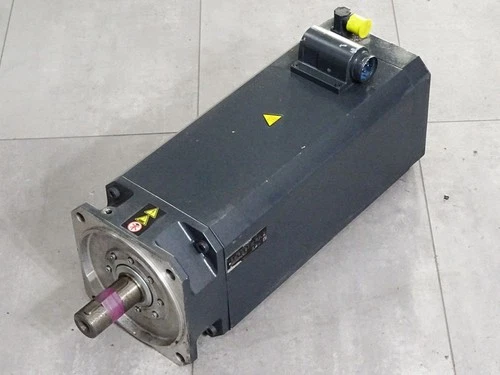
The Siemens 1FT6108-8AC71-1EB1 is a SIMOTICS S 1FT6 synchronous servo motor designed for industrial motion-control applications requiring high torque and precise speed regulation. This naturally cooled motor has a rated speed of 2,000 rpm and a rated torque of approximately 55 Nm under the specified 100 K temperature-rise condition. Its configuration includes an EnDat absolute encoder with 2,048 signal periods, an integrated holding brake, a keyed shaft, and an IP65 protection rating. The motor uses an IM B5 flange mounting arrangement and is intended for operation with a compatible Siemens SIMODRIVE or other approved drive system. For system integrators, important commissioning checks include encoder protocol compatibility, motor identification, brake-control wiring, drive parameter configuration, and the correct power and signal connector assignments. Verify the complete motor order number and the existing drive configuration before installation or replacement.
Technical Specifications
- Brand: Siemens
- Model: 1FT6108-8AC71-1EB1
- Series: SIMOTICS S 1FT6
- Product Name: Synchronous Servo Motor
- Motor Type: Permanent-magnet synchronous servo motor
- Place of Manufacture: Germany, according to the product reference
- Product Status: Seller-stated condition should be confirmed from the individual listing
- Cooling Method: Natural cooling
- Mounting Type: IM B5 flange mounting; IM V1 and IM V3 mounting arrangements are also referenced for this configuration
- Rated Speed: 2,000 rpm
- Rated Torque: Approximately 55 Nm at 100 K temperature rise
- Stall Torque: Approximately 70 Nm at 100 K temperature rise
- Rated Current: Approximately 24.5 A at 100 K temperature rise
- Feedback System: EnDat absolute encoder, 2,048 signal periods
- Encoder Derating: Approximately 10% due to the absolute encoder configuration
- Holding Brake: Integrated holding brake
- Shaft Design: Keyed shaft
- Protection Rating: IP65
- Vibration Severity: Grade N
- Dimensions: Approximately 540 × 240 × 192 mm; verify against the applicable dimensional drawing
- Weight: Approximately 60 kg
- Country of Origin: Germany, subject to nameplate confirmation
- Power Requirements: Determined by the compatible servo drive and motor winding configuration; use the Siemens motor data and drive documentation rather than applying mains voltage directly
- Discontinued: The 1FT6 family is a legacy product range; confirm the current lifecycle status and service availability for this exact order number
Operating Procedures
1. Preparation
- Check the motor nameplate and confirm the complete order number: 1FT6108-8AC71-1EB1.
- Compare the motor ratings with the machine electrical drawings and drive configuration.
- Verify the encoder type, EnDat interface, connector arrangement, and feedback cable.
- Inspect the motor housing, shaft, flange, brake wiring, and connectors.
- Confirm that the motor is mechanically suitable for the application and that the driven load can be safely secured.
2. Installation
- Mount the motor on a clean, accurately aligned machine flange.
- Check the coupling, shaft key, and mechanical fit before tightening the mounting hardware.
- Avoid applying impact loads to the shaft or encoder assembly.
- Ensure that the motor has adequate clearance for heat dissipation.
- Confirm that the installation orientation and environmental conditions meet Siemens requirements.
3. Electrical Connection
- Connect the motor power cable to the compatible servo drive using the specified connector and pin assignment.
- Connect the EnDat feedback cable to the correct encoder interface.
- Wire the holding brake according to the motor and drive documentation.
- Verify protective grounding and cable shielding.
- Keep encoder cables separated from high-current motor and braking cables where required.
- Never assume that a connector with a similar physical appearance has the same pin assignment.
4. Power-On
- Confirm that the motor is securely mounted and the driven mechanism is clear.
- Check power, feedback, brake, and grounding connections.
- Energize the drive according to the machine manufacturer’s startup sequence.
- Check whether the drive recognizes the encoder and motor identification data.
- Verify that brake control and drive enable signals operate correctly before commanding movement.
5. Normal Operation
- Monitor motor speed, torque, current, and temperature.
- Check for abnormal vibration, bearing noise, or mechanical resonance.
- Confirm that encoder feedback follows the commanded movement.
- Observe brake release and engagement during the prescribed operating sequence.
- Record drive alarms and operating data for maintenance purposes.
6. Configuration
- Use the applicable Siemens drive commissioning software and documentation.
- Select the correct motor identification and feedback configuration.
- Verify rated speed, torque limits, current limits, and thermal protection settings.
- Configure the holding brake output and release timing according to the machine design.
- Confirm encoder direction, position feedback, and reference behavior.
- Back up the existing drive parameters before making changes.
7. Shutdown
- Stop the motor using the machine’s normal controlled-stop sequence.
- Allow the mechanical load to reach a safe stationary condition.
- Confirm that the holding brake engages as designed.
- Isolate the drive power supply before disconnecting motor or feedback cables.
- Observe the manufacturer’s DC bus discharge requirements and verify safe voltage before maintenance.
Daily Maintenance
- Check the motor housing for abnormal temperature, vibration, and noise.
- Inspect power and feedback cables for damage, abrasion, or loose connections.
- Check the motor flange and mounting hardware for signs of movement.
- Inspect the shaft coupling and driven mechanism for alignment problems.
- Monitor encoder-related alarms and position-control deviations.
- Check holding-brake operation according to the machine maintenance schedule.
- Keep the motor surface clean and ensure that cooling air can circulate freely.
- Record operating hours, alarms, and maintenance activities.
- Arrange periodic inspection of bearings, brake function, and insulation condition according to Siemens maintenance instructions.
Troubleshooting
1. Motor does not start
- Check drive enable and emergency-stop circuits.
- Verify incoming drive power and control supply.
- Check whether the drive reports an encoder, motor identification, or brake fault.
- Confirm that the holding brake receives the correct release command.
2. Encoder communication error
- Verify that the drive supports the EnDat absolute encoder used by this motor.
- Inspect feedback cable connections and shielding.
- Check connector pin assignments and cable continuity.
- Confirm that the correct encoder configuration is selected in the drive.
3. Motor overheating
- Check whether the motor is operating within its rated torque and current limits.
- Inspect the machine for excessive mechanical load.
- Verify that cooling surfaces are not obstructed.
- Review drive parameters and operating duty cycle.
4. Excessive vibration or noise
- Inspect shaft alignment and coupling condition.
- Check mounting bolts and mechanical connections.
- Examine the driven machine for imbalance or mechanical interference.
- Review speed-control parameters and resonance conditions.
5. Holding brake does not release
- Check brake supply voltage and control wiring.
- Verify the brake-release command and drive interlocks.
- Inspect the brake circuit for open connections.
- Do not force the shaft to rotate while the brake remains engaged.
6. Positioning or speed deviation
- Check encoder feedback and motor direction.
- Verify motor and feedback parameter assignments.
- Inspect coupling slippage and mechanical backlash.
- Review speed-loop and position-loop settings using the applicable commissioning procedure.
Safety Precautions
- Installation and commissioning must be performed by qualified personnel.
- Isolate the drive power supply and follow lockout/tagout procedures before maintenance.
- Wait for the DC bus to discharge and verify the absence of hazardous voltage.
- Do not disconnect motor or encoder cables while the drive is energized.
- Secure vertical or suspended loads before releasing the motor holding brake.
- Do not use the holding brake as a substitute for a machine safety brake unless the system design explicitly permits it.
- Follow the specified grounding, shielding, and cable-routing requirements.
- Do not exceed the motor’s rated current, torque, speed, or thermal limits.
- Confirm encoder and brake compatibility before replacing an existing motor.
- Keep hands and tools clear of rotating shafts and couplings during testing.
Product Keywords
Siemens 1FT6108-8AC71-1EB1, Siemens 1FT6108, SIMOTICS S, Siemens 1FT6 servo motor, 2,000 rpm servo motor, 55 Nm servo motor, EnDat absolute encoder, holding brake servo motor, IP65 servo motor, Siemens synchronous motor, industrial motion control, CNC servo motor, Siemens automation spare parts.
For industrial automation products and spare parts, visit https://www.newplcdcs.com.
Related Siemens Models and Product Families
The following are related Siemens servo motor models and product families for sourcing research. They are not confirmed direct replacements for the 1FT6108-8AC71-1EB1.
- Siemens 1FT6102 – SIMOTICS S 1FT6 servo motor
- Siemens 1FT6105 – SIMOTICS S 1FT6 servo motor
- Siemens 1FT6108 – SIMOTICS S 1FT6 servo motor family
- Siemens 1FT6081 – SIMOTICS S 1FT6 servo motor
- Siemens 1FT6082 – SIMOTICS S 1FT6 servo motor
- Siemens 1FT6084 – SIMOTICS S 1FT6 servo motor
- Siemens 1FT6086 – SIMOTICS S 1FT6 servo motor
- Siemens 1FT6064 – SIMOTICS S 1FT6 servo motor
- Siemens 1FT6044 – SIMOTICS S 1FT6 servo motor
- Siemens 1FT6136 – SIMOTICS S 1FT6 servo motor
- Siemens 1FT7 – SIMOTICS S high-performance synchronous servo motor family
- Siemens 1FK6 – SIMOTICS S synchronous servo motor family
- Siemens 1FK7 – SIMOTICS S high-dynamic servo motor family
- Siemens 1PH7 – SIMOTICS M main motor family
- Siemens 1FT5 – Legacy SIMOTICS synchronous servo motor family


